A 1 acre robot mower without a boundary wire sounds wonderfully simple: map the lawn, set a schedule, and stop spending weekends walking behind a mower. The catch is that one-acre yards expose every weakness in a robot mower setup. Tree cover, fenced sections, side yards, slopes, long docking routes, and patchy wireless reception can matter more than the headline acreage rating.
The right choice is not just the mower with the biggest number on the box. It is the mower whose navigation style, drive system, zone handling, and charging setup fit the actual grass you expect it to maintain.
What to know first
A mower’s advertised acreage is not the same thing as your lot size. One acre is 43,560 square feet, but your mowable grass may be much less after subtracting the house, driveway, patio, pool, garden beds, woods, and hardscape. For a one-acre property, measure the turf itself and then leave room for real-world interruptions: rain delays, charging cycles, narrow passages, missed corners, and heavy spring growth.
For a robot mower for a 1-acre yard with no boundary wire, look for five things before comparing brands: enough rated coverage for your true mowable area, reliable wire-free navigation for your tree and house layout, docking access from all mowing zones, slope ability that matches your steepest sections, and practical app controls for adjusting maps and schedules. If any one of those is weak, the mower may still work, but it will need more owner attention.
Step 1: Measure the grass, not the property line
Before shortlisting any mower, walk the yard with a measuring app, site plan, or simple satellite view and separate the lawn into zones. A front lawn, fenced back yard, side strip, and detached patch by a driveway may all count toward the same acre, but they are not equally easy for a robot mower to reach.
- Subtract non-grass areas. A one-acre lot may only have half an acre of actual turf once buildings and hardscape are removed.
- Note isolated zones. A robot mower needs a safe route between areas or a way to manage them separately.
- Mark bottlenecks. Gates, narrow side yards, stepping-stone paths, and tight turns can create more trouble than open square footage.
- Check the dock location. The charging station should sit where the mower can leave, return, and receive the navigation support it needs.
- Be honest about growth rate. Fast-growing lawns need more schedule headroom than thin, slow-growing turf.
If your mowable grass is close to a full acre, avoid choosing a mower rated exactly at that figure unless the lawn is open, simple, and easy to navigate. A model with extra coverage capacity gives you more flexibility when weather, charging, or zone complexity slows the weekly routine.
Step 2: Match wire-free navigation to your yard
“No boundary wire” does not mean every wire-free mower navigates the same way. Some systems lean on satellite positioning, some use cameras, some use LiDAR, and many combine sensors to build and maintain a virtual map. The practical question is whether the mower can consistently understand your lawn edges, obstacles, and no-go areas without a buried perimeter wire.
Open lawn with a clear sky
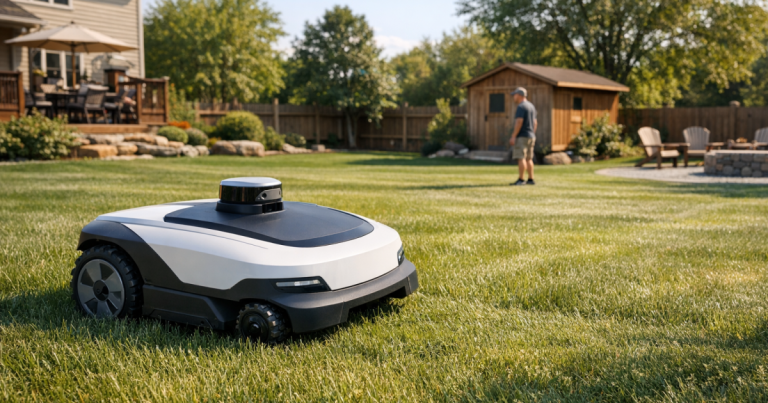
A broad front-and-back lawn with fewer trees is usually the easiest layout for a wire-free mower. Satellite-based systems tend to be happier when the mower and its positioning equipment have a clear view of the sky. The setup still needs careful mapping, but the yard itself is not fighting the technology.
Treed or shaded lawn
If the yard has mature oaks, dense shade, or long runs close to the house, look harder at mowers that use vision, LiDAR, or multi-sensor navigation rather than relying on one signal source alone. Tree cover can create awkward reception zones, and a mower that frequently loses confidence may pause, remap, or leave areas unfinished.
Fenced and multi-zone lawn
For fenced yards, the gate becomes part of the mowing plan. The mower either needs a reliable passage between zones or you need to accept manual moves. On one-acre properties, manual moves get old quickly, so prioritize zone controls, mapped corridors, and a dock location that supports the whole layout.
Three wire-free mowers to shortlist
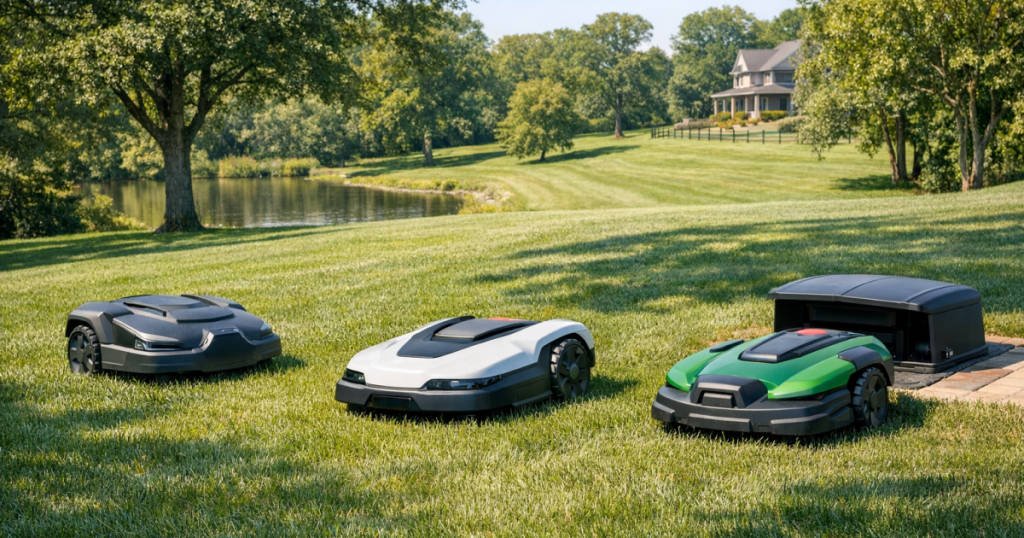
These are not ranked as universal winners, because a one-acre yard can be open and easy or wooded and chaotic. Instead, think of each mower as a different answer to the same problem: how to maintain a large lawn without installing boundary wire.
Worx Landroid Vision Cloud 1 Acre WR340
The Worx Landroid Vision Cloud 1 Acre WR340 is the obvious model to compare if your target is right around a one-acre lawn and you want a wire-free approach from the start. It is best suited to a yard where the mowing areas are reasonably legible: clear lawn edges, manageable obstacles, and routes that do not rely on squeezing through awkward corners all day.
Its appeal is the tidy fit between the stated one-acre class and the homeowner who wants to avoid a perimeter-wire installation. The trade-off is margin. If your actual turf is close to a full acre and broken into several demanding zones, compare the WR340 carefully against larger-capacity alternatives. You can review its yard-fit details on the Worx Landroid Vision Cloud 1 Acre WR340 profile.
Dreame A3 AWD Pro 5000
The Dreame A3 AWD Pro 5000 is a stronger candidate when your one-acre lawn is not perfectly flat or simple. The supplied model information places it in a 1.20-acre class and identifies it as an all-wheel-drive LiDAR robot lawn mower, which makes it worth a close look for larger, uneven, or more demanding layouts.
The sensible way to judge it is not to assume that all-wheel drive solves every terrain problem. Instead, ask where your hard sections are: wet lower corners, bumpy tree-root areas, slopes behind the house, or transitions between lawn zones. AWD can be valuable when traction is part of the problem, while LiDAR-based navigation may appeal where you want wire-free mapping without depending entirely on open-sky positioning. For specs and fit filters, use the Dreame A3 AWD Pro 5000 yard-fit page.
Husqvarna Automower® 440 iQ
The Husqvarna Automower® 440 iQ is the model to consider when you want more breathing room than a one-acre rating provides. The supplied product context describes it as a wire-free robot lawn mower for large properties up to 2 acres, which gives it a different role: not just covering the acre, but handling the schedule with more capacity in reserve.
That extra headroom can be useful for homeowners with a true acre of grass, multiple zones, or a lawn that grows aggressively in spring. It also gives you room to adjust mowing frequency without operating right at the edge of the mower’s intended workload. The main question is whether your yard layout supports the mower’s navigation and docking needs. Start with the Husqvarna Automower® 440 iQ comparison entry if you want to compare it against other large-property options.
Step 3: Stress-test the setup before you buy
Once you have a shortlist, imagine the mower’s normal week. It will not cut the whole lawn in one dramatic pass like a riding mower. Robot mowers maintain grass by cutting frequently, returning to charge, and repeating the route over time. On a one-acre lawn, small inefficiencies add up.
- Docking path: Can the mower reliably return from the farthest part of the yard without crossing gravel, mulch, public sidewalk, or a steep pinch point?
- Zone count: Does the lawn behave like one continuous space, or several smaller lawns stitched together?
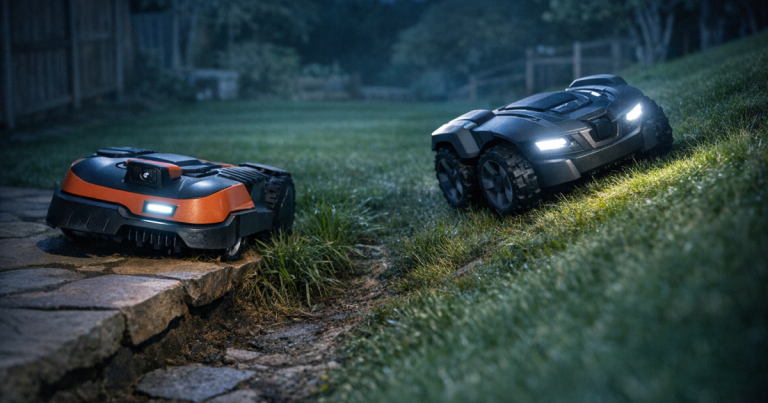
- Slopes: Measure the steepest mowing areas, not the average slope of the yard. Short steep banks are often where traction problems show up.
- Trees and structures: Walk under dense canopy and beside the house where navigation can become less predictable.
- Obstacles: Fire pits, playsets, exposed roots, irrigation heads, dog toys, and fallen branches all affect day-to-day reliability.
- Weather routine: Think about how often your lawn gets soft, muddy, or debris-covered after storms.
One light reality check: a robot mower is patient, not magical. It is excellent at frequent maintenance when the yard is set up well, but it still benefits from tidy passages, sensible scheduling, and occasional owner attention.
Common mistakes with one-acre wire-free mowing
Buying for lot size instead of mowable area
If the property is one acre but the grass is only 25,000 square feet, your options open up. If the grass itself is close to one acre, coverage margin becomes far more important. Always compare the mower against the turf it must actually cut.
Ignoring the worst corner of the yard
A mower that handles 90 percent of the lawn but struggles in a shaded slope behind the garage may still create a weekly chore. Walk the troublesome areas first and choose for those conditions, not for the easy open patch near the street.
Assuming no wire means no setup
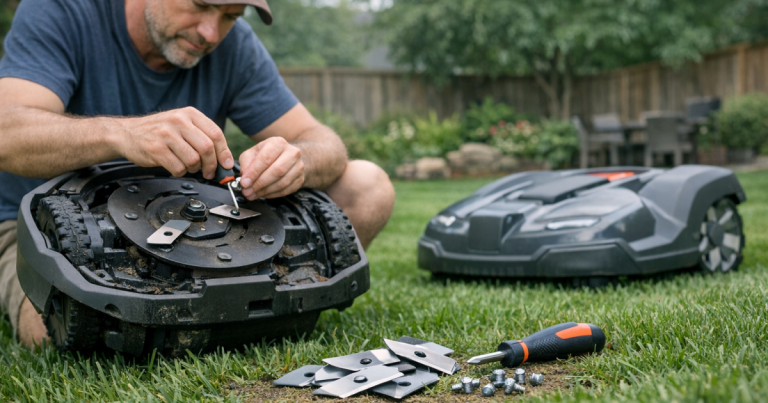
Wire-free mowers still need mapping, no-go zones, docking placement, schedule tuning, and periodic adjustments as the lawn changes. You skip the buried cable, but you do not skip planning.
Underestimating obstacles
Robot mowers are designed with safety systems, but homeowners should still keep the lawn reasonably clear. Toys, hoses, pet bowls, and storm debris are easy ways to turn an automated routine into a rescue mission.
Things readers ask
Is a boundary-free mower better than a wired mower for one acre?
Not always. Boundary-free systems reduce installation work and make map edits easier, but wired systems can still be dependable on some complex properties. For one acre, the better system is the one that matches your layout, tree cover, slope, and willingness to manage setup details.
Should I choose a mower rated above one acre?
If your mowable grass is near a full acre, usually yes. Extra rated capacity gives more schedule flexibility and helps account for charging, rain interruptions, difficult zones, and seasonal growth. If your true grass area is well below an acre, an exact-fit model may be enough.
Can one mower handle front and back yards?
Often, but only when there is a workable route between them or a supported multi-zone setup. A gate, narrow side yard, or driveway crossing can become the deciding factor. Map the travel path before getting attached to any model.
Why the right fit beats the biggest spec
For a one-acre lawn without boundary wire, the best mower is the one with enough capacity, navigation confidence, and zone flexibility for your specific property. The Worx Landroid Vision Cloud 1 Acre WR340 is a natural comparison point for simpler acre-class lawns. The Dreame A3 AWD Pro 5000 deserves attention for uneven layouts where AWD and LiDAR are appealing. The Husqvarna Automower® 440 iQ is the more spacious choice when you want large-property headroom.
Measure first, shortlist second, and treat the hardest part of the lawn as the real test. That approach will tell you far more than the acreage rating alone.