Latest review
Husqvarna Large Automower® House Review: A Simple Shelter for iQ Charging Stations
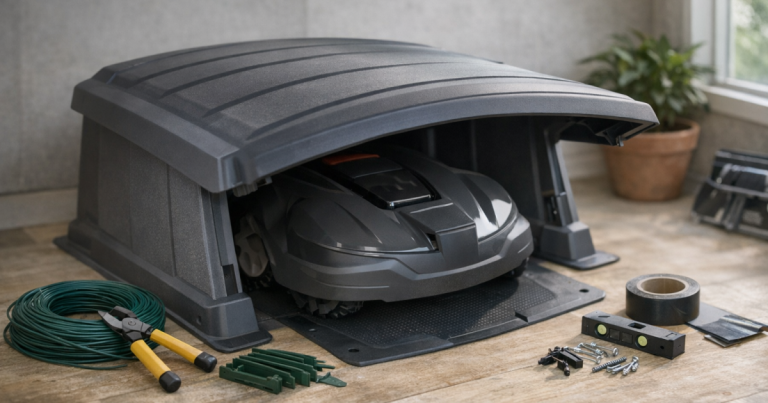
A charging-station cover can tidy up an Automower setup, but fit matters more than looks with this accessory.
Read review →
Robot Mowers
Find out if a robot lawn mower fits your lawn, slope, layout, and setup needs before you buy.
Check Your YardInteractive resource
Find the right robot lawn mower for your needs. Search, filter and compare robot lawn mowers side by side, then check the details that matter most before you choose.
Compare Robot Lawn Mowers →Start exploring
Find clear robot lawn mower reviews that explain who each model suits, how it handles real yard conditions, and where the trade-offs sit. Coverage…
Reviews →Learn how robot lawn mowers work, which features matter, and what ownership is really like before you buy. Topics include wired and wire-free models,…
Robot Mowers →A robot mower is only a good choice if it fits the yard. Use these articles to judge slopes, acreage, gates, narrow passages, trees,…
Yard Fit Guides →When two models or technologies look similar, the details matter. Compare robot mower brands, boundary systems, navigation methods, cutting widths, battery capacity, app features,…
Comparisons →Choose with confidence by matching mower specs to the yard you actually have. Buying coverage helps sort budgets, lawn size ratings, slope capability, wired…
Buying Guides →Get the first install right, from charging station placement to boundary setup, mapping, zones, app pairing, and test runs. These setup articles help prevent…
Setup & Installation →Freshly published
A charging-station cover can tidy up an Automower setup, but fit matters more than looks with this accessory.
Read review →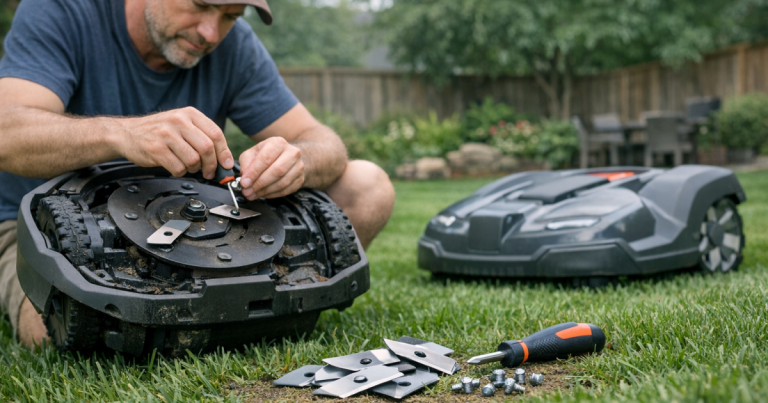
OEM Automower blades are easy to overlook, but pack size, screw replacement and model fit decide whether they…
Read review →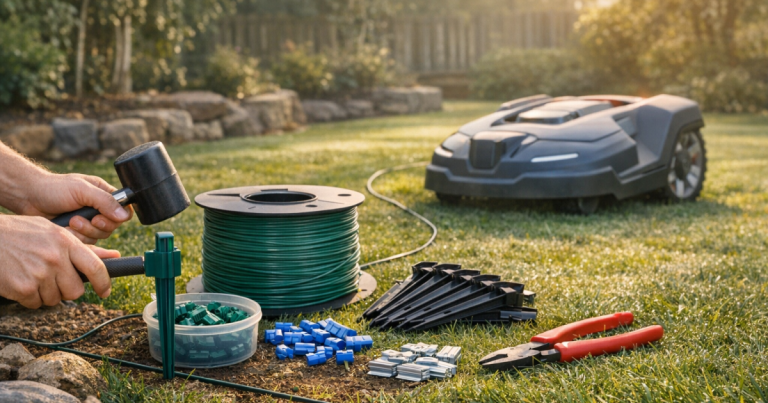
Useful for Automower owners deciding whether a bundled wire kit beats piecing together stakes, couplers and connectors.
Read review →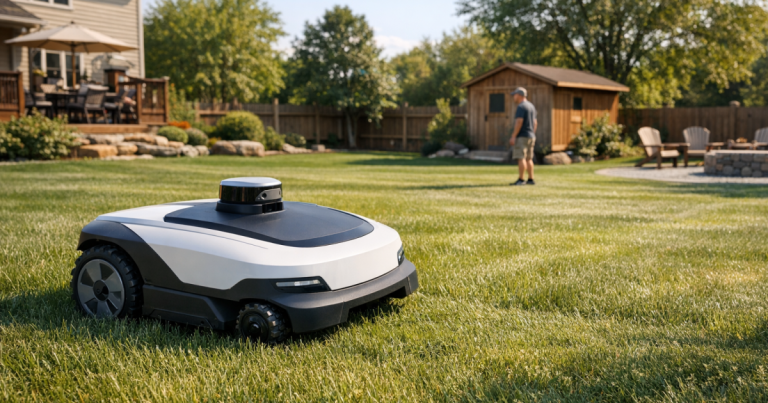
LiDAR mapping, no perimeter wire, and a 0.5-acre fit make this mower interesting—but the cut range and 2WD…
Read review →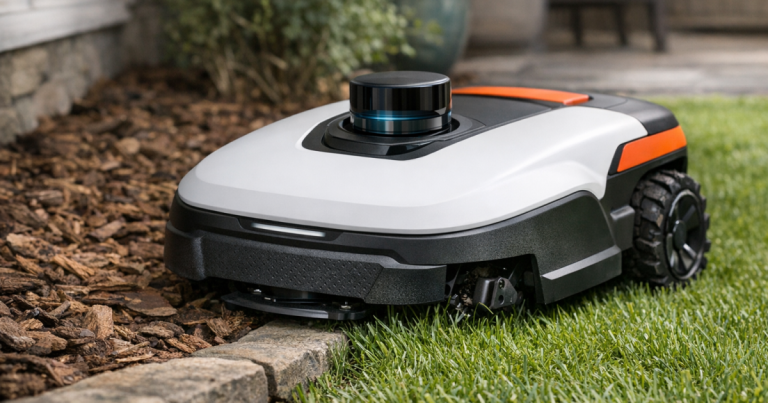
A compact wire-free mower with LiDAR mapping, useful zone flexibility, and one key traction trade-off to understand before…
Read review →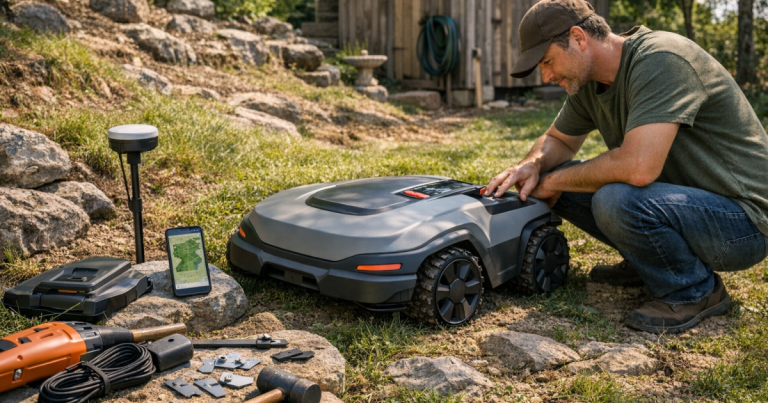
Small, uneven lawns are the real test here: traction, mapping, cut height, and weather behavior all affect the…
Read review →Latest guides & advice
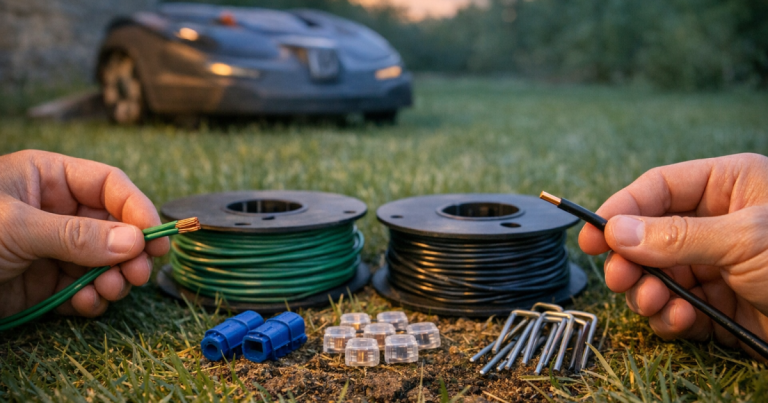
Buying wire before install? Gauge, copper type, insulation, splices, and OEM trade-offs matter more than the label on…
Read article →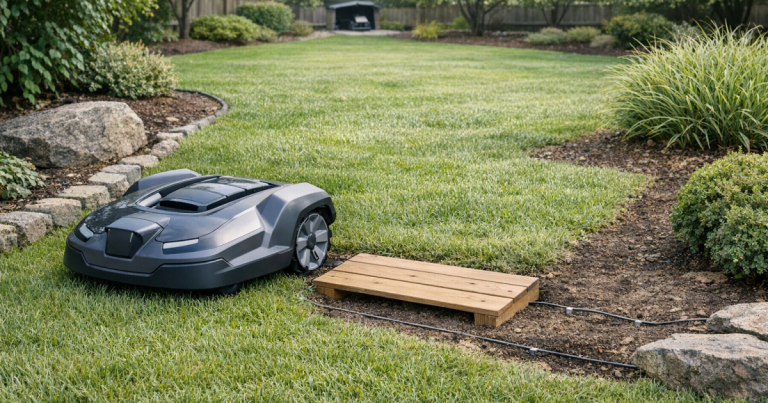
Same-place stuck alerts usually point to one troublesome yard feature. Use the location clues to fix the real…
Read article →
Hot afternoons can stress turf and trigger mower warnings. Shift the work to cooler windows without letting the…
Read article →
A dirty, damp mower can turn winter storage into spring troubleshooting. Use this checklist before you park it…
Read article →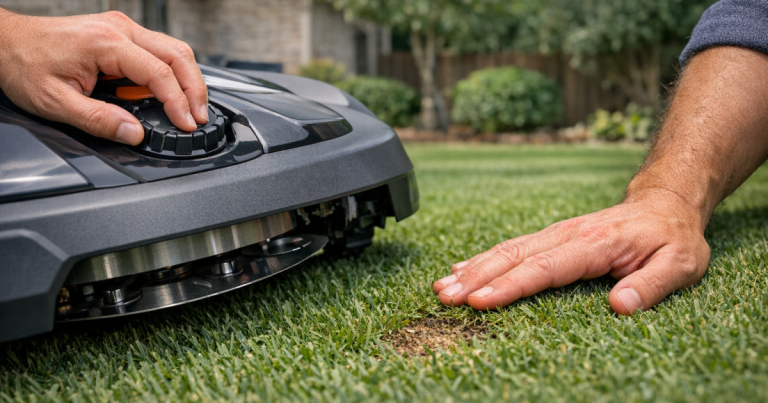
Bermuda lawns need a mower that can cut low, run often, and avoid turning small bumps into scalp…
Read article →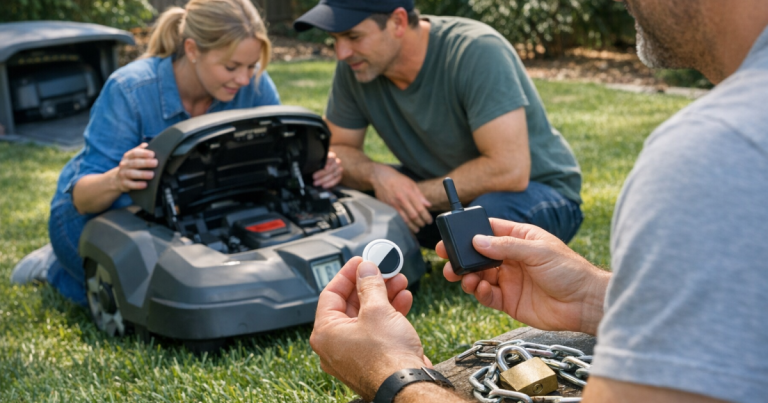
A hidden tag can help, but it is only one layer. Pair recovery tracking with locks, account controls,…
Read article →Robot Mowers is built for homeowners who like the idea of an automatic lawn mower but do not want to guess their way through an expensive purchase. A robot mower can be a great upgrade, but it is not magic. Yard shape, slope, grass type, obstacles, Wi-Fi coverage, mowing height, boundary setup, and maintenance all affect how well it works. Our goal is to help you understand those details before you buy, so you can choose a mower that actually fits your property and your routine.
This site is for everyday US homeowners: people with small suburban lawns, larger corner lots, fenced backyards, narrow side yards, slopes, trees, flower beds, pets, kids, and busy schedules. Some readers are replacing a gas push mower. Others are tired of paying for weekly lawn service. Some simply want a quieter, cleaner, more hands-off way to keep grass looking neat. Wherever you are starting from, we focus on practical guidance that helps you move from “Will this work here?” to “Here is the right way to set it up.”
The biggest mistake many homeowners make is choosing a robot lawn mower based only on lot size. Cutting capacity matters, but it is only one part of the decision. A mower rated for a half acre may still struggle if the yard has steep slopes, tight passages, exposed roots, complex landscaping, poor satellite visibility, or multiple separated lawn zones. Robot Mowers breaks down those real-world factors so you can look at your yard the way an installer or experienced owner would.
We help you think through whether you need a perimeter wire mower, a wire-free GPS-based mower, a model with vision assistance, or a simpler unit for a straightforward lawn. We explain when premium navigation is worth paying for and when it is overkill. We also cover details that are easy to miss, such as docking station placement, charging access, rain handling, app controls, theft protection, blade replacement, and how often the mower will need to run to keep up with spring growth.
A robot mower is only as good as its setup. Even a high-end model can disappoint if the dock is in the wrong place, the boundary is rushed, the cutting schedule is unrealistic, or the mower is expected to handle areas it was not designed for. That is why our setup content is hands-on and yard-focused. We explain how to plan mower routes, prepare the lawn, handle edges, protect garden beds, manage narrow passages, and reduce the chances of common error messages.
For wire-guided mowers, we cover the basics of boundary wire planning, guide wire routing, peg spacing, splicing, and troubleshooting breaks. For wire-free models, we look at mapping, no-go zones, satellite signal quality, camera-based navigation, and app-based adjustments. We also help you understand what “edge cutting” really means, why some trimming may still be needed, and how to set expectations for a lawn that is maintained continuously instead of cut short once a week.
Our advice is written for homeowners who want clear steps, not jargon. You should not need to be a technician to understand how to place a charging station, set a mowing schedule, or diagnose why a mower is missing one patch of grass. When there are trade-offs, we explain them plainly so you can make a decision that fits your budget and your yard.
Because Robot Mowers is an affiliate publisher site, we may earn a commission when readers buy through certain links. That does not change the purpose of our content: helping homeowners make better decisions. We focus on the situations a product is best suited for, the limitations to watch for, and the ownership details that matter after the box arrives.
Robot mower ownership is not just about the mower itself. The right blades, connectors, wire, pegs, garage covers, cleaning tools, battery replacements, wheel kits, and protective accessories can make the experience smoother. We help explain when an accessory is genuinely useful and when it is optional. For example, a mower garage may be helpful in a sunny, exposed location, while extra boundary wire and waterproof connectors can be essential for a larger wired installation or future repairs.
We also pay attention to ongoing maintenance. Robot mowers cut frequently, usually taking off small amounts of grass at a time. That system works best when blades are sharp, the underside is kept reasonably clean, software is updated, and the mower is stored properly during the off-season. Our guides help homeowners understand those routines without making them feel complicated.
A lot of frustration with robot lawn mowers comes from small issues that have simple causes. The mower may stop outside the dock because the charging contacts are dirty. It may leave uncut strips because the schedule is too light for peak growth. It may get stuck in the same low spot because the lawn needs a minor fix, not a new mower. It may lose positioning because the yard has tree cover, tall structures, or poor signal conditions in a key area.
Our troubleshooting content is designed to help you narrow down the cause before you waste time or money. We cover boundary wire problems, docking issues, uneven cutting, mower alarms, app connectivity, battery concerns, wet grass performance, and seasonal adjustments. We also explain when a problem is normal behavior, when a setup change may solve it, and when it may be time to look at replacement parts or warranty support.
A robot lawn mower can save time, reduce noise, and keep a lawn looking consistently maintained, but the best results come from matching the right mower to the right yard and setting it up carefully. Robot Mowers gives homeowners a practical place to compare options, understand installation choices, plan maintenance, and solve problems along the way.
Whether you are still deciding if a robot mower is realistic for your property or you already own one and want it to perform better, our focus is the same: clear explanations, realistic expectations, and useful next steps. With the right information, automatic mowing becomes less confusing and much easier to live with.