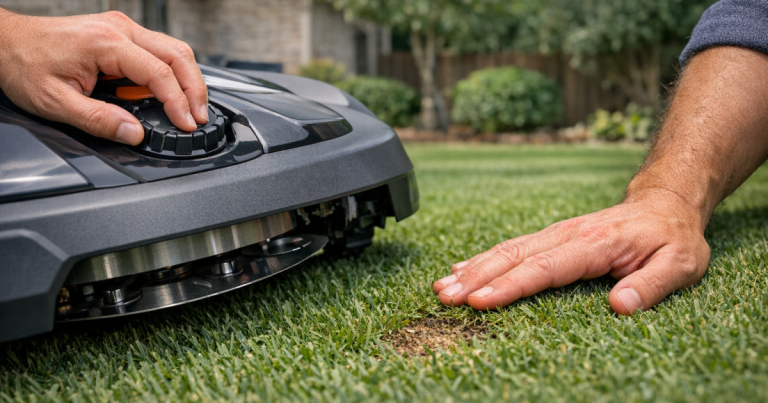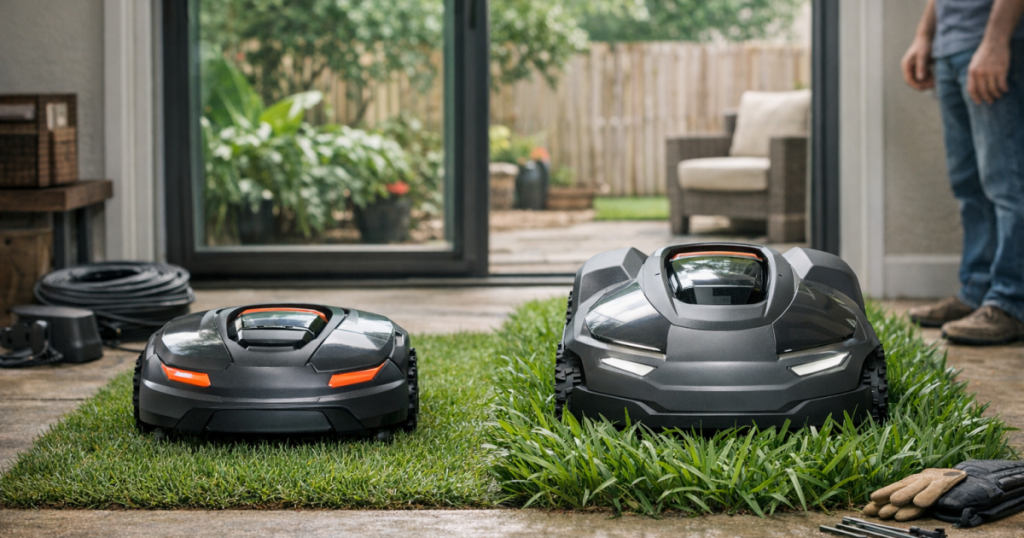
St. Augustine looks its best when it is kept tall enough to shade the soil and protect thick runners, so choosing a robot mower for St. Augustine grass starts with maximum cutting height, not app features or brand loyalty. Many robot mowers top out below the height Southern lawns often need, which can leave this turf stressed before the machine ever has a fair chance.
The practical target is simple: for St. Augustine, shop for a mower that can reach at least 3.5 inches, and favor models that reach 4 inches if your lawn is shaded, heat-stressed, or maintained on the taller side. A mower that barely reaches your preferred height gives you no adjustment room when summer arrives.
The short answer for high-cut Southern turf
The best candidates are high-cut robot mowers with a published maximum cutting height around 3.5 to 4 inches. That does not automatically make them right for every yard. St. Augustine also needs frequent mowing, sharp blades, clean turns around borders, and enough traction to move through thick growth without rutting or scalping.
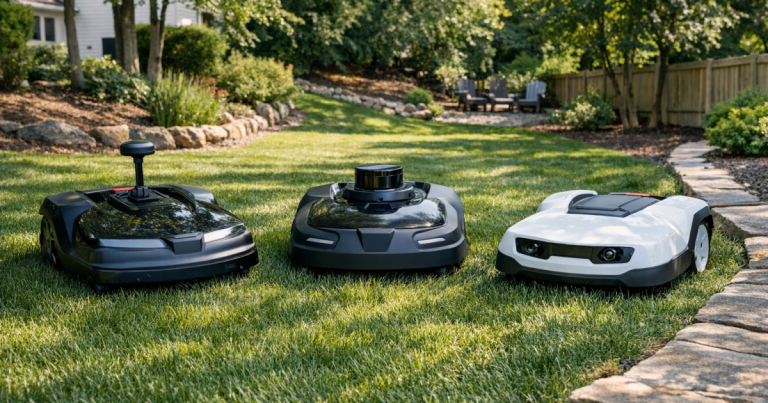
As of September 2026, the strongest high-cut shoppers’ list starts with Husqvarna’s iQ Automower models for taller residential lawns, Mammotion’s high-cut H models for larger or sloped properties, and selected ECOVACS or Segway models where the current US spec sheet confirms a high enough deck setting. Always verify the exact cutting-height range for the model number you are buying, because mower families and regional SKUs can differ.
High-cut robot mower candidates to compare
Use this list as a cutting-height filter before you get pulled into navigation, zones, accessories, or boundary style. The height ceiling is the gatekeeper for St. Augustine; everything else matters after that.
- Husqvarna Automower® 440 iQ: A strong large-yard candidate when you need a high maximum cutting height and wire-free setup. Its listed lawn-capacity class makes it more relevant for bigger St. Augustine yards than compact quarter-acre machines.
- Husqvarna Automower® 420 iQ: A better fit when the yard is closer to one acre and you want hybrid boundary flexibility. It belongs on the shortlist for homeowners who need height plus a more adaptable installation path.
- Mammotion LUBA 3 AWD 5000H: Worth comparing for larger, uneven Southern lawns where high-cut capability and all-wheel-drive traction are part of the decision. Check the current US specification for the exact height range and boundary requirements.
- ECOVACS GOAT A2000 LiDAR PRO: A relevant LiDAR-based option to check because ECOVACS publishes GOAT cutting-height ranges as high as 3.6 inches on some models. That can be enough for St. Augustine lawns kept in the mid-3-inch range, but it is less forgiving than a 4-inch ceiling.
- Segway Navimow i206 AWD: A compact AWD option to consider for small, uneven yards only if the current cutting-height spec reaches your turf target. The appeal is yard fit, not just the height number.
Grass-height targets by turf type
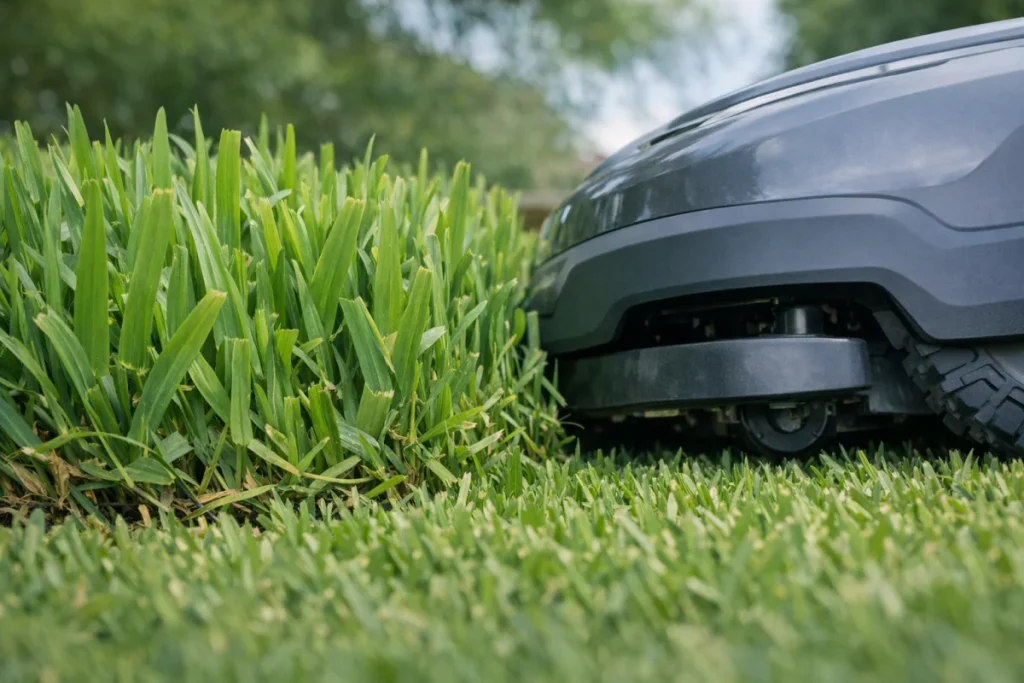
Robot mower buying gets much easier when you match the deck range to the grass, not just the property size. These are practical homeowner targets, not a substitute for local extension guidance or your lawn-care plan.
- St. Augustine: Commonly maintained around 3 to 4 inches. Choose a robot mower that reaches at least 3.5 inches; 4 inches is the safer ceiling for shade, heat, and a lush Southern look.
- Bahia: Often kept tall, around 3 to 4 inches. Treat it like St. Augustine from a mower-height standpoint and avoid low-ceiling machines.
- Tall fescue: Frequently kept around 3 to 4 inches in warm weather. A high-cut mower helps preserve density and reduces the temptation to cut too low.
- Bermuda: Usually maintained much lower than St. Augustine. Cutting height is less likely to be the limiting factor; slope, edging, and mowing frequency may matter more.
- Zoysia: Often kept lower to moderate, depending on variety and preference. Many robot mowers can work, but verify the minimum and maximum settings for your desired finish.
A simple buying process for a robot mower for St. Augustine grass
1. Pick your real mowing height first
Decide whether you want to maintain the lawn at 3 inches, 3.5 inches, or closer to 4 inches. If you already mow St. Augustine tall with a walk-behind mower, do not buy a robot mower that forces you to drop the lawn lower. Automation should support your turf plan, not rewrite it.
2. Leave adjustment room
A mower with a 3.5-inch maximum can work for some St. Augustine lawns, but it leaves little room for seasonal changes. A 4-inch maximum gives you a cushion when the lawn is under summer stress or growing in partial shade. That extra range is one of the few specs that can genuinely change ownership satisfaction.
3. Match the yard layout after the height check
Once the height is right, look at the yard itself. Open front lawns, fenced backyards, narrow side passages, tree cover, and detached zones all affect whether a wire-free, boundary-wire, or hybrid system makes sense. A mower that cuts high enough but struggles to map the yard is still the wrong mower.
4. Do not ignore traction
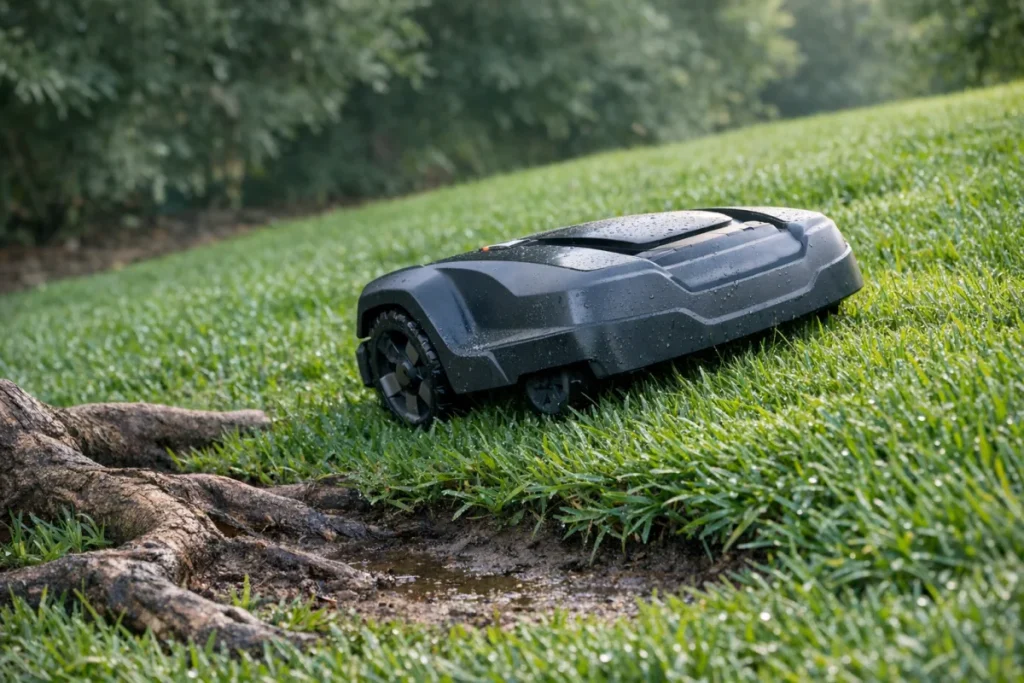
St. Augustine can be thick, spongy, and heavy with morning moisture. If your yard has slopes, dips, exposed roots, or soft sections, compare drive type and slope rating carefully. All-wheel drive can be useful on complex terrain, but it is not a cure for poor drainage or deep ruts.
5. Plan for blade care
Robot mowers cut by taking frequent, small clips, so blade condition matters. Dull blades can tear St. Augustine instead of cleanly clipping it, which is hard on thick warm-season turf. Add blade checks to your routine and use this robot lawn mower maintenance checklist when you are building a repeatable care schedule.
Mistakes that make high-cut mowers disappoint
- Buying by acreage alone: Yard size ratings do not tell you whether the mower can cut high enough for St. Augustine.
- Assuming 3 inches is close enough: It may be fine for some lawns, but many Southern homeowners keep St. Augustine taller for heat and shade tolerance.
- Letting the lawn get overgrown before setup: Start with the grass already close to target height. Robot mowers are maintainers, not brush cutters.
- Skipping obstacle cleanup: Toys, palm fronds, fallen branches, and garden hoses can interrupt mowing and damage blades.
- Ignoring borders: Thick St. Augustine runners near beds and sidewalks may still need occasional string trimming, even with a good robot mower.
A high maximum setting helps, but it does not remove the need to tune the mower after the first few weeks. St. Augustine can hide low spots, sprinkler heads, and soft soil under a thick canopy, so watch the lawn instead of trusting the app alone. If you see pale streaks, torn tips, or repeated wheel marks in the same turn areas, raise the deck if you can, reduce how long the mower runs in that zone, or adjust the boundary so it approaches the area from a cleaner angle.
- Not measuring the actual cut: Deck settings are a guide, not always a perfect field measurement. After a few mowing cycles, measure the grass with a simple ruler in several sunny and shaded spots to confirm the mower is leaving the height you expect.
- Running the same schedule in every zone: A hot front yard, a shaded side yard, and a damp backyard may not grow or recover at the same pace. High-cut St. Augustine often does better when zones are scheduled based on growth and traffic, not just square footage.
- Mowing through wet, spongy areas: Morning dew is common, but consistently wet soil can lead to tracking, slipping, and muddy turns
Reader follow-ups
Can a robot mower keep St. Augustine at 4 inches?
Yes, but only if the model’s published cutting-height range reaches 4 inches and the yard setup lets it mow consistently. A 4-inch setting is most useful when the mower can run often enough to remove only small amounts of grass at a time.
Is 3.6 inches high enough?
For some St. Augustine lawns, 3.6 inches can be workable. It is a tighter fit than 4 inches, so it is best for sunny, well-managed lawns where you are comfortable maintaining the turf in the mid-3-inch range.
Should I choose wire-free or boundary wire?
Cutting height comes first. After that, choose the boundary system that matches your property. Wire-free systems can reduce trenching and layout work, while boundary-wire systems can still make sense for defined yards where the installation is stable and predictable.
What to do next
Start with your turf height target, then eliminate every mower that cannot reach it. For St. Augustine and Bahia, a high-cut ceiling is not a luxury feature; it is a fit requirement. After that, compare the yard’s shape, slope, tree cover, passages, and maintenance demands.
If your shortlist still feels too broad, focus on three questions: Can it cut as high as the grass needs? Can it navigate the actual yard, not the brochure version? Can you keep up with blades, cleanup, and seasonal adjustments? When all three answers are yes, a robot mower becomes much less of a gamble and much more like a quiet helper that happens to enjoy mowing the lawn.