For homeowners with slopes, uneven transitions, and separate lawn areas, this Automower® 435 iQ AWD review comes down to fit: it is a current Husqvarna all-wheel-drive robotic lawn mower built for complex residential yards, not a maximum-acreage shortcut. The short verdict is straightforward: it is most compelling when traction, virtual boundaries, and terrain handling matter more than stretching coverage to the largest possible property.
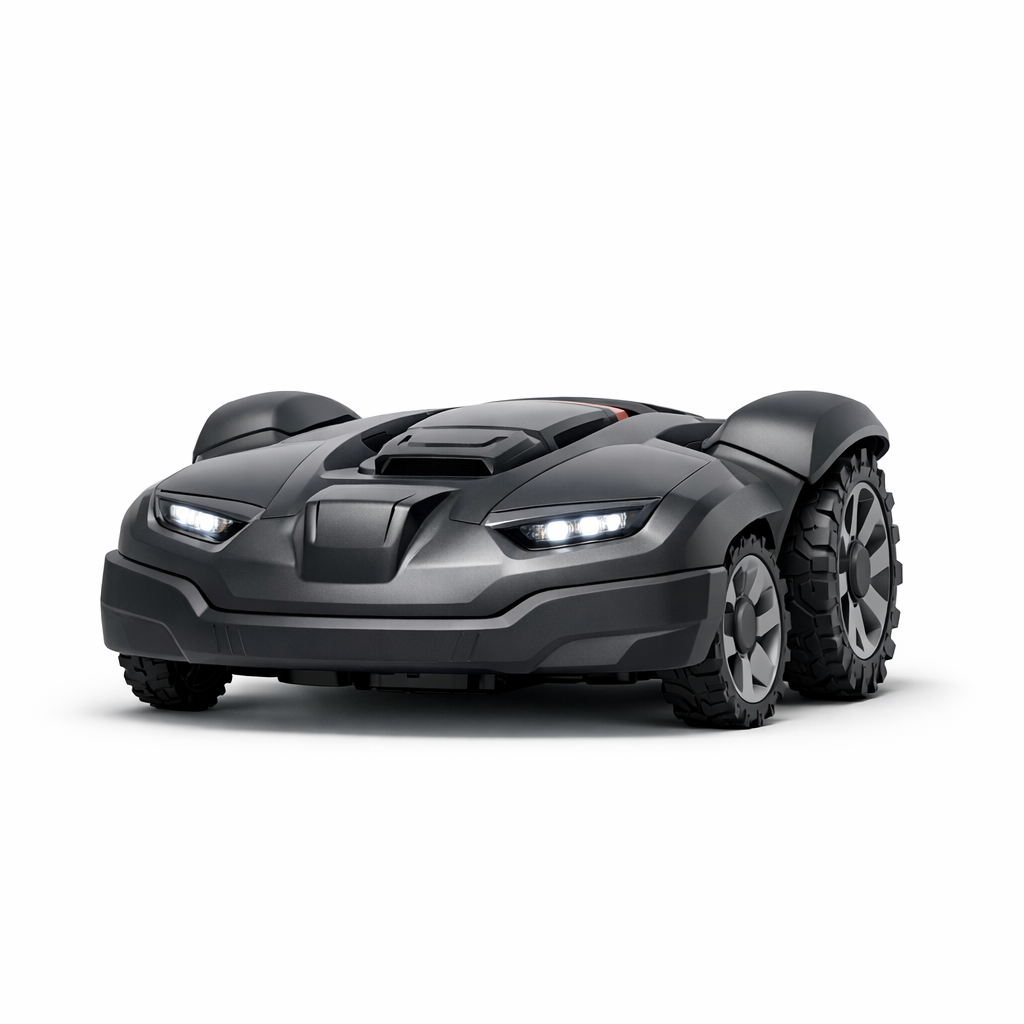
Husqvarna Automower® 435 iQ AWD
A smart premium fit for hilly residential lawns that need AWD traction and flexible boundary planning
The Automower® 435 iQ AWD is sold as a residential robotic mower package with the charging station, power supply, low-voltage cable, and EPOS® Reference station included for virtual-boundary operation. Setup and control run through the Automower® Connect app, so this is not just a mower body; it is a full yard system that needs a suitable charging location, reference-station placement, and a lawn layout that matches its rated capacities.
Product Details
- Product type: Husqvarna all-wheel-drive robotic lawn mower for residential grass cutting.
- Official SKU/article: AM435iQAWD US, CA 970 74 52-05.
- Rated lawn capacity: 1.3 acres with systematic mowing, or 0.9 acre with irregular mowing.
- Boundary support: Virtual wire and physical wire.
- Slope rating: Up to 70% inside the installation and 50% at the boundary.
- Typical mow and charge times: 145 minutes mowing on one charge and 45 minutes charging.
- Size and weight: 36.6 in long x 21.7 in wide x 13.1 in high; 39.9 lb.
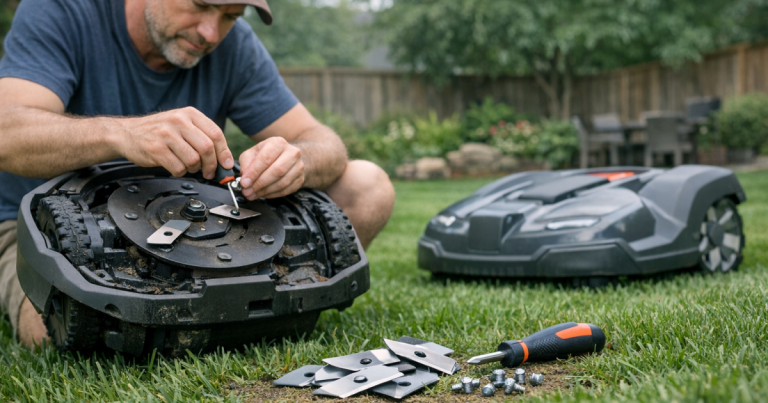
- Cutting setup: Three pivoting razor blades, 8.7 in cutting width, and an approximate cutting height range of 1.2 to 2.8 in.
- Connectivity: Bluetooth®, cellular, Automower® Connect, FOTA firmware updates, and smart home integration.
- Weather and noise: IPX4 protection index and 60 dB(A) perceived sound level.
Where this mower makes the most sense
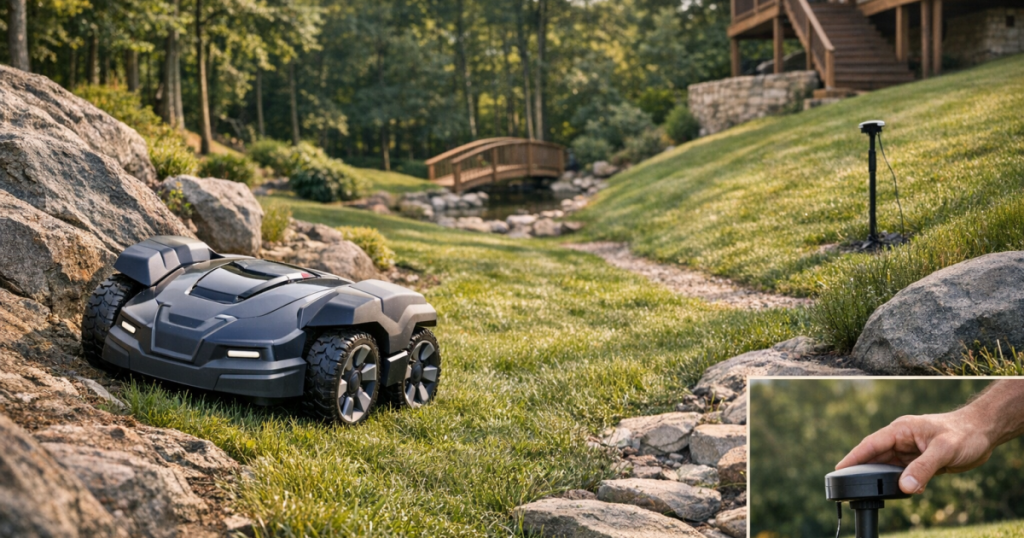
The standout reason to consider the Automower® 435 iQ AWD is the combination of all-wheel drive and Husqvarna’s EPOS virtual-boundary system. In practical yard terms, that points toward lawns with slopes, curved edges, transitions between front and back sections, and areas where burying or stapling a full perimeter wire would be inconvenient.
Its best fit is not simply “big lawn.” Husqvarna rates it for 1.3 acres in systematic mowing, while irregular mowing is rated at 0.9 acre. That difference matters. A relatively open, well-organized lawn can suit the higher systematic capacity better than a chopped-up yard with lots of beds, pinch points, and interrupted mowing zones. If your property is larger than that, this model should not be treated as a way to push beyond the stated range.
The better match is a demanding residential lawn within those limits: a sloped backyard, rolling side yard, uneven transitions near retaining walls, or a property where traction and route planning are bigger headaches than sheer acreage.
Boundary setup: flexible, but not magic
Husqvarna lists both virtual wire and physical wire support for this model. For many homeowners, the virtual-boundary side is the exciting part: no perimeter wire is needed for EPOS virtual boundaries, and the included EPOS® Reference station is part of that setup. That can be a major advantage if you want to avoid trenching, lawn staples, or reworking a buried wire when the landscape changes.
The trade-off is that EPOS is still a positioning system, not a camera-only or LiDAR-only mower. Husqvarna’s setup uses satellite technology and national cellular-network positioning for virtual-boundary operation. In plain English, your yard layout and reference-station placement matter. Houses, dense tree cover, tight side yards, and structures can all affect how suitable a virtual-boundary mower feels in day-to-day ownership, even when the mower itself is capable.
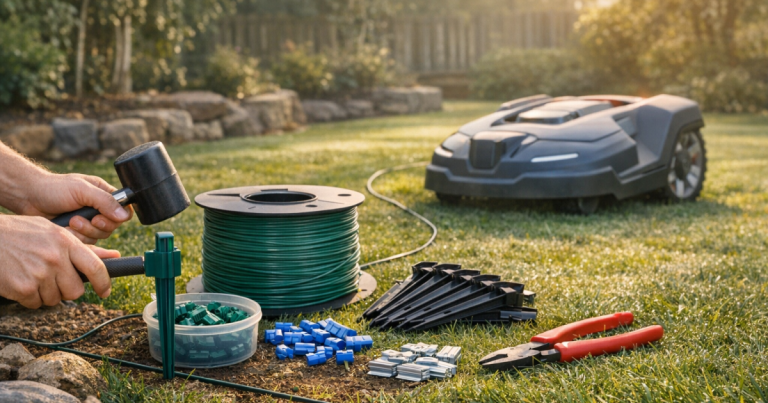
The physical-wire support is also worth noting because it gives this model more installation flexibility than a purely wire-free mower. If part of your property is awkward for satellite positioning, the supported boundary options give the system more ways to be planned around the actual yard rather than forcing one setup style everywhere.
For a specs-first view of this exact model in the site database, the Automower® 435 iQ AWD yard-fit page is a useful companion while you compare slope, boundary method, and mowing capacity.
Slope handling is the headline feature
The 70% maximum slope rating inside the installation is the clearest reason this mower stands apart from ordinary residential robot mowers. A steep rear lawn, a sloping side strip, or a rolling property can be where all-wheel drive shifts from a nice-to-have feature to the main reason to buy.
There is an important boundary detail, though: Husqvarna rates maximum slope performance at the boundary at 50%, not 70%. That affects how you think about mapping. A mower may be rated for steep work inside the cutting area, but edges, borders, and turnaround zones still need to be planned more conservatively. If your steepest pitch is right at a property edge, fence line, ditch, or landscaping border, that distinction matters more than the headline number.
The mower’s 39.9 lb weight and AWD drive type also shape the ownership picture. This is not a tiny patio-lawn mower; it is a substantial robotic mower intended for more challenging residential terrain. That weight can help explain why it belongs in the complex-yard conversation, but it also means setup choices, charging-station placement, and transport around steps or hardscape barriers deserve thought before purchase.
Cutting approach and lawn finish expectations
The cutting system uses three pivoting razor blades with an 8.7 in cutting width. That is typical robot-mower thinking: frequent, light trimming rather than occasional heavy mowing. The best expectation is a lawn that is maintained in small increments, not a machine that replaces a walk-behind mower for knocking down tall, overgrown grass after weeks of neglect.
The approximate cutting height range is 1.2 to 2.8 in. For many maintained lawns, that gives useful adjustment room. For homeowners who prefer a taller summer cut, especially in hot or dry parts of the US, the upper end is the number to pay attention to. The mower can only fit your lawn-care style if its height range matches how you actually want the turf to sit.
The 145-minute typical mow time and 45-minute typical charging time suggest a mower built for sustained cycles across a residential schedule. Still, the more meaningful buying point is the rated acreage in the right mowing mode. Runtime is useful context; capacity and yard complexity are the better decision anchors.
App control, connectivity, and ownership workflow
Automower® Connect is part of the setup and control experience, with Bluetooth® and cellular connectivity listed for this model. Husqvarna also lists FOTA firmware updates and smart home integration. For a homeowner, that means this mower belongs in the connected-yard category: setup, adjustments, and ongoing control are not limited to buttons on the mower itself.
The upside is convenience. The more zones, slopes, and boundary decisions your yard has, the more useful app-based control can become. The trade-off is dependency: if you specifically want a robot mower that avoids cellular-network positioning for virtual-boundary operation, this model is not the cleanest fit. Its EPOS approach is part of what makes it attractive, but it is also part of the buying decision.
Weather, cleaning, and maintenance reality
Husqvarna lists an IPX4 protection index and rain operation for this model, which supports normal outdoor robot-mower use. The practical limit is cleaning: the underside is not approved for hose washing, so debris removal is a brushing job rather than a spray-it-clean routine.
Blade maintenance is another ownership point to factor in. Husqvarna describes the included one-year blade supply based on 500 to 1,000 mowing hours per blade set, and actual blade life depends on lawn size, grass type, and terrain. A smoother, cleaner lawn is easier on blades than one with lots of sticks, exposed roots, seed pods, or abrasive debris. That does not make maintenance difficult, but it does make “set it and forget it forever” the wrong expectation.
The main trade-offs before you buy
- It is not the large-property pick above its rating. The 1.3-acre systematic and 0.9-acre irregular capacities are real decision limits.
- EPOS setup matters. Virtual boundaries reduce wire work, but the mower still relies on Husqvarna’s satellite and cellular-network positioning approach.
- Boundary slopes have a lower rating. The 70% slope figure applies inside the installation; boundary areas are rated up to 50%.
- Cut height tops out at about 2.8 in. That can be a deciding factor for homeowners who prefer a taller cut.
- Cleaning is brush-based underneath. IPX4 does not mean the underside is hose-wash approved.
If those trade-offs line up with your yard, the Automower® 435 iQ AWD is a persuasive premium choice. If they do not, stepping sideways to another Husqvarna iQ model or another boundary approach may make more sense than forcing this mower into the wrong lawn.
How it compares within a yard-fit shortlist
This model should be compared first by terrain, then by acreage. A flatter, more open large lawn points the buying conversation in a different direction than a smaller but steeper, more complicated property. The Automower® 435 iQ AWD is strongest when AWD traction and virtual-boundary flexibility solve a real yard problem.
For broader shortlisting, the Robot Lawn Mower Yard Fit Comparison lets you compare models by yard size, navigation approach, boundary method, slope capability, drive type, cutting dimensions, weather handling, and ownership features. That is the smarter next step if you are weighing this mower against other Husqvarna iQ options.
Verdict
The Husqvarna Automower® 435 iQ AWD is an excellent fit for complex residential lawns where steep terrain, AWD traction, and virtual-boundary planning are the reasons you are shopping in the first place. Its strongest case is a hilly, awkward, under-1.3-acre property where a standard robot mower feels underprepared. The limitations are meaningful but manageable: capacity depends on mowing mode, EPOS setup is central to the experience, boundary slopes are rated lower than interior slopes, and underside cleaning should be done with a brush rather than a hose. For the right yard, it is one of the most compelling current choices in Husqvarna’s residential lineup. Score: 8.9/10.
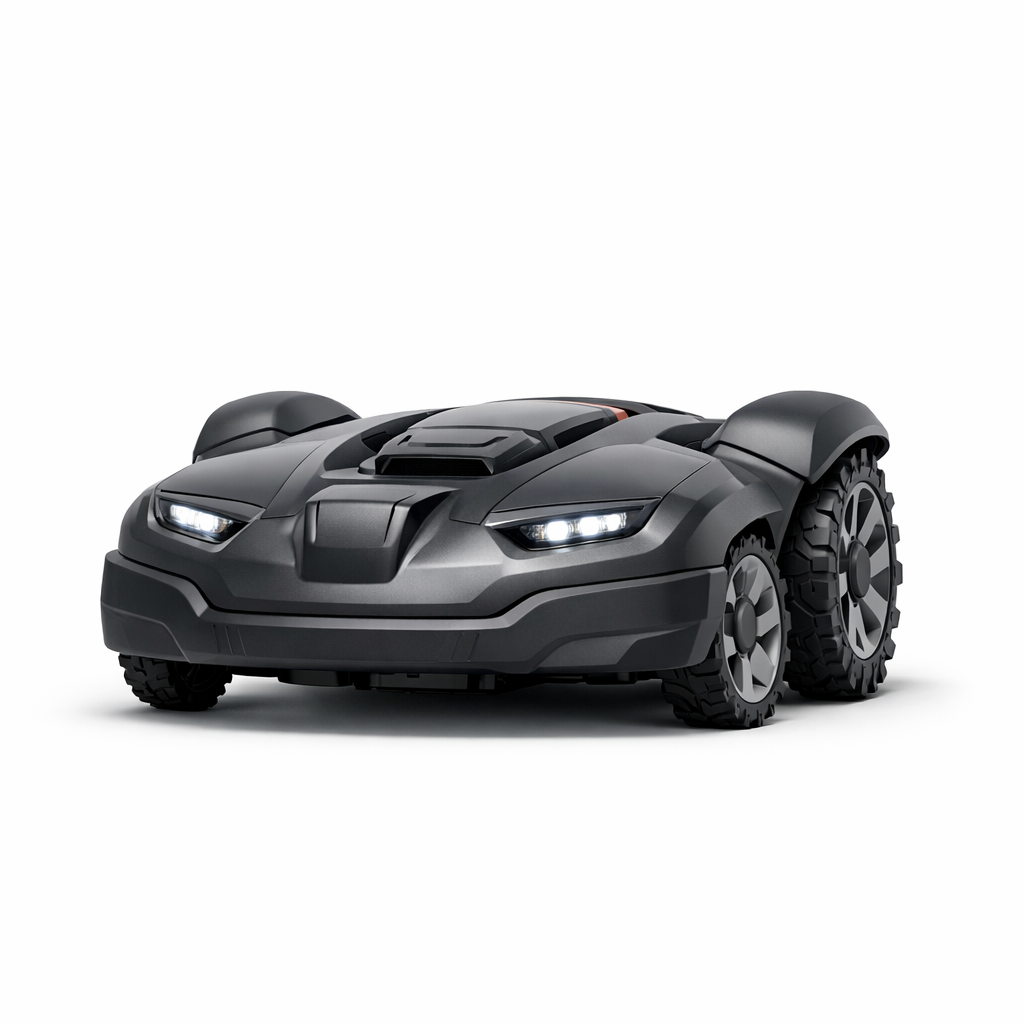
Husqvarna Automower® 435 iQ AWD
A smart premium fit for hilly residential lawns that need AWD traction and flexible boundary planning
You might also like: Automower® 440 iQ.