The Husqvarna Automower® 420 iQ review starts with a practical question: do you want wire-free mapping, but still want the reassurance of a physical boundary option if your yard is tricky? This review covers the Husqvarna Automower® 420 iQ 970 72 75-01, a current US-market residential robot lawn mower with hybrid virtual and physical boundary capability.
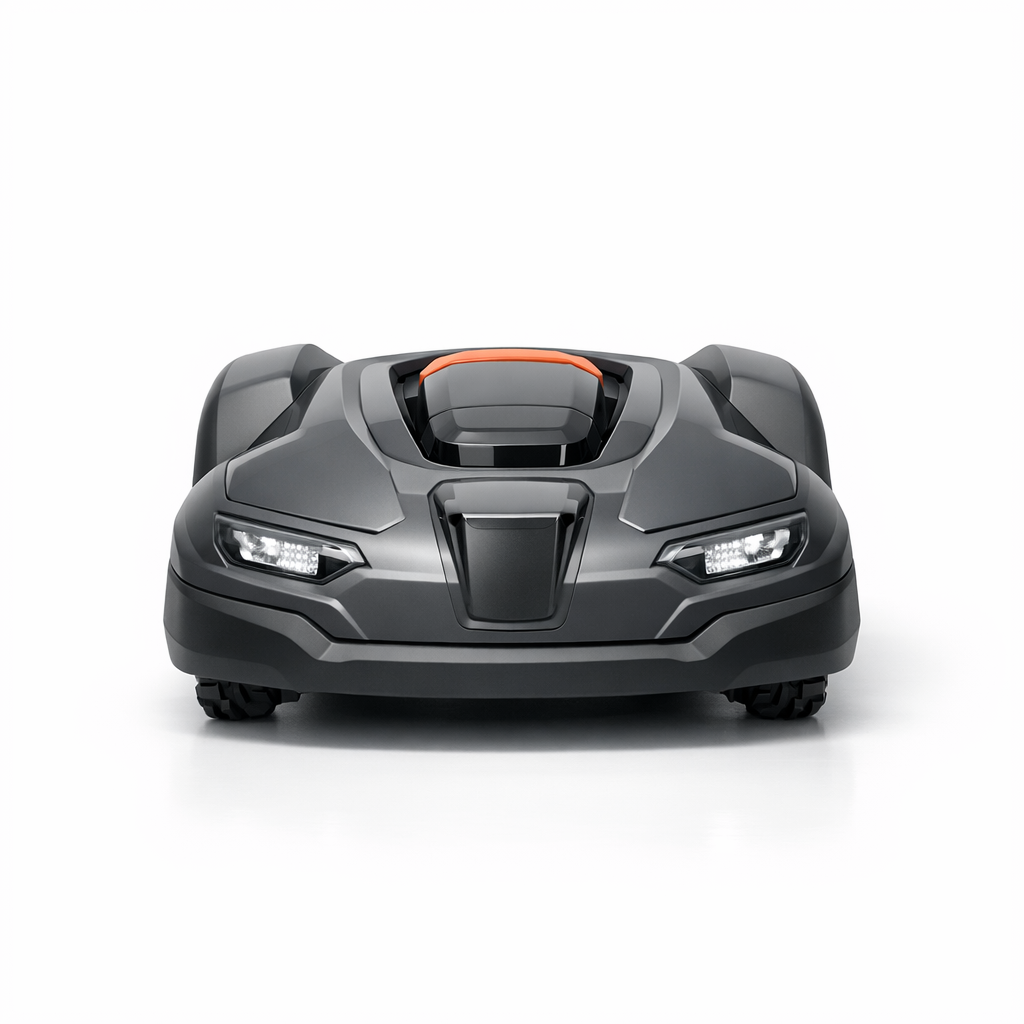
Husqvarna Automower® 420 iQ
A strong one-acre pick for homeowners who want virtual mapping flexibility with a physical-wire fallback
Its appeal is not just that it can map a yard without a full perimeter wire. It is that Husqvarna has paired EPOS satellite positioning with Husqvarna Cloud or the included reference station, onboard radar, multi-zone planning, and the option of physical wire in the US/CA configuration. For a homeowner with a one-acre lawn, that mix gives the mower a wide lane: modern setup where conditions suit it, with a more traditional boundary method still on the table.
Product Details
- Recommended yard size: 1 acre.
- Navigation: EPOS satellite positioning with Husqvarna Cloud or included reference station, plus onboard radar.
- Boundary method: Virtual wire with EPOS mapping; physical wire is also listed for the US/CA configuration.
- Drive type: Two-wheel drive.
- Maximum slope: 45%.
- Cutting width: 9.4 in.
- Cutting height range: 1–4 in.
- Zones: Supports multiple work areas, stay-out zones, and transport paths in the app.
- Weather handling: Listed to operate rain or shine, with an IPX5 mower rating and hose-washable cleaning.
- Theft deterrence: GPS theft tracking, GeoFence, PIN code, alarm, lift sensor, and tilt sensor.
For a structured spec comparison against other current models, the Automower® 420 iQ yard-fit profile is the cleanest next stop.
Where the 420 iQ makes the strongest case
The headline fit is a lawn up to 1 acre. That is an important middle ground in the US market: bigger than the small suburban lots where compact models make sense, but not the kind of sprawling property that pushes shoppers toward the largest premium machines. The Automower® 420 iQ sits in the useful zone for homeowners who have enough grass for manual mowing to feel like a weekly tax, but not so much acreage that they need to jump straight to a two-acre-class robot.
The 1-acre rating also frames expectations. A robot mower is not a conventional mower that clears everything in one loud session. It works by making frequent smaller cuts and maintaining the lawn over time. The 9.4 in cutting width fits that maintenance style: it is not trying to behave like a wide walk-behind deck, and that is the point. The practical question is whether the mower can keep up with the amount of grass you ask it to maintain, not whether it looks impressive on a spec sheet.
The cutting height range of 1–4 in is also well suited to many US lawn preferences. The upper end gives breathing room for homeowners who do not want the lawn scalped low, while the lower end leaves flexibility for tighter turf styles. The review judgment here is straightforward: the Automower® 420 iQ is best judged as a maintenance mower for a properly matched lawn, not as a rescue tool for overgrown grass.
Hybrid boundaries are the real differentiator
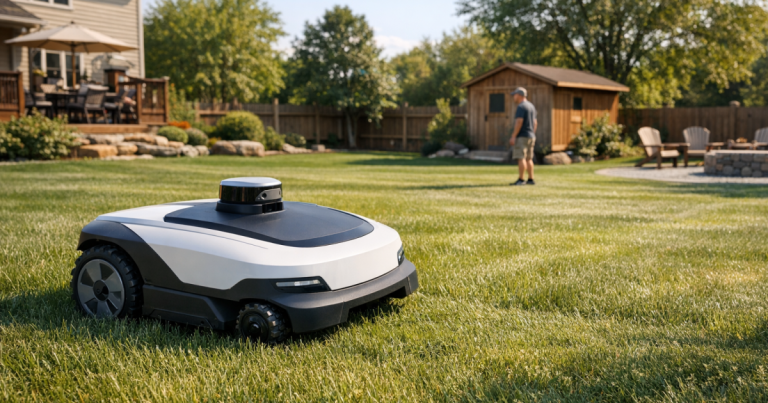
Virtual boundaries are one of the main reasons homeowners get excited about newer robot mowers. Skipping a full perimeter wire can make setup feel less invasive, and it can make future yard changes less of a headache. The Automower® 420 iQ uses EPOS mapping for virtual wire operation, with satellite positioning through Husqvarna Cloud or the included reference station. That is a meaningful step away from the old-school “bury wire first, ask questions later” approach.
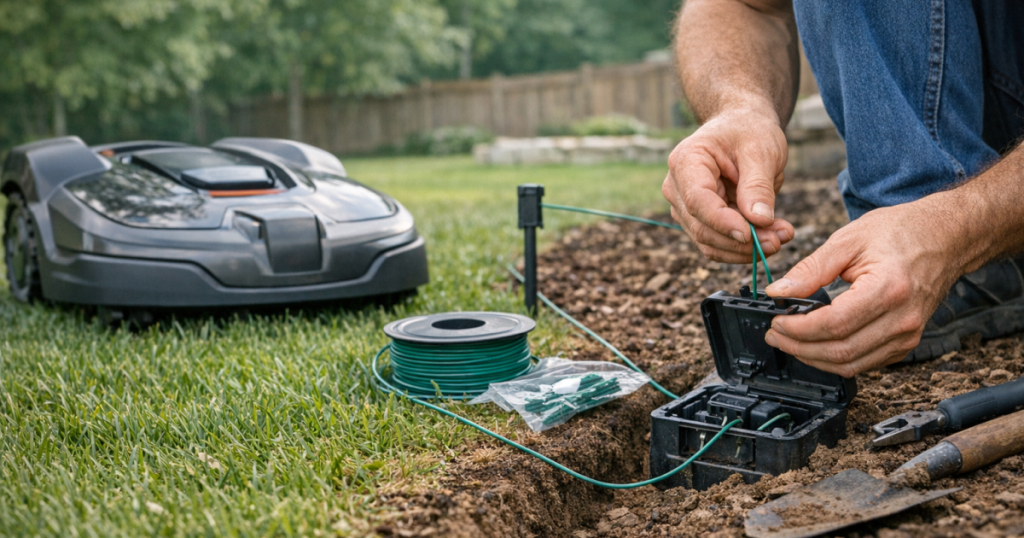
The physical-wire option is just as important. Some yards are clean, open, and friendly to virtual mapping. Others are a greatest-hits album of tree cover, side-yard pinch points, odd borders, detached work areas, and landscaping that was clearly designed before robot mowers had a vote. For those layouts, having physical wire listed for the US/CA configuration gives this model a practical fallback that pure wire-free machines do not offer.
That does not mean every owner will use both methods. It means the buying risk is lower for a yard that is not a perfect rectangle. A homeowner can be attracted to virtual setup without betting the entire purchase on one boundary style. In my view, that flexibility is the single most persuasive reason to consider this model over a mower that is strictly virtual-only or strictly wire-based.
Two-wheel drive, 45% slopes, and realistic terrain expectations
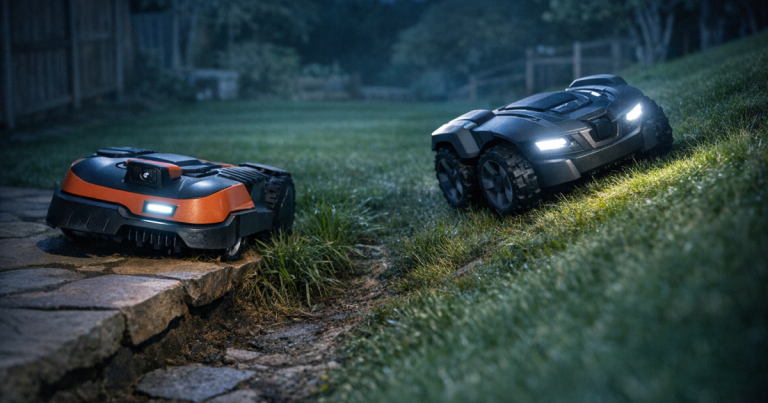
Husqvarna lists the Automower® 420 iQ as a two-wheel-drive mower with a maximum slope rating of 45%. Those two facts need to be read together. The slope number is strong for many residential lawns, but the drive type still matters when the grass is wet, the ground is uneven, or a slope ends near an edge, bed, or rough transition.
This is where yard fit beats brand loyalty. A two-wheel-drive mower can make excellent sense on rolling lawns, moderate hills, and properties where the steep sections are not also loose, rutted, or cluttered. If your yard has steep banks mixed with exposed roots, soft soil, or awkward turn zones, an all-wheel-drive model may be the more comfortable direction. The Automower® 420 iQ’s rating is encouraging, but it does not turn every hill into a fairway.
Onboard radar adds another layer to the navigation package. The supplied product details do not make this a hands-on obstacle test, so it is best understood as part of the mower’s navigation and awareness toolkit rather than a promise that the lawn can be left covered in toys, branches, and garden clutter. Robot mowers still reward tidy habits. The less chaos in the mowing area, the less drama the owner inherits.
Zones, stay-out areas, and transport paths are more than app extras
Multi-zone support is one of the most useful features on the Automower® 420 iQ because real yards rarely behave like one simple mowing room. The mower supports multiple work areas, stay-out zones, and transport paths in the app. That gives the owner a way to separate the open front lawn from a fenced back section, keep the mower away from a new planting bed, or guide it between areas without treating every strip of grass the same.
This is where app-based planning becomes a real ownership feature rather than a novelty. Stay-out zones are helpful for seasonal changes: a temporary project area, a fragile patch, or a spot where the dog has declared war on the turf. Transport paths matter when the mower needs to move between work areas without cutting along the entire route. The benefit is not that the app is clever; it is that the lawn can be divided in a way that reflects how the property actually works.
The trade-off is that flexible mapping still requires thoughtful setup. A mower with zones is only as useful as the plan you give it. Homeowners who enjoy dialing in schedules and boundaries will get more from this model than someone who wants to place a robot on the grass and never think about the yard again. Full autonomy is still not a personality trait robots have earned.
Weather handling and upkeep
Husqvarna states that the Automower® 420 iQ operates rain or shine, and lists an IPX5 mower rating with hose-washable cleaning. For a US homeowner, that is a practical ownership plus because mowing schedules often collide with spring showers, humid summers, and fast-growing grass. A mower that is designed for wet-weather operation reduces the need to micromanage every cloudy afternoon.
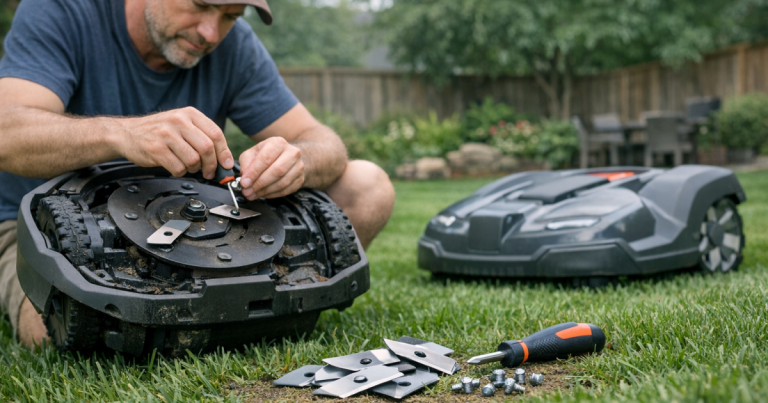
The hose-washable cleaning detail is also useful, provided it is treated as upkeep rather than magic. Robot mowers live close to the ground. Grass buildup, dust, and wet clippings are part of the job. A washable design makes routine cleaning less fussy, but it does not remove the need for blade checks, underside cleaning, and seasonal care. For a broader ownership rhythm, the robot lawn mower maintenance checklist pairs well with this kind of model.
The theft-deterrence package is another strong point on paper: GPS theft tracking, GeoFence, PIN code, alarm, lift sensor, and tilt sensor are all listed. These features do not replace common-sense storage and placement decisions, but they do address a real concern for any robot mower that spends its working life outside. If your front lawn is open to the street, deterrence features move from “nice to have” to part of the ownership calculation.
Where another mower could make more sense
The Automower® 420 iQ is not the obvious pick for every yard. If your property is well below a quarter acre, its one-acre capability may be more mower than you need. A smaller machine can be easier to justify when the mowing area is simple, flat, and compact.
At the other end, homeowners with larger properties may want to compare the Husqvarna Automower® 440 iQ class instead, since that model line is positioned for bigger lawns. If the main pain point is extreme terrain rather than acreage, an all-wheel-drive mower may also deserve a closer look. The 420 iQ’s 45% slope rating is useful, but two-wheel drive is still a defining part of its personality.
The best-fit buyer is the homeowner with a medium-to-large residential lawn, a layout that benefits from zones, and enough uncertainty around boundary style that hybrid flexibility feels valuable. If you already know you want a pure wire-free mower and your yard is open and uncomplicated, the physical-wire capability may not sway you. If you know you want the predictability of a fully wired setup, the EPOS side may be less important. The Automower® 420 iQ is strongest in the middle: the yard where flexibility is not a luxury, but a sensible hedge.
Verdict
Score: 9.1/10. The Automower® 420 iQ earns its recommendation through three things: a 1-acre residential fit, a genuinely useful hybrid boundary approach, and enough zone control to handle the way many US yards are actually laid out. The two-wheel-drive design keeps it from being the default answer for the roughest or steepest properties, but the 45% slope rating, EPOS mapping, physical-wire option, weather handling, and theft-deterrence features make it a very strong candidate for homeowners who want modern robot mowing without locking themselves into one setup path.
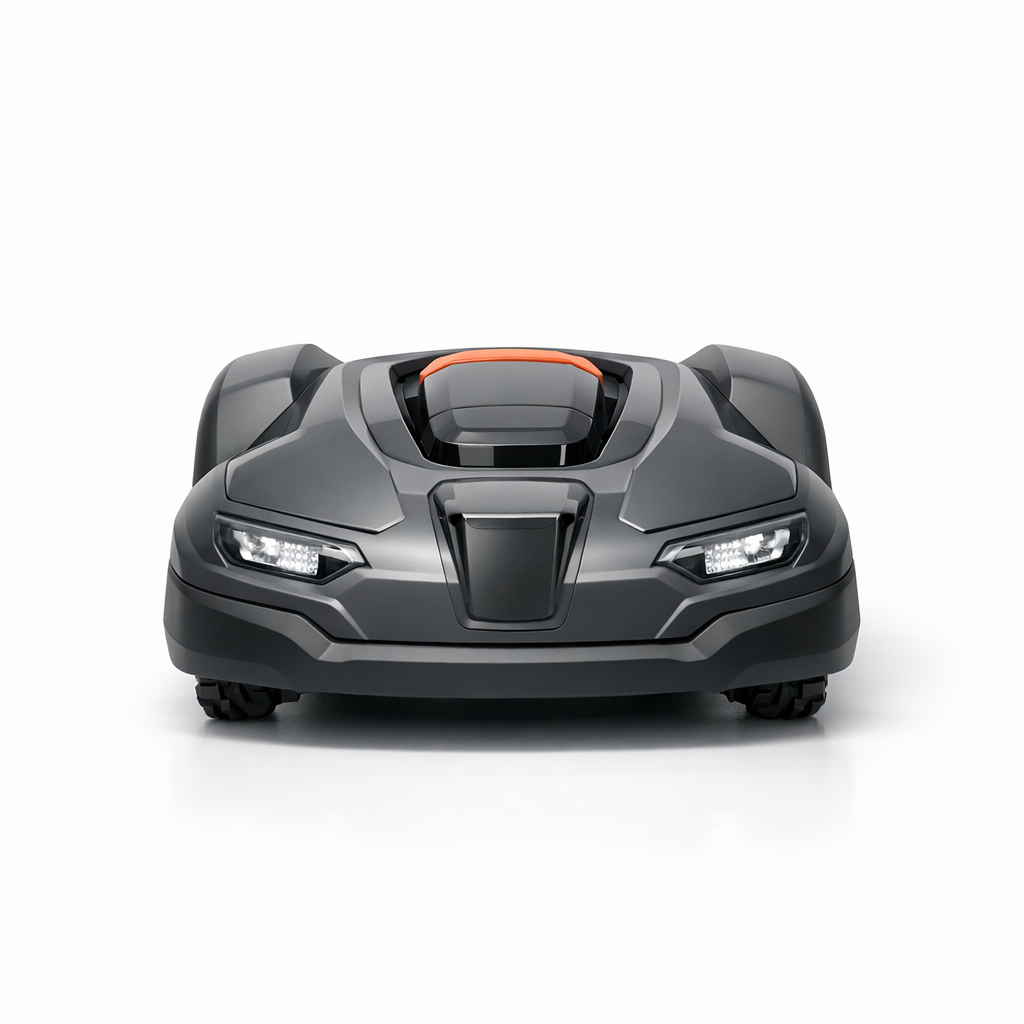
Husqvarna Automower® 420 iQ
A strong one-acre pick for homeowners who want virtual mapping flexibility with a physical-wire fallback
You might also like: How to Restart Your Robot Mower After Winter Storage.