The Segway Navimow i215 LiDAR review starts with a simple yard-fit question: do you want wire-free mowing without installing a boundary wire or setting up an external RTK antenna? For the right lawn, that is the mower’s clearest appeal. It is a current US-market residential robot lawn mower built around integrated LiDAR, vision sensing, app setup, and an included charging station rather than a buried perimeter wire.
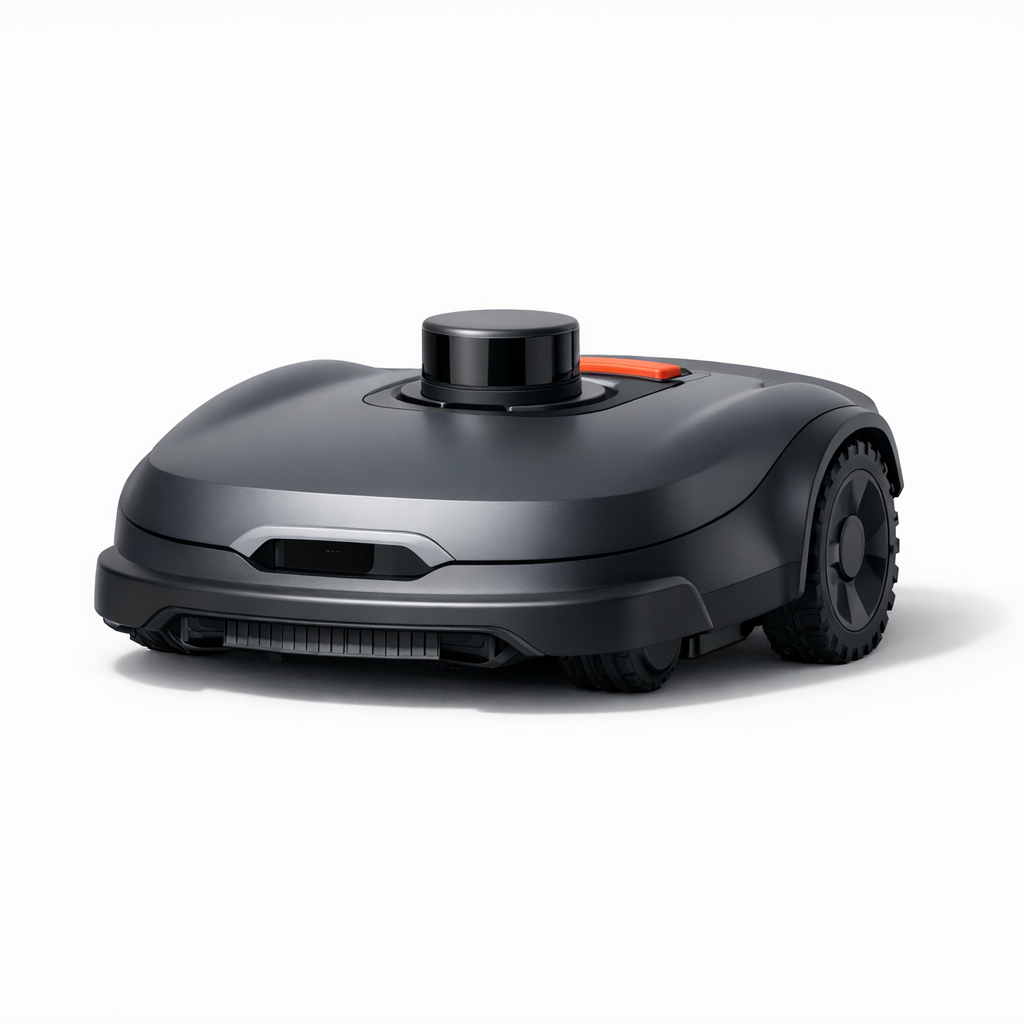
Segway Navimow i215 LiDAR
A strong wire-free choice for flatter small-to-medium lawns where antenna-free mapping matters more than AWD
The quick verdict: this is a strong option for flatter small-to-medium lawns where simple mapping and antenna-free setup matter more than all-wheel drive, extreme slope handling, or maximum acreage.
Product Details
- Product: Segway Navimow i215 LiDAR
- Type: Wire-free LiDAR and vision robot lawn mower
- US direct price: $1,599.00
- Recommended lawn size: 0.37 acre
- Maximum supported mowing area: Up to 0.44 acre, depending on yard layout, shape, and complexity
- Navigation and obstacle sensing: High-resolution solid-state LiDAR plus vision dual fusion
- Required for use: Included charging station and power supply, plus the Navimow app for activation, setup, guidance, and remote control
The yard fit is narrow in a useful way
The Navimow i215 LiDAR is not trying to be a giant-property mower. Its practical sweet spot is a residential lawn around the 0.37-acre recommendation, with room up to the 0.44-acre maximum when the yard shape, layout, and complexity work in its favor.
That distinction matters. A simple open rectangle can be easier for any robot mower than a yard chopped into side strips, fenced sections, narrow pass-throughs, and separate islands of grass. Segway Navimow states that the maximum supported area depends on layout, shape, and complexity, and that all zones share one total map limit across the yard. In plain terms, a lawn with several mapped areas can use up the same capacity budget faster than a single clean mowing area.
For many US suburban homes, this is exactly the right scale: not a postage-stamp yard, not a 2-acre property, but a front-and-back lawn where weekly mowing is annoying enough to automate. It becomes less compelling if you are already near the upper limit and also have a complicated yard with disconnected grass sections, tight side yards, and lots of route planning.
Why antenna-free LiDAR changes the setup conversation
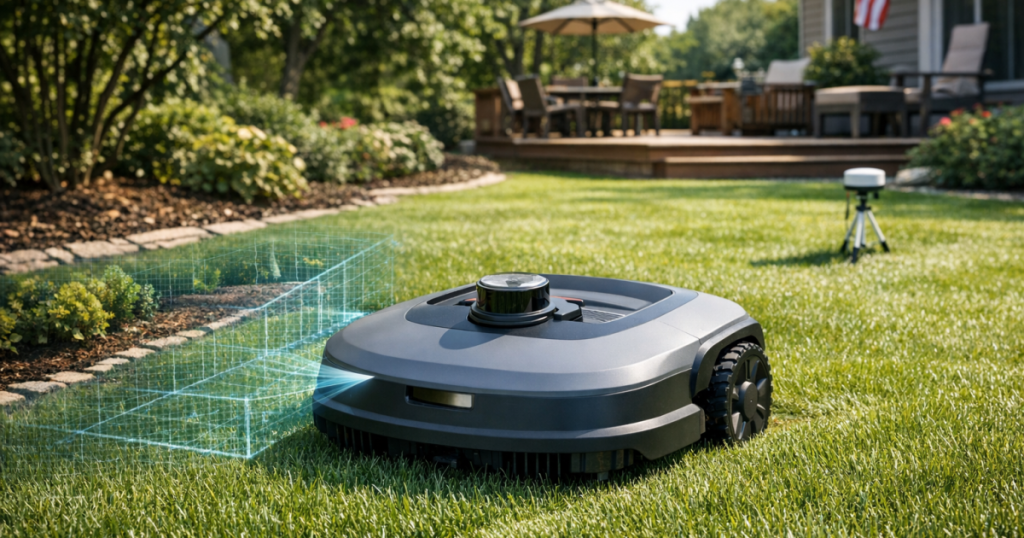
The headline feature is the mower’s LiDAR-and-vision approach. Segway Navimow describes the system as high-resolution solid-state LiDAR plus vision dual fusion, scanning about 200,000 points per second and detecting more than 200 object types with 0.4 inch precision. Those are manufacturer claims, not hands-on test results here, but they explain the design goal: let the mower understand its surroundings without a boundary wire or separate RTK antenna setup.
That matters most for homeowners who have been put off by traditional robot mower installation. A boundary-wire system can work well, but it asks you to plan the perimeter, protect the wire, handle repairs if it gets cut, and think carefully about every bed edge and driveway transition. RTK-style wire-free systems remove the wire, but the antenna placement can become its own project when houses, trees, and rooflines interfere with the signal.
The Navimow i215 LiDAR takes a different route by putting its primary mapping and sensing hardware on the mower itself. The buying implication is simple: it is appealing when your goal is a cleaner, less hardware-heavy install. It is not a magic bypass for every difficult property, but it does remove two common friction points: burying or staking boundary wire and positioning an external antenna.
If your main worry is tree cover and inconsistent satellite reception, the broader guide to robot mowers for tree-covered yards with weak GPS is a useful next step after reading this review, because yard structure still matters even when the mower does not depend on a separate antenna.
Obstacle sensing sounds promising, but keep expectations realistic
Obstacle sensing is one of the most important decision factors for this mower. The stated LiDAR and vision dual-fusion setup is designed to help the mower identify objects in its working area, and Segway Navimow’s 200-plus object-type claim is a meaningful part of the product’s pitch.
For real yards, the implication is less about perfection and more about resilience. A robot mower that can better interpret its surroundings should be easier to live with around common lawn clutter such as patio edges, landscaping shapes, and objects that occasionally end up on the grass. Still, no homeowner should treat obstacle detection as permission to leave hoses, toys, branches, or pet items scattered across the mowing area. Robot mowers are at their best when the lawn is reasonably prepared and the route is predictable.
This is also where the i215 LiDAR’s positioning feels modern without becoming gimmicky. The technology is there to reduce installation friction and improve navigation confidence, not to eliminate owner involvement. You still need sensible zone planning, clean transitions, and a yard that stays within the mower’s documented limits.
Slope limits make it better for flatter lawns
The Navimow i215 LiDAR is not an all-wheel-drive robot mower. For the US i Series, this model is positioned with rear-wheel drive, and Segway Navimow’s own FAQ says the i215 LiDAR is more suitable for flatter and larger lawns than the i2 AWD Series.
The documented mowing limits reinforce that point. It should not mow areas steeper than 45% / 24° inside the working area, or 25% / 14° at the boundary. That boundary number is important because edges are where robot mowers often need the most predictable traction and positioning. A slope that looks manageable in the middle of the yard can become a poor fit if the steepest portion sits along a fence line, curb, ditch, or landscaped border.
If your lawn has rolling grade changes, the i215 LiDAR can still make sense within those limits. If your problem area is a steep backyard bank, a sloped side strip, or a rough transition from lawn to driveway, an AWD mower belongs on the shortlist instead. For example, the Automower® 435 iQ AWD is a more relevant comparison point for homeowners prioritizing all-wheel-drive traction on complex terrain.
Weather, grass condition, and capacity are connected
The i215 LiDAR’s area rating should be read alongside the mowing-condition limits. The manual states that working capacity is smaller when grass is wet or long, and larger on flatter lawn surfaces. That is not unusual for robot mowers, but it is especially important if your lawn is near the upper end of this model’s supported range.
Robot mowers maintain a lawn best through frequent light cutting. They are not designed to rescue tall, neglected grass in the way a walk-behind mower might. If you regularly let the lawn grow long between cuts, the mower’s effective capacity can shrink, and the yard may need more preparation before automation feels smooth.
Weather also matters. The manual warns not to mow in bad weather such as heavy rain, heavy fog, thunderstorms, or snow. That does not make the mower fragile; it sets realistic boundaries for autonomous outdoor equipment with blades, sensors, and traction needs. In a US spring with fast growth and frequent storms, schedule flexibility and lawn condition will influence how consistently the mower keeps up.
App dependence is part of the ownership model
The Navimow i215 LiDAR is a standalone robot lawn mower for its primary job, but it is not a no-app appliance. The included charging station and power supply are required for charging, and the Navimow app is required for activation, setup, guidance, and remote control.
That is normal for modern wire-free robot mowers, but it affects who will enjoy owning one. If you are comfortable walking the mower through setup in an app and using guided controls to manage the mowing area, the workflow fits. If you want a purely button-driven machine with no phone involvement, this product is not built around that ownership style.
The upside is that app-based setup is part of what allows wire-free mapping to feel approachable. Instead of physically defining the yard with a perimeter wire, you define the working area through the mower’s guided setup process. The trade-off is that the phone becomes part of the system rather than an optional extra.
Maintenance and accessories: keep the base package clear
The core purchase includes the mower’s cutting system, battery, charging station, and app-based control path. Segway Navimow also lists optional accessories such as MowGate, Garage M, Blade Assembly Plus, and a replacement cutting disk, but those should be treated as accessories rather than required base equipment.
The most important ownership note is simpler: blades are consumable items and are not covered by the limited warranty. That means replacement blades should be viewed as a routine operating cost, not a defect issue. For any robot mower, sharp blades help keep cuts cleaner and reduce strain on the system, especially during fast-growth periods.
One noise-related caveat also deserves a plain-English reading. The noise figure for the mower is measured under laboratory no-load conditions without cutting. That does not mean it will be loud in normal use, but it does mean the published figure is not the same as a backyard measurement while cutting real grass.
Value at $1,599
At $1,599.00 direct in the US, the Navimow i215 LiDAR sits in a serious purchase range for homeowners who want to automate regular mowing rather than experiment with a novelty gadget. The value case depends heavily on whether its wire-free, antenna-free design solves a real problem for your yard.
If your lawn is within the recommended scale, relatively flat, and you dislike the idea of boundary-wire work, the price buys a cleaner setup concept and a sensor package that is central to the product’s identity. If your lawn needs AWD, has steep boundaries, or pushes beyond the area limit once all zones are mapped, the same money is better aimed at a mower built for those constraints.
For a nearby wire-free alternative in the same general small-to-mid lawn conversation, the Landroid Vision Cloud ½ Acre (WR320.1) is worth comparing by yard size and navigation approach. The right choice comes down less to brand preference and more to which system better matches your lawn shape, obstacles, slope, and setup tolerance.
Verdict
The Navimow i215 LiDAR is a very good fit for homeowners with flatter small-to-medium lawns who want wire-free mowing without boundary wire or a separate RTK antenna. Its LiDAR-and-vision approach gives it a clear identity, and the 0.37-acre recommended size makes sense for many suburban yards. The trade-offs are equally clear: app dependence, documented slope limits, reduced capacity in wet or long grass, and a total map limit that matters on multi-zone lawns. It is easy to recommend for the right property, but it is not the mower to stretch beyond its terrain or acreage comfort zone. Score: 8.6 out of 10.
Segway Navimow i215 LiDAR
A strong wire-free choice for flatter small-to-medium lawns where antenna-free mapping matters more than AWD