Summer is when a robot mower earns its keep, but it is also when a sloppy robot mower summer heat schedule can work against the lawn. The goal is not to mow more aggressively; it is to keep growth even while avoiding the hottest, driest, most stressful parts of the day.
Think of the mower as a light-touch maintenance tool. In hot weather, short runs during cooler windows usually beat long midday sessions that leave the grass and mower both working harder than they need to.
The big picture
The best summer schedule for most US lawns is simple: mow in the cooler part of the morning after heavy dew has lifted, or in the early evening after the strongest sun has passed. Avoid midday and late-afternoon mowing during heat waves, do not mow wilted or drought-stressed grass, and keep irrigation or rain from overlapping with mower runs.
Use this as a starting point, then adjust for your grass type, shade, soil, and mower capacity:
- Mild northern or coastal summers: Schedule shorter runs between about 7 a.m. and 10 a.m., or early evening if the lawn is dry enough.
- Hot, humid regions: Use morning windows after dew begins to dry, or early evening. Skip steamy afternoons when the turf is already under pressure.
- Hot, dry regions: Favor early morning, and pause more readily when the lawn is browning, brittle, or under watering restrictions.
- Active drought conditions: Reduce mowing frequency sharply or pause mowing until growth resumes. A robot mower does not need to trim grass that is barely growing.
Step 1: Check the mower’s heat behavior before changing everything
Before you rebuild the schedule, look at what the mower is already telling you. Some models may pause, return to the charging station, or show a temperature-related warning when conditions are too hot for normal operation. Treat that as useful feedback, not a nuisance to override.
Check the owner’s manual or app settings for operating temperature guidance, rain behavior, charging limits, and any automatic weather-related features. Manufacturer limits vary, so do not assume that a schedule that works for one mower is right for another.
If the mower has been stopping repeatedly in the afternoon, the fix is usually not a sharper blade of persistence. Move the work earlier or later, reduce the length of each mowing block, and give the machine more idle time during peak heat.
Step 2: Move mowing away from the harshest heat
Midday mowing is the first habit to cut. Grass loses moisture faster under strong sun, and fresh cuts can make stressed turf look worse. Robot mowers take tiny clippings, but they are still cutting living grass; timing matters.
A reliable summer template
- Morning window: Start after heavy dew has mostly lifted, often around 7 a.m. to 10 a.m. depending on your yard.
- Evening window: Use the period after the most intense heat, often around 6 p.m. to 9 p.m., as long as the lawn is not wet and the yard is clear.
- Avoid: Noon through late afternoon during very hot spells, especially on exposed lawns with thin shade.
- Use caution overnight: Night runs can avoid heat, but they are not ideal if your yard has pets, toys, poor visibility, or frequent wildlife activity.
If your mower cannot finish the whole property inside one cool window, split the work. A front yard block in the morning and a backyard block in the evening is usually easier on the lawn than one long afternoon grind.
Step 3: Shorten sessions instead of letting the lawn get tall
Robot mowers work best when they remove a small amount of grass at a time. In summer, that still matters. The adjustment is not necessarily to mow only once a week; it is to reduce heat exposure while keeping cuts light.
For a fast-growing lawn, keep frequent short sessions in cooler windows. For a slow-growing or drought-stressed lawn, reduce the number of mowing days. The schedule should follow actual growth, not the calendar you set in May and forgot about. The grass does not care about your app routine, which is rude but true.
A useful weekly pattern is to start with three to five short mowing days in cooler weather and cut back during heat waves. If the mower is leaving no visible clippings, the grass is upright, and the color looks steady, the rhythm is probably close. If the lawn looks gray-green, footprints linger, or blades fold instead of springing back, pause mowing and water according to local rules and turf needs.
Step 4: Raise the cutting height when the lawn shows stress
Raising the cutting height is one of the simplest summer adjustments. Taller grass can shade the soil, reduce moisture loss, and give the plant more leaf area to recover from heat. You do not need a dramatic change; one height step can be enough to soften the pressure.
Cool-season lawns often benefit from being kept taller in summer. Warm-season lawns are more varied. Bermuda, for example, is commonly maintained lower than many other grasses, but that does not mean every robot mower or bumpy yard can scalp it cleanly in August. If Bermuda is your main turf, compare mower fit and height expectations in our guide to low-cut Bermuda grass.
Do not lower the mower to “catch up” after a pause. If the lawn has grown tall, lower it gradually over several mowing cycles. Scalping during a heat wave is a fast route to brown patches and regret.
Step 5: Keep mowing away from irrigation and rain
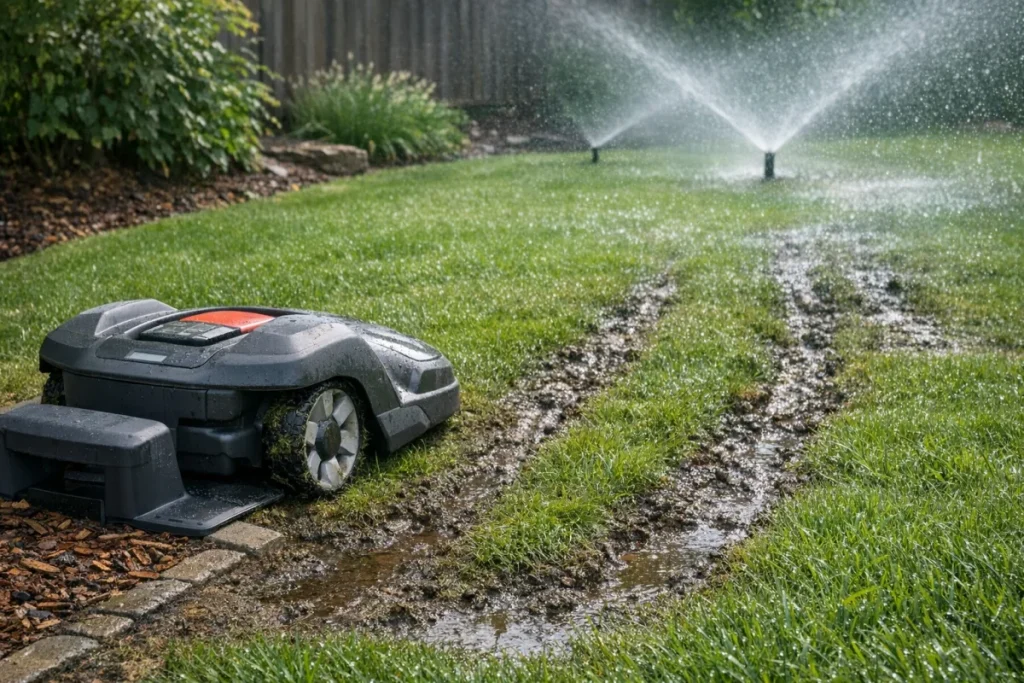
Summer schedules often fail because the mower and sprinkler system are quietly fighting each other. Wet grass can clump, stick to the underside of the mower, reduce cut quality, and create messy wheel tracks in soft areas.
Set irrigation first, then schedule mowing around it. A common approach is to water deeply and less frequently in the early morning, then let the lawn dry before the mower runs later. If you water at dawn, a late-morning or evening mowing window may be better than sending the mower out immediately afterward.
After a summer thunderstorm, do not restart the mower just because the rain stopped. Walk the yard first. Look for standing water, soft ruts, fallen sticks, washed-out mulch, and low spots that stay slick. Robot mowers are patient machines; they can wait a few hours.
Step 6: Change zone timing for slopes, shade, and separate lawns
Not every part of the yard heats up the same way. A shaded side yard may stay damp until late morning, while a south-facing front lawn may bake by lunch. Treat zones differently if your mower and setup allow it.
- Sunny front lawn: Give it the earliest cool slot, before heat builds on pavement and open turf.
- Shaded side yard: Delay mowing until dew or irrigation moisture has cleared.
- Slopes: Avoid wet grass and peak heat. Traction and turf stress both matter here.
- High-traffic areas: Mow when kids, pets, and outdoor activity are not competing with the mower.
- Separate lawn areas: Split the schedule so the mower is not rushing one area while another sits overgrown.
If your layout has disconnected areas, a narrow passage, or a manual move between zones, summer scheduling becomes more important. Our guide to handling two separate lawns with one robot mower explains the setup side of that problem.
Step 7: Watch cut quality during heat waves
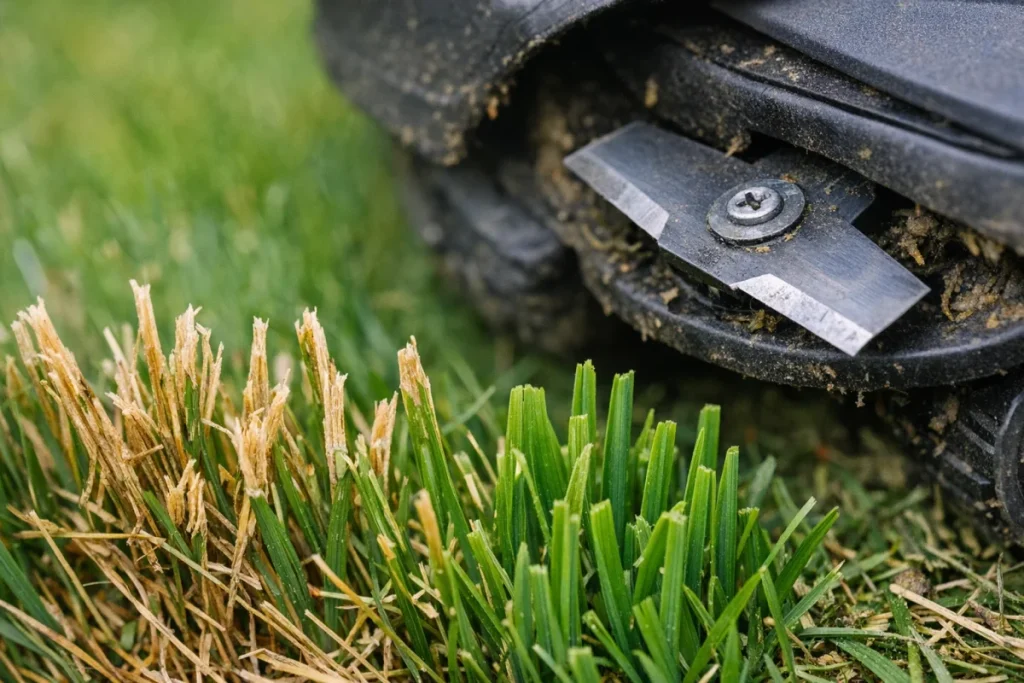
Heat can make existing maintenance issues more obvious. If the mower starts tearing grass tips instead of cutting cleanly, the lawn may look brown even when the schedule is sensible. Dull blades are a small part with an outsized effect.
Check blades more often during heavy growing periods, sandy conditions, or after the mower has clipped small twigs and debris. Replace damaged or dull blades according to the mower maker’s instructions, and use the right screws or fasteners for that mower. If you use an Automower, our review of robot mower blades and screws covers one OEM upkeep option.
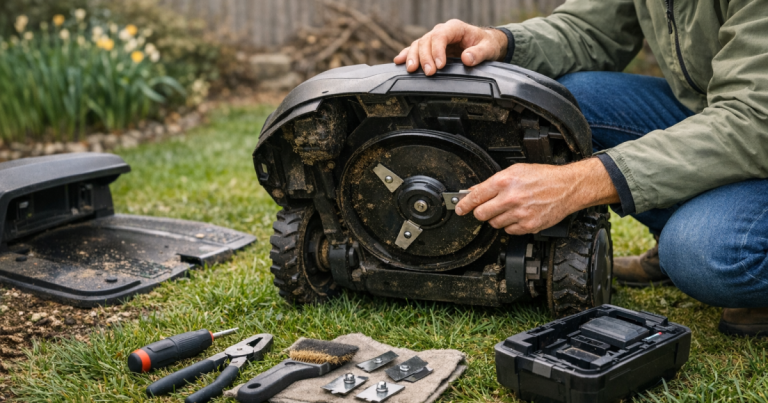
Also clear the deck regularly. Dry clippings, dust, and seed heads build up faster in summer, especially in yards with weeds or thin patches. A clean mower has an easier job, and easy jobs are exactly what you want during a hot week.
Common summer scheduling mistakes
- Running the same schedule all season: Early-summer growth and late-summer drought are not the same problem.
- Mowing through visible wilt: If grass looks folded, dull, or footprint-marked, pause and let it recover.
- Chasing a very low cut: Low mowing exposes bumps, roots, and dry soil. It also leaves less margin for heat stress.
- Ignoring hardscape heat: Edges near driveways, sidewalks, and patios can dry out faster than the middle of the lawn.
- Letting the mower run after storms: Fallen branches and soft ground can turn a normal run into a stuck-mower afternoon.
Quick answers
What is the best robot mower summer heat schedule?
A good robot mower summer heat schedule uses short mowing sessions in the cooler morning or early evening, avoids midday heat, stays clear of irrigation and rain, raises cutting height during stress, and pauses mowing during drought when grass growth slows or stops.
Should a robot mower run every day in summer?
Only if the lawn is actively growing and the mower is cutting very lightly. During heat waves or dry spells, daily mowing can be unnecessary. Reduce the number of active days when the grass is not growing enough to justify the cut.
Is evening mowing better than morning mowing?
It depends on moisture. Morning is useful before heat builds, but heavy dew can make the lawn too wet. Evening works well after the sun drops, as long as the turf is dry and the yard is clear of pets, toys, and debris.
When should I pause the mower completely?
Pause during drought stress, watering restrictions, repeated heat warnings, standing water, storm debris, or when the lawn is visibly wilted. Restart with a higher cut and shorter sessions once growth resumes.
Practical takeaway
Summer scheduling is less about squeezing in more mowing and more about choosing the right windows. Start with cooler morning or early evening runs, keep cuts light, raise the height when the lawn looks stressed, and let drought conditions override the app schedule. A robot mower is at its best when it quietly maintains healthy growth, not when it tries to win a heat wave by brute force.