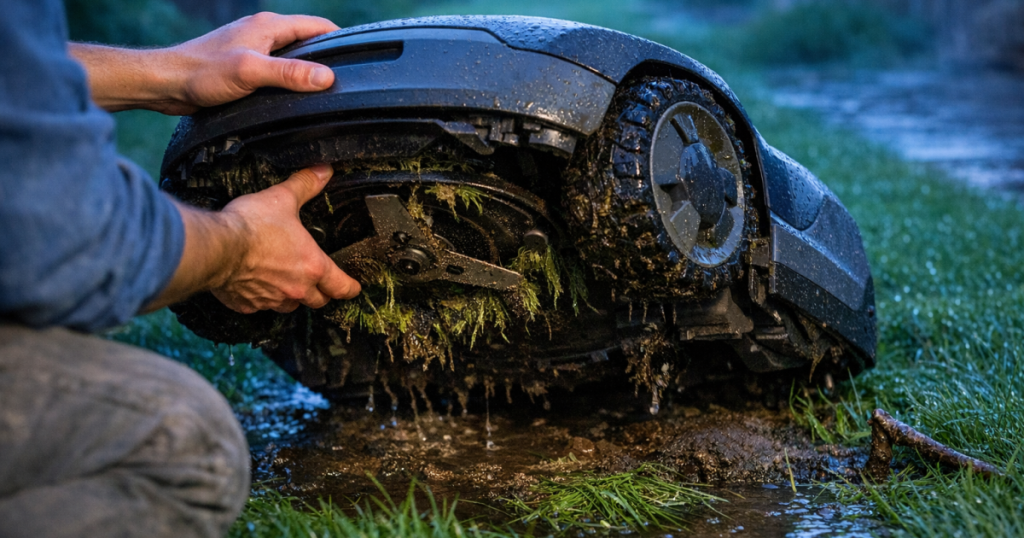
Rain doesn’t automatically mean your robot mower has to stay docked, but the lawn’s condition matters more than the weather icon. A robot can often mow wet grass when the blades are only damp from dew or a passing shower, but soggy soil, standing water, and heavy clumps are different problems. The goal is not just getting the grass shorter; it is keeping traction, cut quality, and turf health under control.
At a glance
- Morning dew: Usually manageable if the mower is clean, the grass is not overgrown, and the wheels are not slipping.
- Light rain or a damp lawn after a shower: Often possible, but cut quality may decline and clippings can build up faster under the deck.
- Rain-soaked grass with soft soil: Delay mowing. Tire marks, wheel slip, and turf tearing are bigger risks than the wet leaf blades themselves.
- Standing water, thunderstorms, or flooded low spots: Keep the mower parked until the area drains and the surface firms up.
- rain sensors and weather delays: Helpful, but they do not truly inspect soil firmness, slope slickness, or hidden puddles.
The real issue is not only wet grass
Robot mowers are different from traditional walk-behind mowers because they usually cut a small amount of grass at a time. That helps in damp conditions because there is less material to chop, pack, and discharge. A light daily trim on a slightly damp lawn is very different from asking the mower to cut down tall, rain-heavy growth after a week off.
The larger question is what the wet conditions are doing to the mower and the lawn. Moisture makes clippings stick to blades, wheel treads, and the underside of the cutting deck. Soft soil can reduce traction, especially on slopes, tight turns, narrow passages, and shaded side yards that dry slowly. Wet grass can also bend rather than stand upright, which may leave a less even finish.
For most homeowners, the best rule is simple: damp leaves are usually acceptable; saturated ground is not. If your shoes leave deep impressions or the mower’s wheels smear the surface, give the lawn more time.
A practical decision matrix for dew, drizzle, and soaked soil
Morning dew
Morning dew is common, especially in spring and fall. A robot mower can usually handle dew if the lawn is otherwise firm and the mower is running frequently enough that it only trims fine tips. Expect more moisture on the underside of the deck and possibly a little more buildup around the blade area.
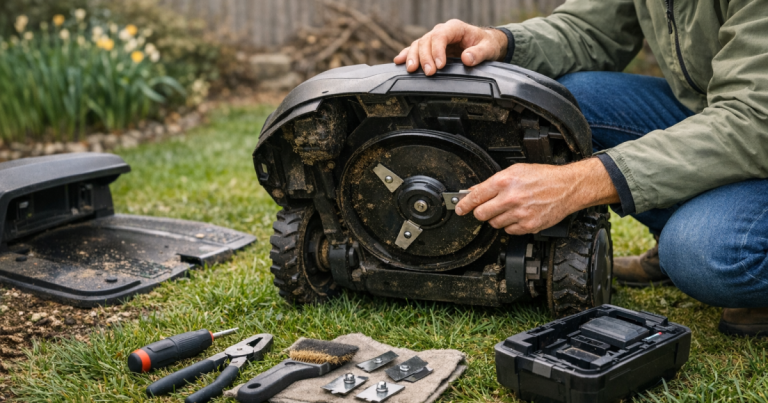
Letting the mower work through dew can be useful during fast growth periods because it keeps the schedule steady. The trade-off is maintenance: you may need to check the underside more often and replace blades sooner if buildup, grit, or damp clippings affect cut quality. If you are seeing torn grass tips rather than clean cuts, review your blade routine with this guide on changing robot mower blades for cleaner cuts.
Light rain or a recently damp lawn
Light rain is a judgment call. Many robot mowers are built to operate outdoors, and some owners allow them to continue during brief showers. Still, rain can reduce traction and increase cleanup. It can also make clippings collect in a paste-like layer, especially if the grass is tall or the lawn has sandy soil, clay mud, or lots of leaf debris.
If you allow mowing after light rain, keep the session short and observe the first few runs. Look for wheel spin on slopes, missed patches near turns, or clumps gathering behind the mower. If those appear, use a rain delay or pause the schedule until the leaf surface dries.
Saturated soil after steady rain
Saturated soil is where the answer changes. A robot mower may be able to drive over the lawn, but that does not mean it should. Soft ground can rut, compact, or tear, especially where the mower repeatedly turns near boundaries, gateways, charging approaches, and narrow corridors.
Do not restart simply because the rain stopped. Walk a few problem areas first: the bottom of a slope, the shaded side of the house, the route to the charging station, and any low spots near downspouts. If water squeezes up around your shoe, wait.
Standing water or storm conditions
Standing water is a clear stop sign. Park the mower until puddles drain and the surface firms. Heavy rain can also hide fallen twigs, wash mulch into the mowing area, and move toys or lightweight yard objects into the route. A robot mower is happiest when the lawn is boring; storms have a way of making it less boring.
Signs the lawn is too wet for robot mowing
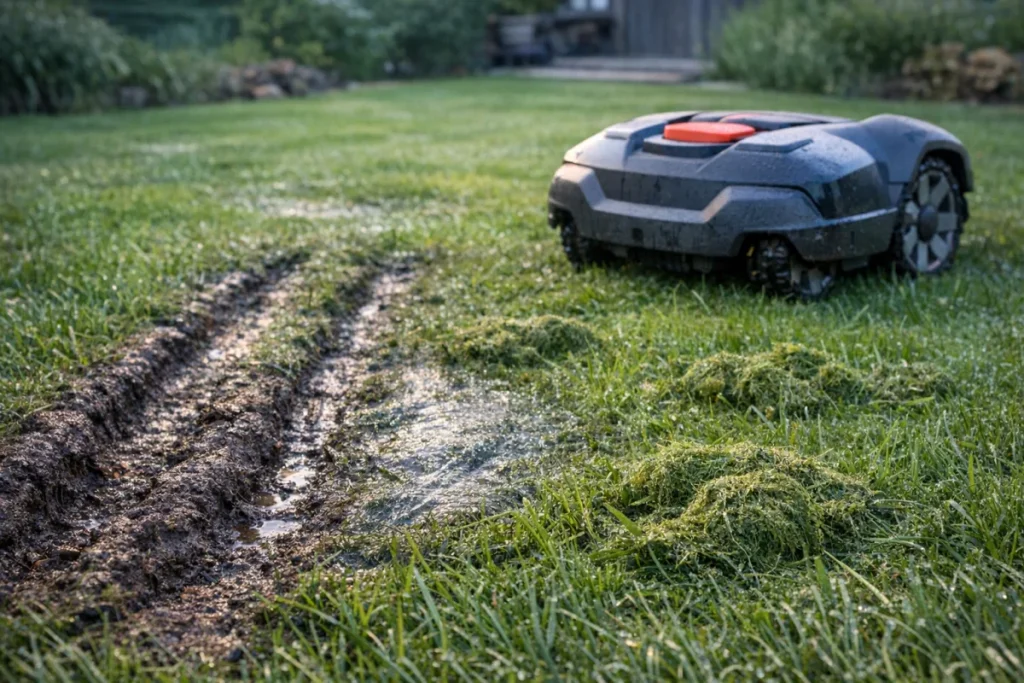
The mower’s behavior tells you a lot. A damp lawn that still supports the mower should show normal tracking and a reasonably even finish. A lawn that is too wet usually leaves visible evidence.
- Wheel slip: The mower hesitates, spins, or scrubs the turf when turning.
- Ruts or shiny smears: The wheels press tracks into soft soil instead of rolling over firm turf.
- Clumping: Wet clippings gather under the mower or leave blobs on the lawn.
- Uneven cutting: Grass bends away from the blades and pops back up later.
- Torn tips: The grass looks ragged or grayish at the ends after cutting.
- Repeated docking trouble: The mower slips or misaligns on the approach to the charger.
If several of these appear at once, pause the schedule and inspect the mower before the next run. The lawn will recover better from one missed mowing window than from repeated passes over mud.
How rain-delay settings help, and where they fall short
Rain-delay settings are useful because they turn a vague decision into a repeatable routine. Depending on the mower, that may mean a physical rain sensor, a weather-based delay, or a manual pause in the schedule. The best setting depends on your yard rather than the mower alone.
A sunny, open front lawn with sandy soil may be ready a few hours after a shower. A shaded backyard with clay soil, mature trees, and a low drainage corner may need much longer. Slopes add another variable because a mower that works fine on damp flat ground may slip on a wet incline.
The limitation is that sensors do not fully understand your lawn. A rain sensor may detect water on the mower, not whether the soil is firm. A forecast-based system may know rain is likely, but not whether your back gate area holds water. Manual observation still matters, especially during seasonal transitions when growth, rainfall, and soil temperature are changing quickly.
Cleaning after wet mowing
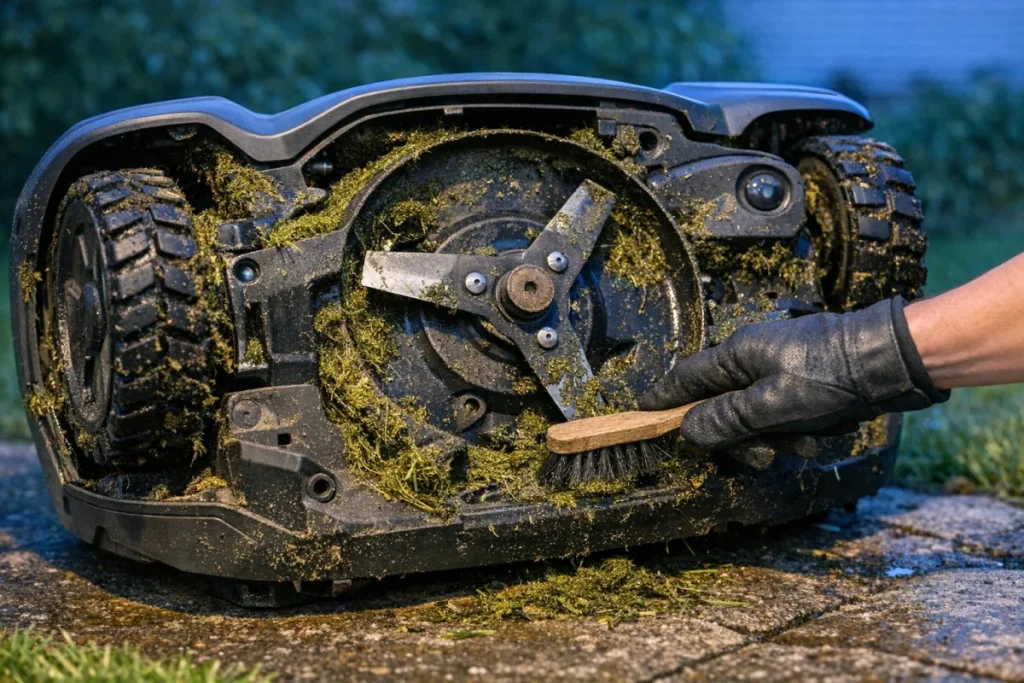
Wet mowing makes cleanup more important. You do not need to detail the mower after every damp run, but you should check it more often during rainy stretches. Always follow the manufacturer’s cleaning instructions for your specific model, especially around the cutting deck, charging contacts, wheels, and any sensor areas.
Focus on three areas. First, look underneath for packed clippings around the blades or guard. Second, check wheel treads because mud buildup can reduce traction on the next run. Third, make sure the mower can dock cleanly and charge properly after operating in damp conditions.
A seasonal routine is easier than reacting only when something goes wrong. The robot lawn mower maintenance checklist is a useful reference for building those quick inspections into normal ownership rather than treating them as a chore.
Adjusting the schedule after rain
After a wet week, resist the urge to make the mower “catch up” with one long session. Robot mowers generally produce better results through frequent light cuts. If the grass has grown quickly, run shorter sessions over multiple dry or mostly dry periods rather than sending the mower out for a heavy cut on soft ground.
You can also shift mowing later in the day when dew has lifted, especially in spring and fall. In hot summer weather, the better choice may be a shorter early window after the lawn has firmed but before heat stress peaks. The right answer depends on your grass type, shade, soil, and irrigation habits.
Charging station placement also matters during rainy seasons. A station at the bottom of a slope, near a downspout, or in a soggy corner can create repeat problems even when the rest of the lawn is ready. If docking gets messy after storms, revisit the basics of choosing the best charging station spot.
When wet grass changes the mower choice
If you are still shopping, wet-weather performance should be part of the yard-fit conversation, not a single feature checkbox. A small, flat, open lawn with good drainage is much easier on any robot mower than a sloped backyard with shade, tree roots, and clay soil.
For damp or uneven yards, pay attention to drive type, wheel design, slope rating, navigation approach, and how the mower handles multi-zone routes. All-wheel-drive models can be useful on complex terrain, but traction is still limited by the lawn surface. No mower turns saturated soil into firm ground.
Boundary-wire and wire-free systems also behave differently in messy seasonal conditions. A physical wire does not care about cloud cover or tree canopy, but it does require a stable installed route. Wire-free systems reduce wire maintenance, but their navigation setup and signal environment need to fit the property. Wet grass is only one part of that larger match.
Common questions
Can a robot mower safely cut wet grass?
Yes, in the right conditions. A robot mower can safely cut damp grass when the soil is firm, the mower is designed for outdoor operation, and the grass is not too tall. It is better to delay mowing when the lawn is saturated, the mower slips, or clippings are clumping heavily.
Is dew better or worse than rain?
Dew is usually easier to manage than rain-soaked turf because the soil may still be firm. The mower may need more frequent cleaning, but the risk of rutting is lower if the ground is not soft.
Should I turn off the rain sensor?
Only do that if you understand how your lawn responds after rain. Some yards dry quickly and can tolerate damp mowing. Others need a conservative delay because of slopes, shade, clay soil, or poor drainage. A sensor is a tool, not a complete turf inspection.
Will wet mowing dull robot mower blades faster?
Moisture itself is not the only issue. Damp clippings, grit, and buildup can make blades work harder and reduce cut quality. If the lawn looks ragged after wet stretches, inspect the blades and clean the deck before assuming the schedule is wrong.
The practical rule
A robot lawn mower can handle some wet grass, but it should not be treated like an all-weather rescue machine. Dew and light dampness are often workable; soft soil, standing water, clumps, and wheel slip are reasons to pause. The best owners do not chase a perfectly rigid schedule. They let the mower run often when conditions are good, delay it when the lawn is vulnerable, and keep the machine clean enough to do its quiet little job well.