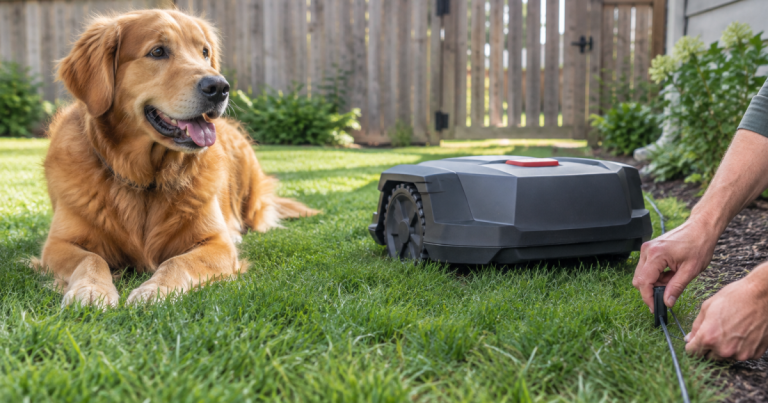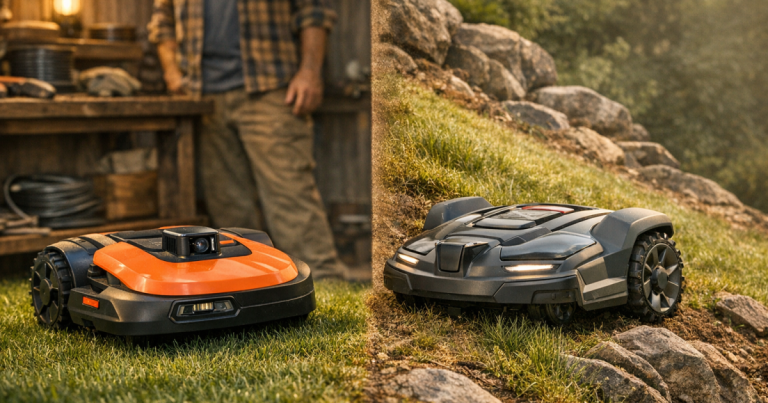
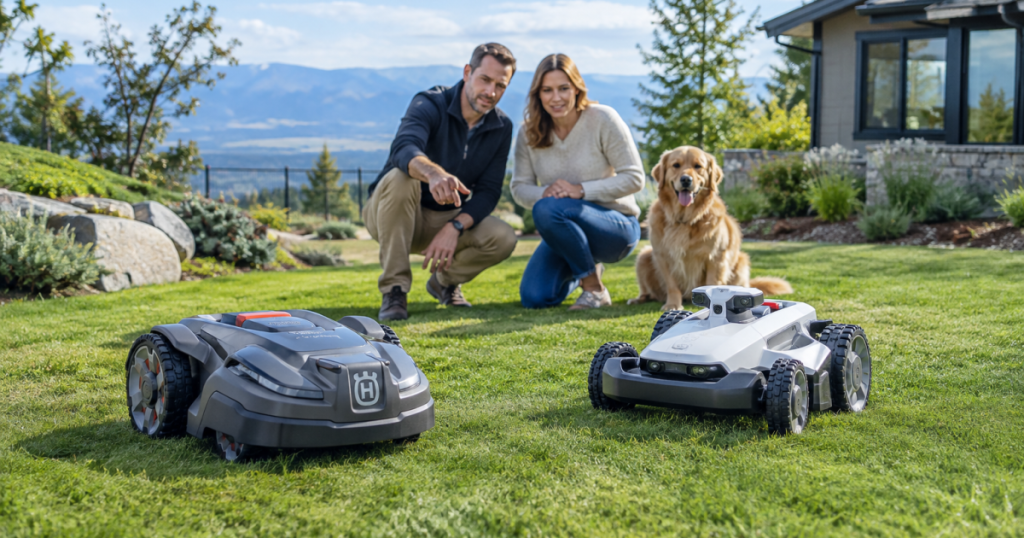
Steep side yards, uneven back lawns, and big open mowing areas all push robot mowers harder than a flat rectangle of turf. The Husqvarna Automower 435 iQ AWD belongs on the shortlist when you want an all-wheel-drive, wire-free mower for a complex lawn, while the Mammotion LUBA 3 AWD 5000H is the other name many shoppers check when availability, cutting height, and large-yard fit are part of the decision.
New outdoor outlets, buried electrical runs, or permanent charging-station power extensions should be handled by a qualified electrician to meet local electrical codes, outdoor-rated equipment standards, and safety requirements.
Main points before you shop
- The 435 iQ AWD is a premium wire-free AWD option. It makes the most sense for complex lawns where traction, turning ability, and boundary flexibility matter more than simply buying the lowest-cost mower.
- The LUBA 3 AWD 5000H is worth checking if you need a high-cut, large-yard AWD mower. Its real-world fit still depends on your grass type, slope layout, and whether you can actually buy and support it in your area.
- Availability is not just “in stock.” For a mower this expensive and installation-sensitive, confirm live inventory, shipping to your ZIP code, return terms, parts access, and warranty support before planning the yard around it.
- Your yard decides the winner. Roots, ruts, narrow passages, trees, fenced sections, and charging-station placement can matter more than the model name.
Step 1: Decide whether an AWD robot mower is truly needed
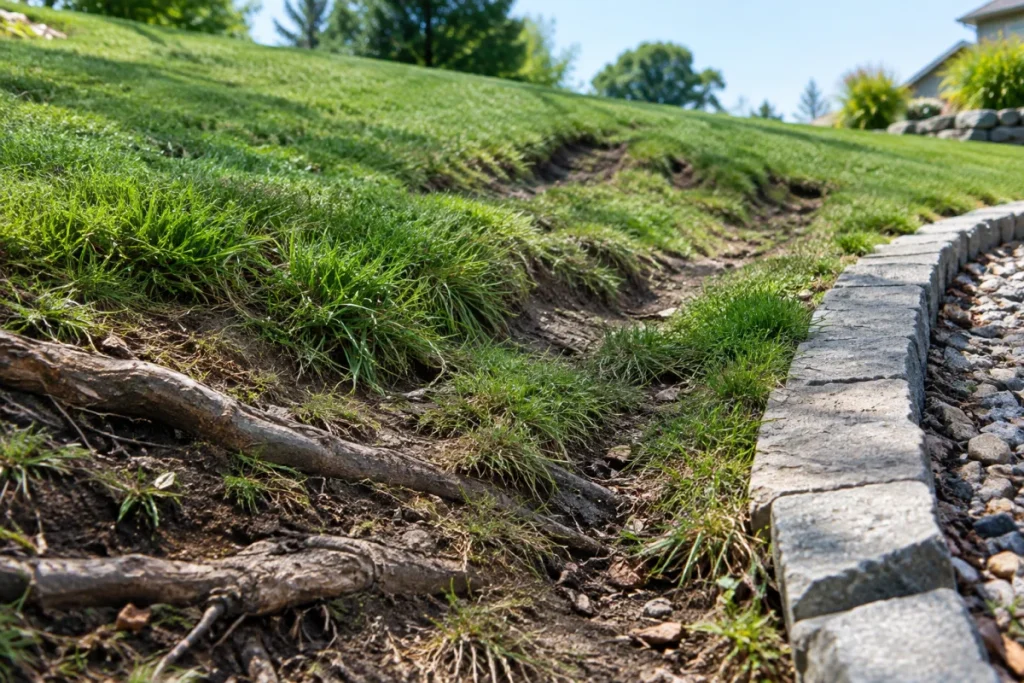
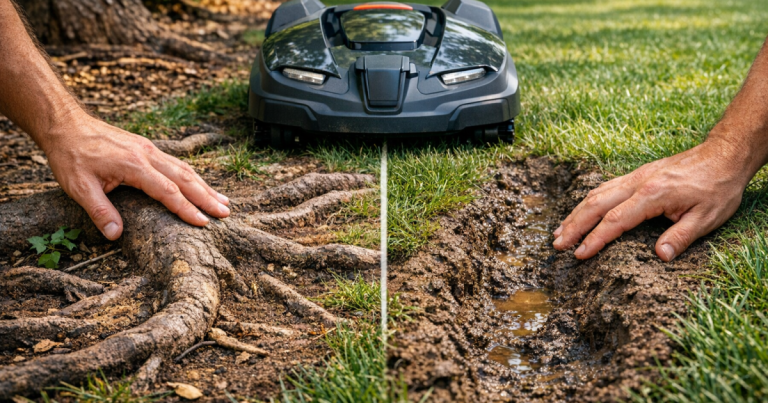
All-wheel drive is most useful when the mower must maintain traction through slopes, transitions, and uneven patches. It is not a magic fix for every difficult lawn. A steep but smooth slope is different from a slope cut by exposed roots, washed-out grooves, sprinkler trenches, or hard edging stones.
Walk the yard before comparing features. Look for places where a small wheeled machine would tilt, spin, scrape, or bottom out. If the trouble spots are shallow and gradual, an AWD mower may handle them well with careful setup. If the lawn has sharp holes, raised roots, or deep wheel ruts, fix the surface first. A mower that can climb still needs a lawn it can physically cross. For a deeper pre-purchase inspection, use this guide to checking roots and ruts before buying a robot mower.
Step 2: Where the Husqvarna Automower 435 iQ AWD fits best
The cleanest buyer case for the Husqvarna is a lawn with real complexity: slopes, multiple mowing areas, curved beds, awkward corners, and places where a simpler two-wheel-drive mower may lose consistency. Its role is not “cheap automatic mowing.” It is closer to “reduce manual mowing on a difficult property without committing to a traditional perimeter-wire-only plan.”
Good signs it belongs on your shortlist
- You have slope changes rather than one flat mowing zone. AWD is most valuable when the mower must keep moving across transitions, not just cruise over easy turf.
- You want a wire-free installation path. A wire-free mower can be attractive when you do not want to cut a boundary wire around every bed, tree, or edge. You still need careful mapping and setup discipline.
- Your lawn has several “decision points.” Gates, side-yard passages, islands, and separate mowing areas reward a mower with strong navigation planning and setup flexibility.
- You are buying for long-term convenience, not a quick bargain. Premium AWD mowers make the most sense when the yard would otherwise require frequent rescue, trimming, or remapping with a less capable machine.
Reasons to pause
- Your grass needs a higher finished cut than the mower can provide. Cool-season lawns can suffer if cut too low during heat or drought stress. Always compare the mower’s cutting-height range with how you maintain your turf. If you manage tall fescue or Kentucky bluegrass, read this guide to robot mowers that cut high enough for tall fescue and Kentucky bluegrass.
- Your obstacles move constantly. Toys, hoses, dog bowls, fallen limbs, and temporary lawn furniture can still create intervention points. A robot mower is easier when the yard has a repeatable routine.
- Your charging station has no practical home. Even the right mower becomes annoying if the dock sits in runoff, blocks a walkway, or forces awkward cable routing.
Step 3: Mammotion LUBA 3 AWD 5000H availability status
The practical US availability status for the Mammotion LUBA 3 AWD 5000H is something to verify at the moment you are ready to buy. Treat it as a model to confirm through current listings, shipping options, and support channels rather than assuming every configuration is continuously available from every seller.
That may sound cautious, but it is the right kind of caution. Large AWD robot mowers can appear in waves: available from one channel, temporarily backordered from another, or listed while certain accessories or service options vary. Before you commit your yard plan to the LUBA, check whether the exact model can ship to your address, whether the seller shows clear fulfillment timing, and whether after-sale support is practical for your location.
If you are comparing its yard-fit profile, start with our Mammotion LUBA 3 AWD 5000H overview, then confirm live purchase details directly with the retailer or manufacturer channel you plan to use.
Step 4: Use the same yard test for both mowers
Do not compare these two mowers only from a spec sheet. Put them through the same practical yard filter:
- Measure the actual mowing area. Exclude the house, driveway, patios, mulch beds, pool deck, and no-mow zones. Many shoppers overestimate or underestimate by looking at lot size instead of grass area.
- Map slopes by section. A short steep bank near the road is a different problem from a long sloped backyard. Note where the mower must turn, stop, or re-enter flat ground.
- Check cutting-height needs. High-cut capability matters if you maintain taller turf for heat tolerance or lawn health. Do not assume “robot mower” means the same cut range across brands.
- Look at boundary complexity. Beds, playsets, trees, fire pits, and drainage features all add setup work. Wire-free does not mean thought-free.
- Plan the charging route. The mower needs a predictable path home. A great mower with a poor docking location will feel less autonomous than a modest mower with a clean setup.
Step 5: Match the mower to the ownership experience you want
Choose the Husqvarna if your priority is a premium AWD wire-free mower for a complicated lawn where setup flexibility and traction are central to the decision. It is the calmer choice for shoppers who want a mature robot-mower ownership path and are willing to pay for capability rather than chase the most dramatic feature list.
Choose the Mammotion path if the LUBA 3 AWD 5000H’s large-yard, AWD, and high-cut positioning lines up with your lawn, and you can confirm current availability, shipping, support, and return terms before buying. It can be a compelling option for homeowners who need a robust mower for steep or larger turf areas, but the buying decision should include the same due diligence you would apply to any high-value outdoor machine.
My editorial preference is to start with yard constraints, not brand preference. If your hardest problems are slope traction and multi-zone complexity, the Husqvarna deserves a close look. If your hardest problems are taller grass management, broad mowing area, and steep sections, the Mammotion may be the one to investigate first, provided the current availability checks are clean.
Common buying mistakes to avoid
- Buying for maximum capability without fixing the lawn surface. AWD helps with traction, but it does not erase holes, roots, loose soil, or hard ledges.
- Ignoring the trimming burden. Robot mowers reduce mowing work, but edges around fences, walls, beds, and tight objects may still need attention.
- Assuming wire-free means no setup. Mapping, exclusion areas, docking placement, and schedule tuning still decide how well the mower behaves.
- Checking availability too early. A model being available during research does not guarantee the same status when you are ready to buy. Recheck before ordering accessories or planning installation work.
- Skipping support research. Confirm who handles service, parts, and warranty questions. A mower that fits the yard but leaves you stranded on support is not a good ownership experience.
Practical takeaway
The Husqvarna and Mammotion options both sit in the serious end of the robot mower market, where yard fit matters more than impulse shopping. If your property has slopes, uneven sections, multiple zones, and turf that needs careful cutting height choices, either mower could be relevant. The better choice is the one that fits your terrain, your grass, your docking location, and your willingness to verify live availability before money changes hands.
Before buying, walk the lawn with a notepad, mark the trouble spots, confirm the cut-height requirement, and check current stock from the channel you trust. Ten minutes of honest yard inspection can prevent a very expensive mower from becoming a very polite garden ornament.