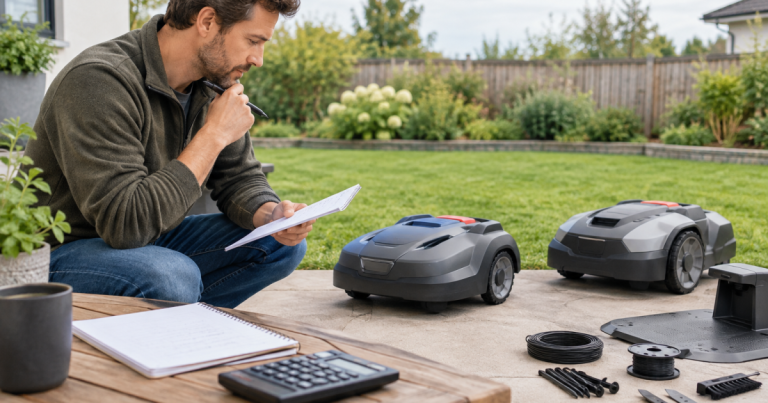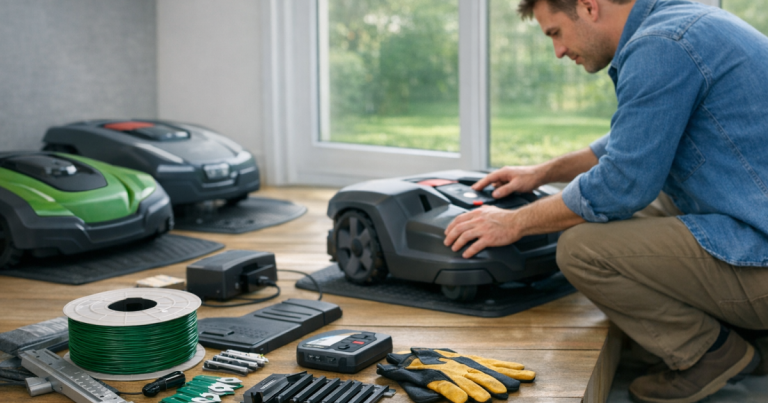
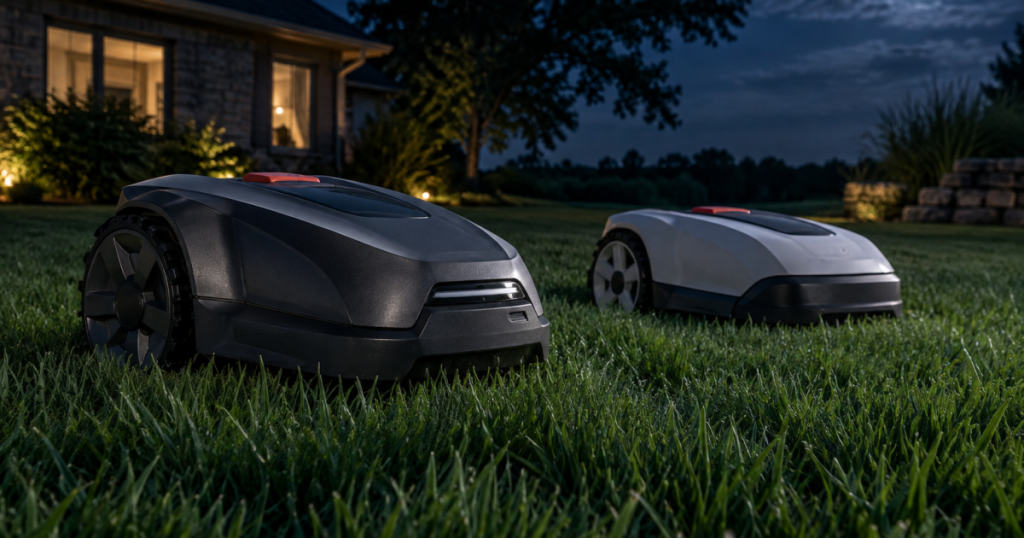
Cool-season lawns can make robot mower shopping awkward. Choosing a robot mower for tall fescue or Kentucky bluegrass is not just about acreage rating, app features, or whether the mower can find its way around the maple tree. The make-or-break number is cutting height.
Tall fescue and Kentucky bluegrass are often kept higher than warm-season grasses. If you like your lawn around 3.5 to 4 inches, a mower that tops out lower may work mechanically, but it will not match the way you want to maintain the grass. That is where many otherwise good robot mowers quietly fall off the shortlist.
Main points
- For tall fescue and Kentucky bluegrass, shortlist robot mowers with a published maximum cutting height of at least 3.5 inches; 4 inches gives more breathing room.
- University turfgrass extension ranges vary by region, cultivar, shade, and season, but cool-season lawns are commonly maintained in the medium-to-tall range, roughly 2.5 to 4 inches.
- A mower rated for a large yard is not automatically right for tall grass. Cutting-height range matters before acreage rating.
- Robot mowers maintain grass by frequent small trims. They are not a good first tool for knocking down overgrown fescue after a vacation or rainy spell.
- Terrain still matters. Ruts, roots, and uneven soil can make a high setting less useful if the mower bounces, scalps, or loses traction.
Those points are especially important because robot mower height numbers are usually measured under controlled conditions, not on your exact lawn. A deck set to 3.5 inches on a flat driveway may not leave every blade of grass at 3.5 inches once the mower is crossing soft soil, wheel tracks, thatch, or a slight crown in the yard. Treat the published range as a useful filter, but give yourself a little cushion when your lawn is already close to the top of that range.
Think about your mowing height as a seasonal setting, not a fixed personality trait. A Kentucky bluegrass lawn in full sun with regular irrigation may look fine a bit lower during active spring growth. The same lawn may need more leaf blade left during heat, dry weather, or heavier shade. Tall fescue owners often want that extra height even more, because the lawn can look thinner and more stressed when it is kept too short for the site conditions.
- If you normally mow at 3 inches: you can consider more models, but still avoid anything that leaves no room to raise the deck during stress periods.
- If you normally mow at 3.5 inches: look for a mower that can go higher than that, not one that barely reaches it on paper.
- If you normally mow at 4 inches: be prepared for a shorter shortlist, and verify the exact height range in the current manual or specifications before buying.
Once the mower is installed, make the first week a height-checking week. Let the robot run on a conservative schedule, then inspect the lawn in several areas: sunny turf, shaded turf, slopes, edges, and any uneven spots. If you see pale tips, scalped patches, or a generally “shaved” look, raise the setting if possible and reduce how much grass the mower is removing per pass. A robot mower should make cool-season grass look steadily maintained, not freshly punished.
Step 1: Pick your real mowing height before you shop
Start with the lawn you actually want, not the mower you are tempted to buy. If your target is 3 inches, you have more robot mower options. If your target is 3.5 inches, the field narrows. If you want 4 inches through summer heat, you need to be much more selective.
For Kentucky bluegrass, many homeowners can live in the 2.5 to 3.5 inch zone depending on sun, irrigation, and seasonal stress. Tall fescue is often managed a little taller, especially when the goal is deeper rooting, shade tolerance, or a less stressed lawn during hot spells. The point is not to chase one perfect number. The point is to know your number before the mower box arrives.
A simple rule works well: choose a robot mower whose maximum height is higher than your normal setting. If you mow at 3.5 inches, a mower that maxes at 3.5 inches leaves no adjustment room. A mower that can reach 4 inches is the more forgiving choice.
Step 2: Read the cutting-height range before the yard-size rating
Robot mower listings often lead with recommended lawn size, navigation type, slope rating, and boundary method. Those details matter, but cool-season grass owners should check cutting-height range first. A model can be clever, quiet, and beautifully mapped yet still be wrong for a tall fescue lawn if it cannot cut high enough.
Use the published maximum cutting height as a pass-or-fail filter:
- Under 3 inches: usually a poor fit if you want a taller cool-season lawn.
- About 3 to 3.4 inches: potentially workable for some Kentucky bluegrass settings, but tight for taller fescue preferences.
- 3.5 inches: a realistic minimum for many tall fescue and bluegrass owners who like a higher lawn.
- 4 inches: the safer target if you raise mowing height in heat, shade, or drought stress.
Do not assume a “high cut” label means the same thing across brands. Check the exact model and SKU, because mower families can have different deck designs or height ranges.
Step 3: Shortlist mowers that fit the cut-height problem
The best candidates are models that combine a tall enough maximum cut with the navigation and traction your yard needs. For many cool-season lawns, that means looking beyond the cheapest compact machines and checking premium or higher-cut versions first.
For larger or steeper lawns
The Mammotion LUBA 3 AWD 5000H belongs on the research list for homeowners comparing high-cut, all-wheel-drive options for larger or more demanding yards. Its positioning as a high-cut AWD mower makes it more relevant to tall cool-season grass than low-slung compact models. Still, verify the current published cutting-height range for the exact package before buying.
For a premium wire-free direction
The Husqvarna Automower® 420 iQ is worth comparing if you want a higher-end robot mower and are weighing virtual-boundary ownership. For fescue and Kentucky bluegrass, the question is not only whether it can cover your lawn area, but whether its maximum cutting height gives you the 3.5 to 4 inch range you want.
For LiDAR-based mowing on medium-to-large lawns
ECOVACS GOAT A2000 LiDAR PRO is another recognizable model to compare if you are interested in LiDAR navigation and a wire-free setup. Its integrated edge-trimming pitch may appeal to owners who dislike string-trimming borders, but cool-season grass buyers should still treat cutting height as the first filter, not an afterthought.
Step 4: Check the yard surface before trusting the height setting
A high maximum setting does not fix a bumpy lawn. If a mower rolls over exposed roots, dips, mole tunnels, or tire ruts, the deck can ride unevenly. That can leave tufts in one pass and shaved patches in another. Tall grass hides these problems nicely, which is rude but predictable.
Walk the lawn before buying. Look for shallow roots near mature trees, settled soil along old utility trenches, low spots that stay soft after rain, and narrow transitions between front and back zones. If you are not sure whether the surface is friendly enough, use this guide to check roots and ruts before buying a robot mower.
For lawns with uneven areas, an AWD model or larger drive wheels can help with traction, but they do not erase the need for basic grading, filling, or root-aware routing. The mower still has to keep the deck stable enough to cut consistently.
Step 5: Avoid the common cool-season buying mistakes
- Buying for acreage only: a half-acre rating does not tell you whether the mower suits a 4 inch fescue target.
- Expecting a robot mower to rescue tall grass: do the first seasonal cut with a conventional mower, then let the robot maintain small trims.
- Ignoring shade: shaded bluegrass or fescue is often kept taller, which makes maximum cutting height even more important.
- Forgetting leaf season: cool-season lawns grow actively in fall, but leaf cover can interfere with clean mowing and navigation. Plan to clear heavy leaves rather than asking the mower to mulch everything.
- Assuming all blades behave the same: many robot mowers use small pivoting razor-style blades. They work best when clipping a little and often, not when chewing through heavy, wet, or matted growth.
What to remember
For tall fescue and Kentucky bluegrass, the safest buying path is simple: decide your target mowing height, reject models that cannot reach it, then compare navigation, slope capability, yard size, and boundary method. A mower with a maximum cutting height under your normal setting is not a bargain. It is a future compromise with wheels.
If you want a neat, resilient cool-season lawn, look hardest at robot mowers that reach at least 3.5 inches, and favor 4 inches when you regularly mow high in summer or shade. After that, match the mower to the messy realities of your property: tree roots, slopes, narrow passages, soft soil, fences, and the amount of trimming you still expect to do by hand.
The right robot mower can keep fescue and bluegrass looking consistently maintained, but only if the deck height matches the grass. Start there, and the rest of the buying decision gets much easier.