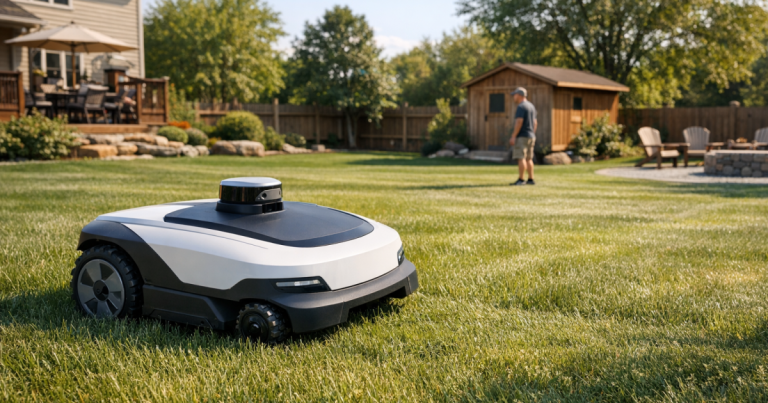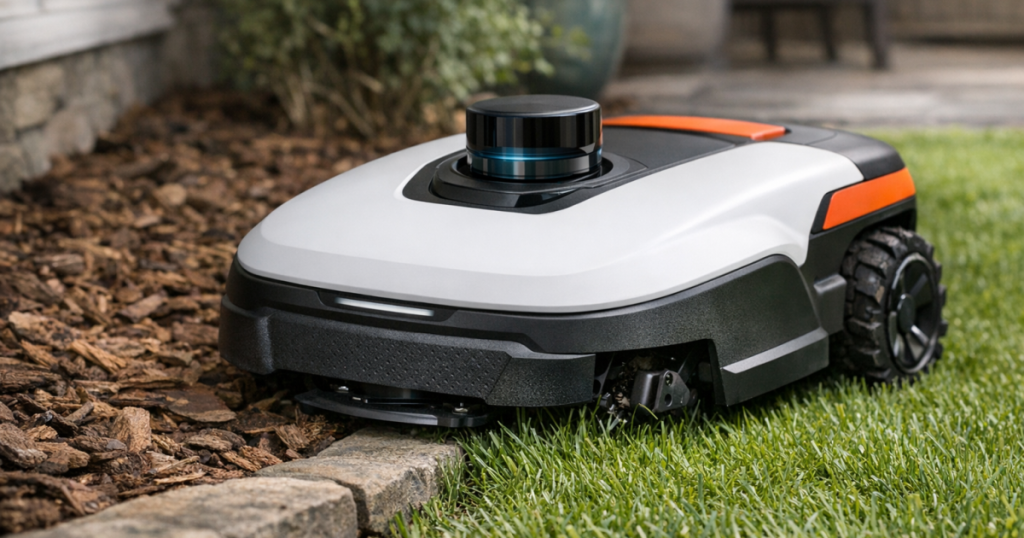
The Mammotion YUKA mini 2 1000H is built for the homeowner who wants wire-free mowing without planting a perimeter wire or mounting an RTK base station. This Mammotion YUKA mini 2 1000H review focuses on the real decision: whether a compact LiDAR mower with rear-wheel drive makes sense for a small, split-up, mildly complicated US yard.
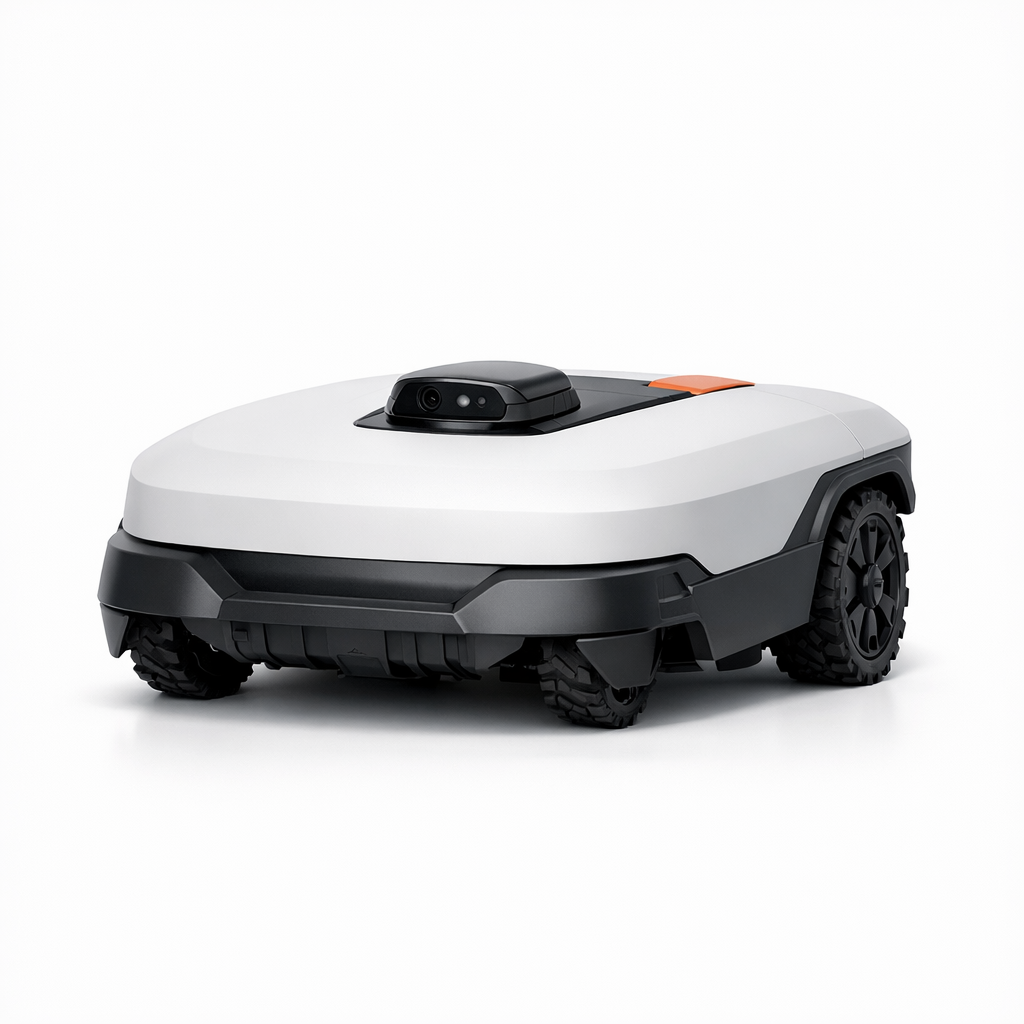
Mammotion YUKA mini 2 1000H
Best suited to compact, split lawns where wire-free mapping matters more than all-wheel-drive traction
My read is positive but specific. The YUKA mini 2 1000H is most compelling when your lawn is around a quarter acre or less, you want virtual mapping, and you value a simpler antenna-free setup over all-wheel-drive traction. It is not trying to be a big-property bruiser, and that clarity is part of its appeal.
Product Details
- Reviewed product: Mammotion YUKA mini 2 1000H
- Product type: LiDAR wire-free robot lawn mower
- Recommended yard size: 0.25 acre
- Navigation: 360° LiDAR + AI Vision
- Boundary method: Wire-free virtual mapping with no RTK base station or perimeter wire
- Maximum slope: 45%
- Drive type: Rear-wheel drive
- Multi-zone support: Up to 10 separated zones
- Cutting width: 7.5 in
- Cutting height range: 2.0-3.5 in
- Weather handling: Built-in rain sensor returns the mower to the charging station in heavy rain or high moisture and resumes when conditions improve; IPX6 waterproof rating listed
- Theft deterrence: Theft protection listed; optional 4G module supports continuous remote monitoring
The big appeal: wire-free mapping without RTK hardware
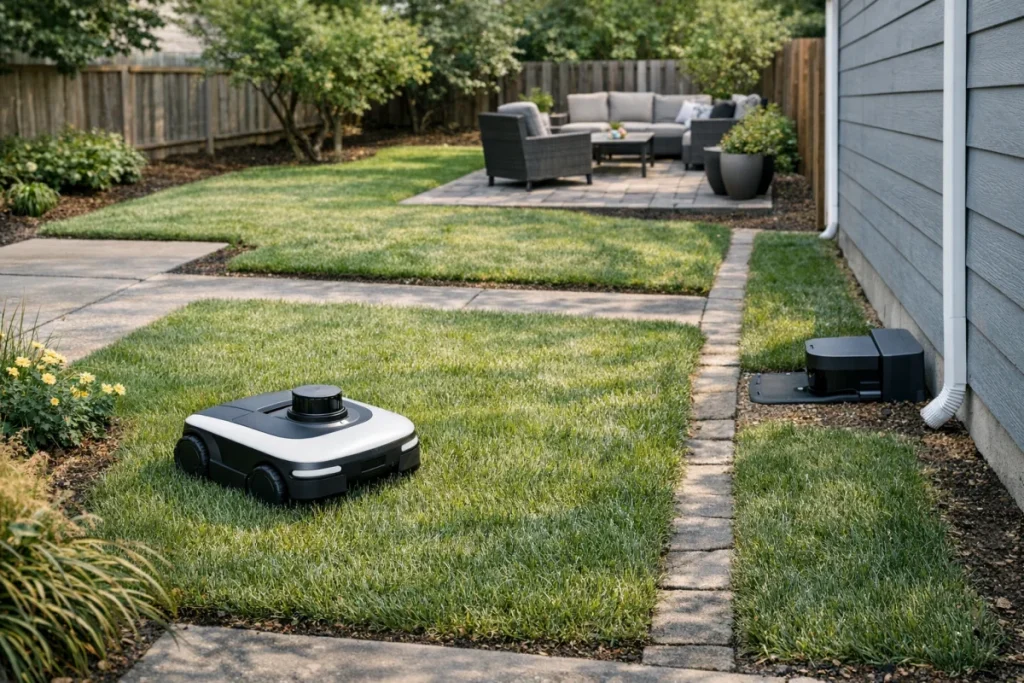
The defining feature here is Mammotion’s 360° LiDAR + AI Vision navigation paired with wire-free virtual mapping. For a small suburban lot, that changes the setup conversation. You are not trenching or staking a perimeter wire, and you are not solving for RTK base-station placement before the mower can understand the yard.
That matters in the exact kind of lawn this model targets: a front patch, a back section, a narrow side strip, and maybe a separate area around a patio. The YUKA mini 2 1000H’s support for up to 10 separated zones gives it more layout flexibility than its small-yard label might suggest. A quarter-acre recommendation does not mean a perfectly square quarter acre; it can mean several smaller pieces that need to be managed as one mowing plan.
The practical trade-off is that LiDAR and vision are still part of a navigation system, not magic. Yard shape, obstacles, lighting conditions, and clean mapping still matter. But compared with RTK-based mowers, the absence of a separate base station removes one common setup headache. If you are comparing this with satellite-guided models, our guide to RTK antenna placement for robot mower mapping explains why that hardware decision can be important on other systems.
Small-yard fit is the reason this mower makes sense
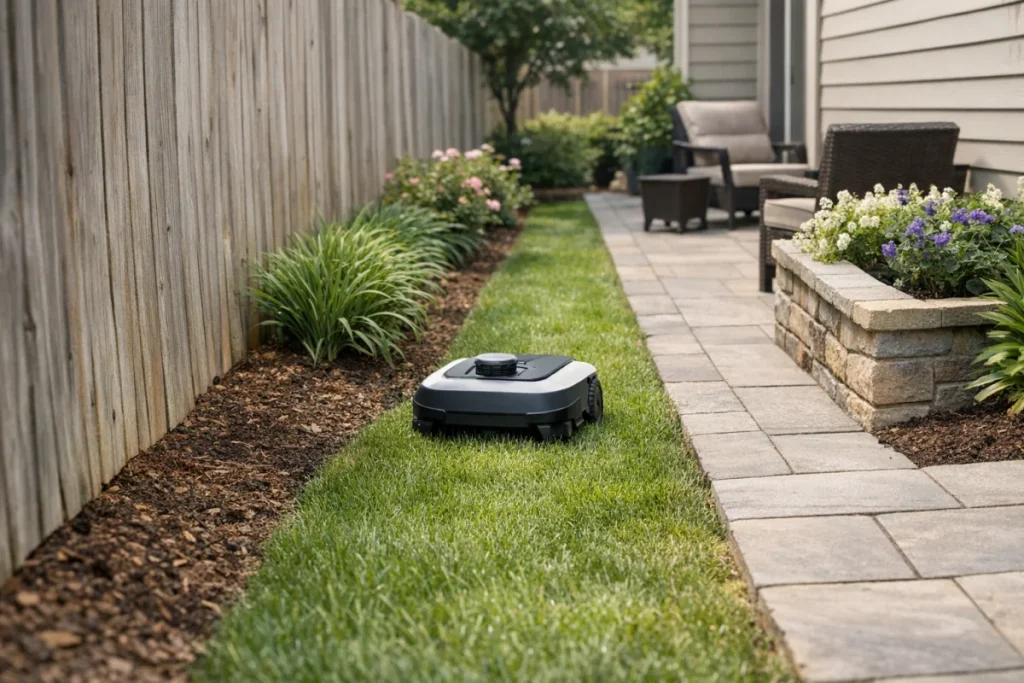
The recommended 0.25-acre yard size is the first filter. That makes the YUKA mini 2 1000H a sensible candidate for townhomes, compact suburban lawns, and homeowners who want to stop pushing a mower over several small patches each week. It is not the model to stretch across a large open property just because the mapping system sounds convenient.
The 7.5-inch cutting width reinforces that small-lawn role. A narrower cutting width can make sense around tighter spaces, planting beds, and fragmented lawns, but it also tells you this mower is not built around maximum deck coverage. If your yard feels more like a collection of small mowing chores than one big field, that is exactly where this design starts to look useful.
Multi-zone support is the most homeowner-friendly spec in this area. Up to 10 separated zones means the mower is not limited to a single uninterrupted lawn. For US homes with a driveway splitting the front lawn, a fenced backyard, or a side yard that always gets neglected, this is the kind of flexibility that can decide whether a robot mower is actually worth owning.
Slope rating is strong, but rear-wheel drive still matters
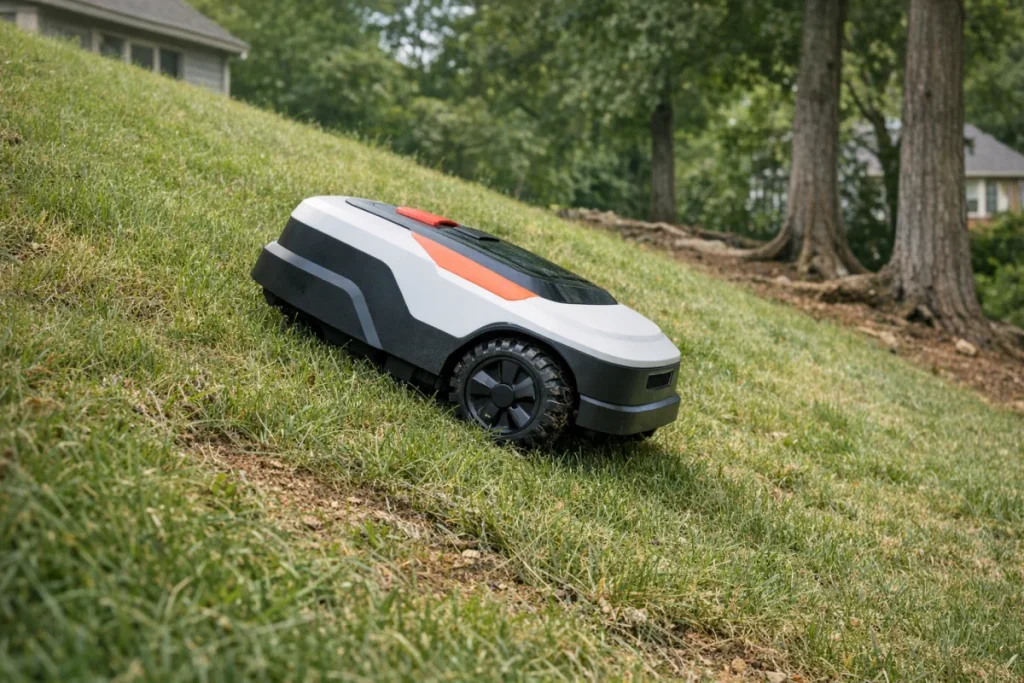
Mammotion lists a maximum slope of 45%, which is a notable figure for a compact mower. That gives the YUKA mini 2 1000H room to handle lawns that are not perfectly flat, including rolling front yards and sloped side areas that make manual mowing feel like a weekly ankle workout.
The drive type keeps the recommendation grounded: this is a rear-wheel-drive mower, not an all-wheel-drive model. That does not erase the slope rating, but it does shape expectations. Rear-wheel drive is a reasonable match for small lawns with moderate unevenness, while yards with steeper transitions, loose patches, ruts, exposed roots, or repeated traction challenges are where AWD mowers earn their keep.
In other words, the 45% slope rating is a strength, but the buying decision should still be based on the whole terrain. A smooth slope and a rough, rooty slope are not the same problem. The YUKA mini 2 1000H looks best when the lawn is compact and somewhat complex, not when the mower has to behave like a tiny off-road vehicle every afternoon.
Cutting height: good for many lawns, less ideal for high-cut grass
The cutting height range is 2.0-3.5 inches. That range will be comfortable for many homeowners who keep their lawn in a conventional maintained height window. It also fits the robot mower approach of taking frequent small cuts rather than removing a large amount of grass at once.
The upper limit is the key number for warm-season grass owners. If you maintain St. Augustine or another lawn that you prefer to keep taller, 3.5 inches may be the deciding constraint. A robot mower can be convenient and still be the wrong fit if it cannot cut high enough for your grass type and local conditions. For that decision, compare this model against our guide to robot mowers that cut high enough for St. Augustine grass.
For the right lawn, though, the range is straightforward. The mower is aimed at routine upkeep, not rescue cuts after two weeks of spring growth. That is normal for robot mowers, but it is worth saying plainly: the best results come when the mower is allowed to maintain, not recover.
Rain handling is sensible, not a license to mow through everything
The built-in rain sensor is a practical ownership feature. Mammotion says the mower returns to the charging station in heavy rain or high moisture and resumes when conditions improve. That is the right behavior for a residential robot mower because wet grass can clump, smear, and put more strain on the cut quality than dry grass.
The listed IPX6 waterproof rating adds reassurance for outdoor use, but it should not be read as an invitation to treat the mower like pond equipment. The more useful takeaway is simple: the mower is designed to react to heavy rain or moisture rather than blindly keep cutting. For a homeowner, that reduces one of the day-to-day management tasks. You still want normal common sense around storms, debris, and saturated ground.
Security and remote monitoring are useful, with one important distinction
Mammotion lists theft protection for the YUKA mini 2 1000H, and the optional 4G module supports continuous remote monitoring. That combination matters most for unfenced front yards or homes where the mower will spend time near a sidewalk or street.
The distinction is that continuous remote monitoring depends on the optional 4G module. The base mower’s theft protection is part of the product story, but the 4G detail is not something to gloss over if remote monitoring is important to you. For a fenced backyard, this may be less decisive. For a visible corner lot, it could be one of the features that moves the mower from “nice idea” to “I can live with this outside.”
Where the compromises show up
The YUKA mini 2 1000H is easy to like because its strengths are focused: wire-free mapping, no RTK base station, small-yard sizing, multi-zone support, and a meaningful listed slope capability. The compromises are just as clear.
- It is a small-yard mower. The 0.25-acre recommendation should guide the purchase, not be treated as a challenge to beat.
- It is rear-wheel drive. The slope rating is useful, but rougher or more traction-heavy lawns can still point toward an AWD mower.
- The top cutting height is 3.5 inches. That is fine for many lawns but not ideal for every high-cut grass preference.
- The 7.5-inch cutting width suits compact layouts. It is not the obvious pick for homeowners trying to cover a broad, open lawn quickly.
- Continuous remote monitoring uses the optional 4G module. That distinction matters if theft monitoring is one of your main reasons for buying.
Those are not deal-breakers; they are boundaries. And boundaries are useful. A robot mower that is honest about the lawn it wants is easier to recommend than one that tries to be everything and ends up being a driveway ornament with blades.
When another mower is the smarter move
Choose a different class of robot mower if your lawn is much larger than a quarter acre, if you need all-wheel drive for recurring traction problems, or if your grass-care plan depends on cutting higher than 3.5 inches. Larger AWD models such as the Mammotion LUBA 3 AWD 5000H or Husqvarna Automower® 435 iQ AWD are the kind of alternatives that belong in the conversation for bigger, steeper, or more demanding yards.
For the smaller-yard buyer, though, those larger machines can be overkill. The YUKA mini 2 1000H has a cleaner pitch: make wire-free mowing easier to adopt on a compact lawn without asking the homeowner to solve perimeter wire or RTK placement first. That is a very real benefit if the yard fits the spec.
Verdict
Score: 9.1/10. The Mammotion YUKA mini 2 1000H earns its recommendation through three main strengths: antenna-free wire-free mapping, a clear 0.25-acre small-yard fit, and flexible multi-zone support for split lawns. The 45% slope rating helps its case, but rear-wheel drive and a 3.5-inch maximum cutting height keep the recommendation focused rather than universal.
For a compact US lawn with separated sections, moderate slopes, and no appetite for perimeter wire, this is a smart model to consider. For large, rough, high-cut, or traction-heavy yards, move up to a mower built around those harder conditions.
Mammotion YUKA mini 2 1000H
Best suited to compact, split lawns where wire-free mapping matters more than all-wheel-drive traction
You might also like: How to Fix Robot Mower Wi-Fi and Bluetooth Connection Problems.