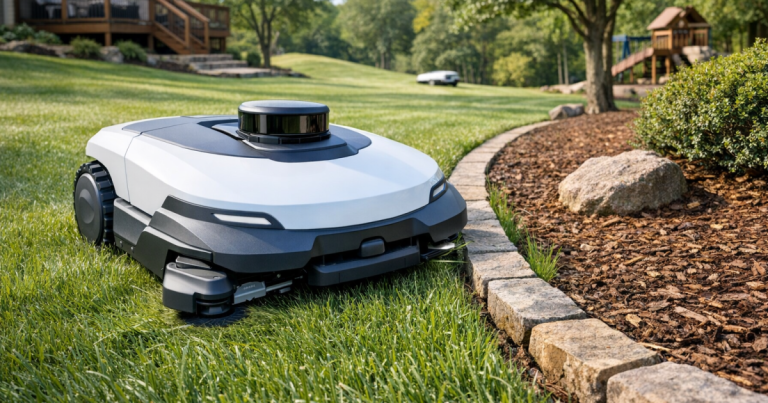
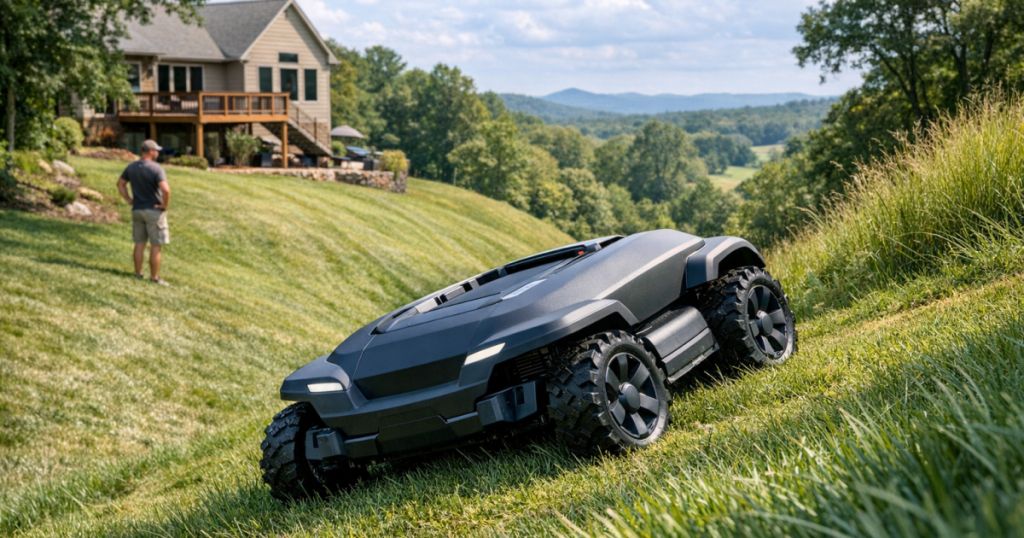
A steep, uneven acre-plus lawn is where ordinary robot mower advice starts to get thin. This Mammotion LUBA 3 AWD 5000H review looks at a wire-free, all-wheel-drive robot lawn mower built for homeowners who want automated mowing on large, hilly turf without installing boundary wire. The quick verdict: it is a serious high-capability mower for the right property, but its price, app dependence, and turf-scuffing risk make yard fit especially important.
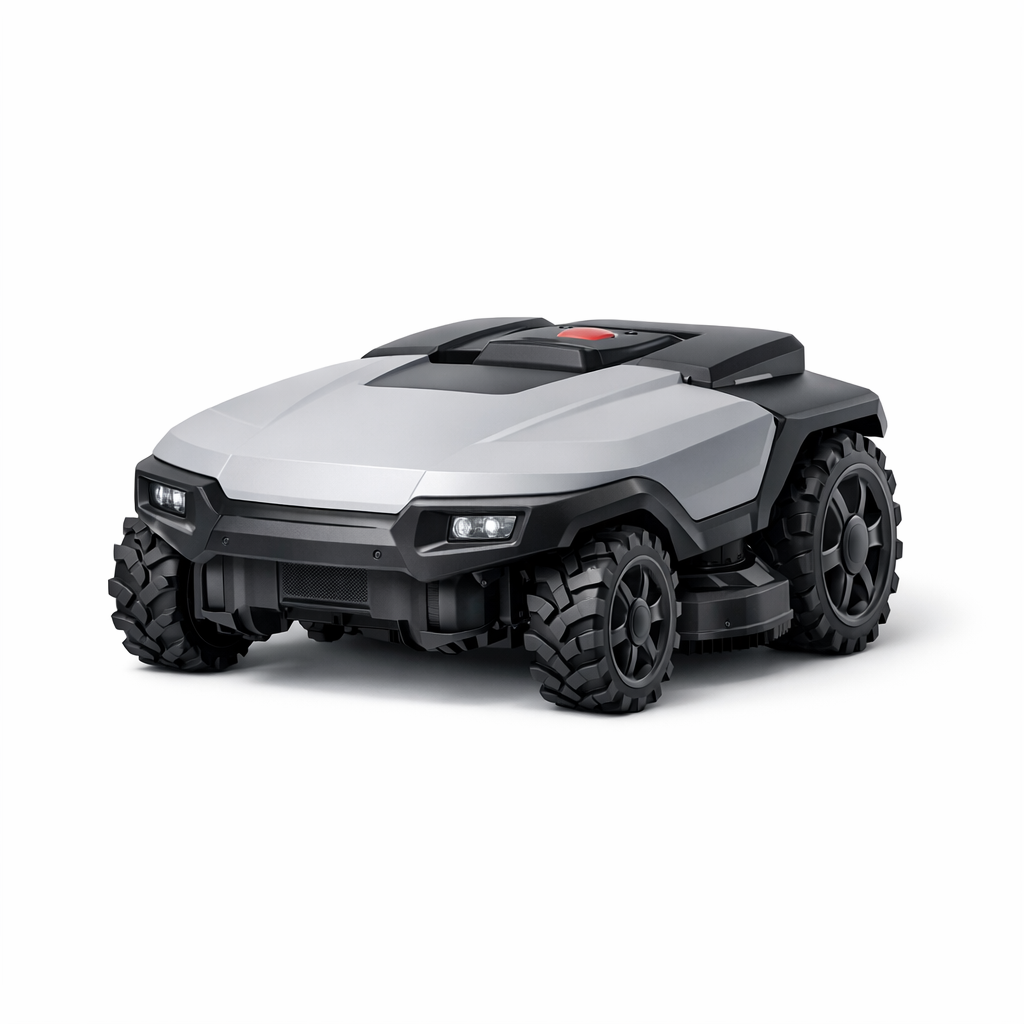
Mammotion LUBA 3 AWD 5000H
A strong fit for steep, larger lawns where wire-free setup and higher mowing height matter most
Product Details
- Product: Mammotion LUBA 3 AWD 5000H
- Type: Wire-free autonomous robot lawn mower
- Maximum coverage: 1.25 acres
- Maximum slope: 80%
- Cutting width: 15.8 inches
- Cutting height: 2.2 to 4 inches
- Navigation system: Tri-Fusion with 360° LiDAR, NetRTK, and AI Vision
- Battery life: Up to 215 minutes per charge
- App control: Mammotion App
- Weatherproof garage: Included
- Price: $3,299
Where this mower makes the most sense
The LUBA 3 AWD 5000H is not aimed at the homeowner with a simple, flat rectangle of grass behind a townhouse. Its stated 1.25-acre maximum coverage and 80% maximum slope rating put it in the large-property, difficult-terrain category. That matters because robot mowers are rarely chosen on lawn size alone. A half-acre with steep transitions, side-yard corridors, exposed roots, and shaded corners can be harder to automate than a larger open lawn with gentle grades.
The all-wheel-drive design is the big reason to look at this model if your current mowing routine involves climbing banks, approaching drainage swales carefully, or leaving awkward sloped sections for a string trimmer. The practical appeal is clear: if the mower can handle the terrain within its stated limits, it can reduce the most tiring part of mowing a large hilly property. But the 80% slope figure should not be treated as a promise that every steep patch will work equally well. Grass condition, surface firmness, wet soil, transitions at the top and bottom of the slope, and the layout around obstacles all influence whether a robot mower behaves neatly in the real yard.
Before spending at this level, walk the lawn and map the hard parts: the steepest slope, narrowest passage, worst tree canopy, roughest turn, and every zone the mower needs to reach. Our guide to measuring slopes, obstacles, and zones before buying a robot mower is a useful next step if you are still deciding whether your yard is a realistic match.
Navigation: wire-free convenience, with real-yard caveats
Mammotion’s Tri-Fusion navigation system combines 360° LiDAR, NetRTK, and AI Vision. In plain English, that means the mower is designed around a wire-free setup rather than a buried or staked boundary wire. For homeowners who have dealt with broken boundary wire, landscaping changes, or a yard that keeps evolving, that is a major part of the appeal.
The upside is flexibility. A wire-free mower can be more attractive on properties where installing a physical perimeter would be tedious, disruptive, or awkward around driveways, beds, patios, and multiple lawn sections. It also fits the way many US yards actually change over time: a new play area, a fresh mulch bed, a widened driveway edge, or a reshaped front border.
The trade-off is that wire-free navigation still depends on the yard environment. The supplied limitation that NetRTK performance can be affected by dense tree canopy is important. If your property has heavy overhead cover, tight side yards between tall structures, or wooded edges where satellite-based positioning struggles, the mower’s navigation strengths deserve a closer look before assuming it will behave like it does on an open lawn. LiDAR and AI Vision are part of the system, but the reviewable fact is the navigation architecture—not a guarantee that every shaded or obstructed yard will be effortless.
There is also no support for boundary wire installation. That is not a minor footnote. If your yard is the kind where a physical wire would give you more confidence around complex edges, shared borders, or signal-challenged areas, this model does not give you that fallback approach.
Cutting setup and lawn finish considerations
The 15.8-inch cutting width is broad for a robot mower context and aligns with the product’s large-lawn role. A wider cut generally supports more efficient coverage than a very narrow deck, especially when a mower is maintaining a large area through repeated autonomous runs. It does not mean the mower replaces every trimming task, though.
The cutting height range of 2.2 to 4 inches is one of the most important details for US homeowners. Many warm-season and cool-season lawns are kept within that general range, and the 4-inch top setting is helpful for owners who prefer a taller cut during hotter stretches. At the same time, the supplied limitation that the cutting height range is limited compared with some competitors matters if you maintain turf outside that window or want a broader seasonal adjustment range.
The LUBA 3 AWD 5000H also does not include an edge trimmer. That means the usual robot mower ownership pattern still applies: the robot handles the regular mowing pass, while borders, fence lines, tight corners, and hardscape edges can still need separate cleanup. If built-in edge trimming is high on your wish list, compare the trade-off against our ECOVACS GOAT A2000 LiDAR PRO review, since that model is positioned differently around edge work.
Battery life and mowing rhythm
The stated battery life is up to 215 minutes per charge. For a large lawn robot, that is a meaningful number because runtime affects how the mower breaks the property into mowing sessions. A longer operating window can help reduce the stop-start feel on larger zones, though actual mowing rhythm depends on terrain, routing, grass conditions, and how the app schedule is configured.
For most homeowners, the practical question is not simply “How long does the battery last?” It is “Can the mower maintain my lawn often enough that the grass never gets away from it?” Robot mowers work best as maintenance machines. They are not meant to rescue overgrown turf in the same way a full-size walk-behind or riding mower might. On a 1.25-acre-capable mower, the schedule needs to be realistic for your grass growth rate, number of zones, weather interruptions, and the amount of slope work required.
The battery is not user-replaceable. That should factor into long-term ownership expectations. It does not make the mower a poor choice by itself, but it does mean buyers who prioritize DIY repairability or simple at-home battery swaps should weigh that limitation before committing to a premium model.
App control and smart-home expectations
Control runs through the Mammotion App, and app control requires a stable internet connection. For a wire-free mower, the app is not just a convenience layer; it is part of how the owner interacts with the mower, manages the setup, and adjusts operation. That makes the quality of the app experience more important than it would be on a simpler piece of outdoor power equipment.
The supplied limitation that the app interface can experience occasional glitches is worth taking seriously. Occasional app friction is not unusual in this category, but it can be more frustrating on a mower that relies on software-defined boundaries and app-based control. If you enjoy tuning schedules and managing connected devices, that may be an acceptable trade-off. If you want a mower that feels as simple as pushing a start button and forgetting the app exists, this is a more demanding ownership style.
Smart-home integration is also limited at launch: there is no Matter or HomeKit integration and no voice assistant integration. For many lawn owners, that will not matter much. A robot mower does not need to be part of a whole-home automation routine to be useful. But if your expectation is to fold outdoor equipment into a broader smart-home ecosystem, this model is more app-centered than platform-integrated.
The price question: capability versus overbuying
At $3,299, the LUBA 3 AWD 5000H is a premium purchase. The value case is strongest when the mower’s specific strengths solve expensive or exhausting yard problems: large mowing area, steep grades, wire-free layout needs, and a preference for a taller cut. In that scenario, the price is tied to capability you may actually use.
The value case weakens quickly on smaller, flatter lawns. If your yard is a straightforward quarter acre with gentle slopes and clean borders, much of what you are paying for here is unused headroom. That is the classic robot mower buying mistake: choosing the most capable machine on paper rather than the one that fits the yard’s actual constraints.
Skid steering is another practical ownership trade-off. The limitation that it can cause turf scuffing during turns matters most on softer turf, tight turning areas, wet spots, and lawns where the mower repeatedly pivots in the same place. This does not automatically rule it out, but it reinforces the need to think through turning zones, surface conditions, and the areas of the lawn where appearance matters most.
Practical takeaway before you buy
The LUBA 3 AWD 5000H is compelling when your yard is big enough, steep enough, and complicated enough to justify a premium wire-free AWD mower. Its strongest argument is not that it is the simplest robot mower for everyone. It is that it targets the exact kind of lawn where simpler robot mowers can feel underpowered, under-specified, or too dependent on boundary-wire work.
The main reasons to pause are just as clear: dense tree canopy can affect NetRTK performance, there is no boundary-wire backup option, the app experience can be imperfect, the battery is not user-replaceable, and edge trimming is still a separate chore. Those are not small details at this price. They are the difference between a confident match and an expensive mismatch.
For a homeowner with a large, hilly lawn and realistic expectations about setup, trimming, and connected control, this is a strong candidate. For a smaller, flatter, highly manicured yard where turn marks and edge cleanup matter more than slope capability, it is likely more mower than you need.
Verdict
The Mammotion LUBA 3 AWD 5000H earns its place as a premium wire-free AWD robot mower for large, steep US lawns. Its 1.25-acre coverage, 80% slope rating, Tri-Fusion navigation, 15.8-inch cutting width, and up to 215-minute runtime give it a serious capability profile. The limitations keep it from being a universal recommendation: the $3,299 price is high, dense canopy can challenge NetRTK performance, skid steering can scuff turf, app glitches can affect the ownership experience, and edge trimming is not included. For the right yard, it is very good; for a simple lawn, it is overkill. Score: 8.6/10.
Mammotion LUBA 3 AWD 5000H
A strong fit for steep, larger lawns where wire-free setup and higher mowing height matter most
You might also like: Best Robot Mowers for Large Yards and Uneven Lawns.