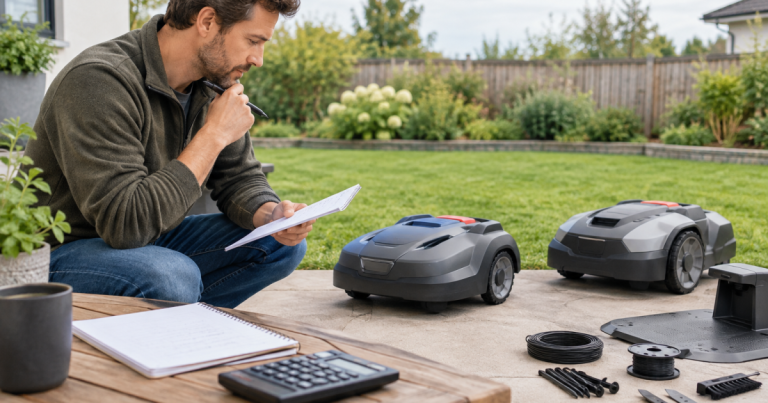

A $1,000 cap sounds simple until you start comparing yard ratings, boundary systems, slope claims, and sale banners. The best robot lawn mower under $1,000 is usually not the fanciest model on a temporary discount; it is the mower that fits your actual mowable area, has parts you can replace, and will not turn setup into a second weekend job.
For a typical US homeowner’s yard, this price range is most realistic when the lawn is small to modest, fairly open, and not full of steep banks, root ridges, narrow side passages, and disconnected patches. If your yard is closer to a flat suburban front-and-back lawn than a miniature golf course designed by a prankster, you have a much better shot.
In brief
At this budget, prioritize yard fit over brand excitement. A good sub-$1,000 robot mower should match your mowable square footage, handle your slopes within the manufacturer’s stated limits, use a boundary method you are willing to install, and have basic consumables available, especially blades and installation materials.
The most sensible choice for many typical yards is a compact small-lawn mower from a recognizable brand, bought only after you confirm the final cart price, included accessories, warranty terms, return policy, and whether any boundary wire, stakes, connectors, charging-station shelter, or replacement blades need to be purchased separately.
Step 1: Measure the lawn you actually mow
Do not use your lot size as the mower size. A quarter-acre property may have a house, driveway, patio, deck, beds, trees, and walkways taking up a big chunk of the land. The mower only cares about grass it can physically cut.
Walk the yard and divide it into mowable zones:
- Front lawn
- Back lawn
- Side strips
- Disconnected areas separated by gates, driveways, steps, or gravel
- Problem corners where a mower may need extra guidance or manual trimming
For the under-$1,000 range, the safest fit is usually a smaller, simpler lawn rather than a property that technically squeaks under the advertised rating. Robot mower capacity ratings are useful, but they are not a promise that every awkward yard at that size will be effortless.
Step 2: Decide whether boundary wire is a bargain or a headache
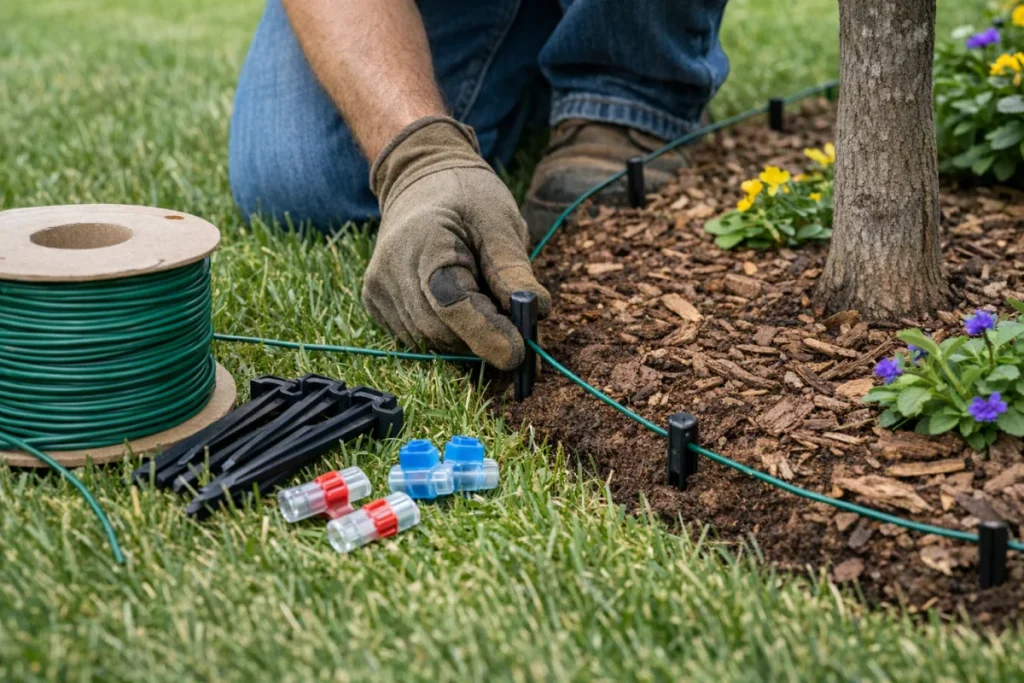
Budget buyers often face the wire question first. Boundary-wire mowers can be a strong value because the navigation method is proven and the mower does not need to interpret every edge visually. The trade-off is the installation: you need to lay the perimeter, protect islands around beds or hazards, and repair breaks if they happen later.
Wire-free mowers can be easier to imagine living with, especially if you dislike the idea of trenching, staking, or troubleshooting wire loops. But at this price level, wire-free models are often best matched to simpler, smaller layouts. Before buying, check whether the mower’s navigation method makes sense for your trees, fences, house walls, shaded areas, and lawn edges.
If you choose a wired model, budget for the installation materials as part of the mower, not as an afterthought. The right boundary wire gauge and type matters more than most first-time buyers expect, because a cheap or poorly matched setup can make a decent mower feel unreliable.
Step 3: Filter by yard shape before features
A typical budget-friendly yard has clear grass edges, moderate slopes, few pinch points, and one main mowing area. If your yard has several separate sections, tight gates, rough tree roots, deep dips, or a steep drainage swale, the mower may still work, but the budget gets harder to defend.
Use this simple filter before comparing model names:
- Small open lawn: A compact entry-level mower may be enough if the listed capacity comfortably covers your mowable grass.
- Two connected zones: Look closely at multi-zone support and how the mower travels between areas.
- Separate front and back lawns: Confirm whether you must carry the mower between zones or install separate guidance arrangements.
- Noticeable slopes: Compare the manufacturer’s maximum slope rating against the steepest part of your yard, not the average grade.
- Rough edges and obstacles: Expect more trimming and setup time; budget mowers are not magic goats.
If one spot already traps your push mower wheel, a robot mower will probably notice it too. Before blaming the model, learn the common causes of why a robot mower gets stuck in the same spot and factor those fixes into your buying decision.
Step 4: Check the true cost, not just the mower price
A mower advertised below $1,000 can still become a poor-value purchase if the required extras are missing. Before checkout, confirm what is in the box and what you need to add.
- Boundary supplies: Wired installs may need wire, stakes, connectors, and couplers. A kit such as the Husqvarna Large Installation Kit is the type of add-on to account for when comparing a wired mower’s real cost.
- Replacement blades: Robot mowers use small blades that need routine replacement. Availability matters more than shaving a few dollars off the mower price.
- Weather shelter: A garage cover is not always required, but some owners prefer protecting the charging area from sun, rain, and debris.
- Return policy: A mower that looks perfect online may not like your yard. A clear return window is valuable.
- Support channel: Check whether the brand offers accessible US support, parts, manuals, and setup guidance.
This is where the cheapest option can become expensive in irritation. If parts are hard to find or documentation is thin, every small maintenance task becomes a scavenger hunt.
Budget models and examples worth comparing
Because prices, promotions, and retailer bundles change, do not treat any model name as automatically under $1,000 without checking the live price and included equipment. Instead, use these as examples of the kinds of mowers to compare when they fall within your budget.
- Compact wire-free mowers: A model such as the Mammotion YUKA mini 2 1000H is worth comparing for small lawns where a wire-free setup is appealing and the stated lawn capacity matches your mowable area.
- Vision-based small-lawn mowers: The Worx Landroid Vision Cloud 1/4 Acre is an example to evaluate if you want to avoid perimeter wire on a modest, clearly defined lawn.
- Traditional wired small-yard mowers: Do not dismiss wired models just because they feel less futuristic. For some simple yards, a well-installed boundary-wire mower is still the cleaner budget decision.
The editorial preference here is straightforward: under $1,000, buy the mower that makes the fewest heroic promises. A smaller mower that reliably handles your actual yard is a better purchase than a more ambitious model being pushed to its limit from day one.
What not to expect below $1,000
This price range can be useful, but it is not where you should expect premium all-wheel-drive traction, effortless multi-acre coverage, advanced handling of complex zones, or flawless operation through every awkward yard condition. Some higher-end features may appear in discounted models, but a sale price does not erase the need to verify fit.
Be especially cautious if you need:
- Reliable handling on steep slopes
- Coverage for a large property
- Hands-off navigation through several disconnected areas
- Strong performance around heavy tree cover, narrow corridors, and cluttered edges
- Local dealer setup help included in the purchase
Also remember that mowing schedule matters. In hot parts of the US, cutting at the wrong time of day can stress grass and push the mower through worse conditions than necessary. If summer heat is a factor where you live, build your plan around adjusting a robot mower schedule for summer heat rather than simply running it longer.
Fast answers
What is the best robot lawn mower under $1,000 for a typical US homeowner’s yard?
The best robot lawn mower under $1,000 is usually a compact model matched to a small or modest lawn with simple boundaries, manageable slopes, available replacement parts, and a setup method the owner is willing to maintain. For many buyers, that means comparing small wire-free mowers against basic boundary-wire models and choosing the one with the least setup friction for the actual yard.
Is wire-free worth it at this budget?
It can be, but only when the lawn is simple enough for the mower’s navigation approach. Wire-free setup is attractive, but a budget wire-free mower is not automatically better than a wired mower with a clean installation.
Should I buy a discounted larger mower instead?
Sometimes, but only after checking the full specification sheet, warranty, support, included accessories, and whether the model suits your terrain. A bigger rating is not helpful if the mower struggles with your yard’s layout.
What to do before you buy
Use one quiet hour to walk the yard with the mower listing open. Measure the mowable area, identify slopes, count separate zones, note rough patches, and list any accessories you need. Then compare the final price, not the headline price.
If the mower fits the lawn on paper and the setup sounds realistic on a Saturday morning, it may be a good budget buy. If the listing only works after ignoring slopes, disconnected areas, missing parts, or vague support, keep looking. Robot mowing is supposed to reduce lawn chores, not create a small outdoor IT department.