For homeowners who want to skip perimeter wire without putting an RTK antenna on the roofline, this ECOVACS GOAT A2000 LiDAR PRO review centers on one practical question: does its LiDAR-first, wire-free setup make sense for a real US yard rather than a perfect rectangle in a product image?
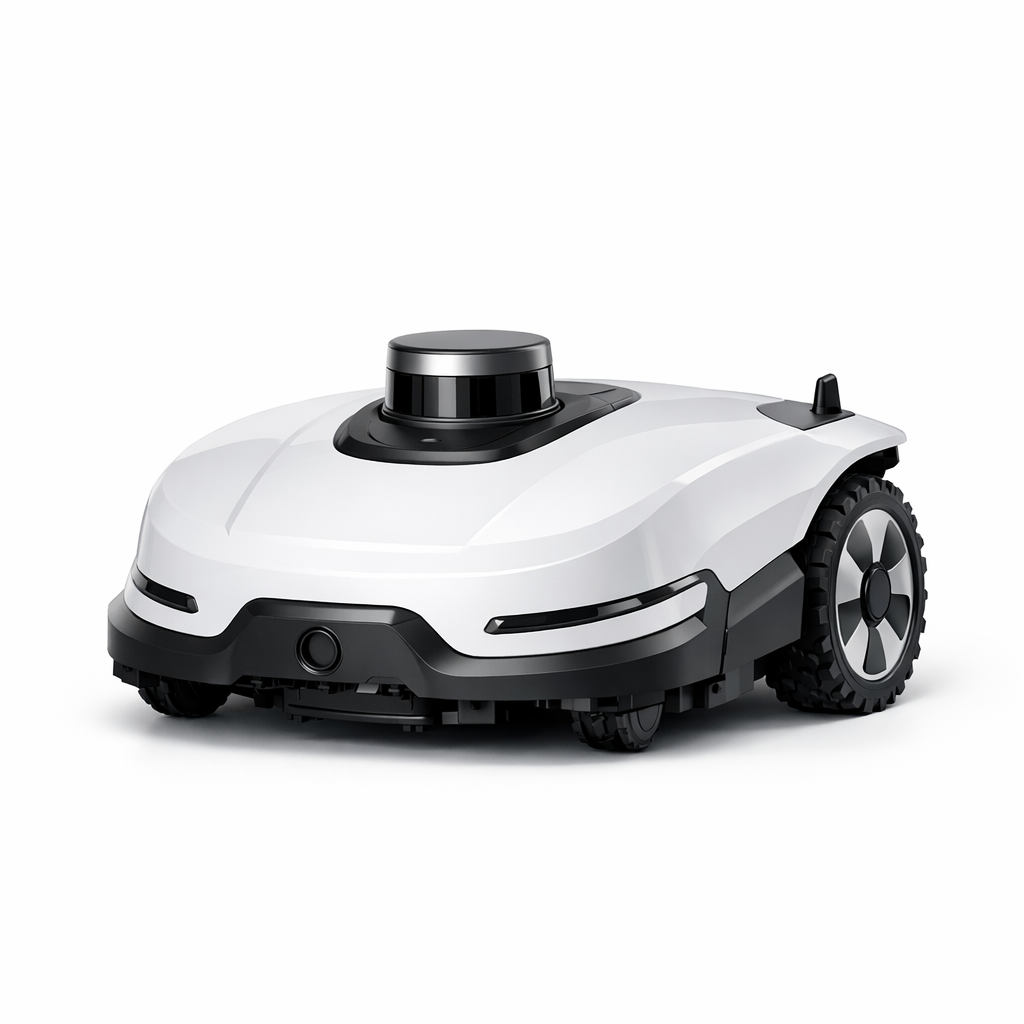
ECOVACS GOAT A2000 LiDAR PRO
A strong fit for medium lawns where wire-free LiDAR mapping and flexible zone control are the main priorities
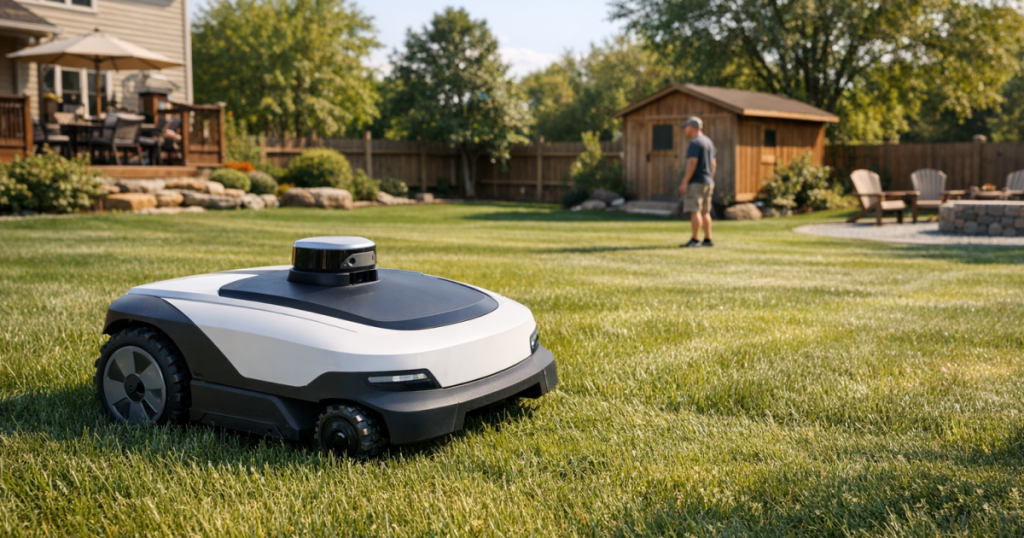
The ECOVACS GOAT A2000 LiDAR PRO is a current US-market LiDAR wire-free robot lawn mower with a listed working capacity of about 0.5 acre. My read is straightforward: it is most compelling for medium-size lawns where virtual mapping, app-based zone control, and a broad sensor package are more valuable than all-wheel drive or an especially tall maximum cut.
Product Details
- Product type: LiDAR wire-free robot lawn mower
- Recommended yard size: 2000 m², or about 0.5 acre working capacity
- Navigation: HoloScope 360 Dual-LiDAR / multiline LiDAR with AI camera and 3D ToF
- Boundary method: virtual mapping with automatic or remote mapping; no physical perimeter wire
- Drive type: two-wheel drive
- Maximum slope: 50%
- Cutting width: 12.96 inches
- Cutting height: 1.18 to 3.54 inches with electric adjustment
- Zones: multi-area map management
- Weather handling: IPX6 mower waterproofing with rain sensor; station rated IPX4
- App control: mapping, scheduling, area editing, and mowing controls through the ECOVACS app
The biggest reason to consider it: wire-free mapping without an RTK setup
The A2000 LiDAR PRO’s headline feature is its HoloScope 360 Dual-LiDAR / multiline LiDAR navigation system, supported by an AI camera and 3D ToF. In plain English, ECOVACS is building this mower around onboard sensing rather than a buried perimeter wire. For homeowners who have avoided robot mowers because trenching, staking, or repairing boundary wire sounds like a weekend punishment, that is the main attraction.
The practical advantage is setup flexibility. Virtual mapping with automatic or remote mapping means the mower is designed around digital boundaries rather than a physical loop around the yard. That can be a cleaner fit for lawns with garden beds that change, a front yard and back yard that need separate treatment, or a homeowner who wants to edit areas from the app rather than crawl around the edge with wire stakes.
The trade-off is that sensor-based mowing still needs a yard that suits the system. LiDAR navigation is exciting, but it is not a magic cloak against every awkward lawn feature. Tight clutter, changing obstacles, tree debris, toys, and odd transitions still call for realistic expectations and some owner involvement. The win here is not “set it and forget the lawn exists.” The win is avoiding perimeter wire while keeping control over mapped mowing areas.
Half-acre capacity makes it a medium-lawn mower, not a large-property flagship
ECOVACS lists the A2000 LiDAR PRO for 2000 m², or about 0.5 acre of working capacity. That places it in a useful middle zone for US homeowners: bigger than many compact city-lot robot mowers, but not the obvious choice for multi-acre properties.
For a typical suburban lawn, about 0.5 acre can be a sweet spot. There is enough area for automation to feel worthwhile, and the mower’s 12.96-inch cutting width gives it more coverage per pass than many smaller robot mowers. That does not tell you exactly how it will behave in every yard, because slopes, zones, obstacles, and grass conditions all change the workload. But the listed capacity gives a sensible first filter: if your mowable turf is near or under that range, it belongs on the shortlist; if your grass area is well beyond it, start higher in the lineup before falling in love with the feature sheet.
Multi-area map management also strengthens the fit for split lawns. A front yard, side strip, and fenced back lawn are more realistic use cases than a single flawless rectangle. If those areas are separated by pavement, gates, or narrow passages, the routing plan still matters. The mower can support multiple mapped areas, but the yard has to provide a practical way for the robot to move or be moved between them.
Cutting height is flexible, but warm-season grass owners should look closely
The A2000 LiDAR PRO has an electric cutting-height range from 1.18 to 3.54 inches. Electric adjustment is convenient because it keeps height changes in the control workflow rather than forcing manual dial changes at the mower. For many cool-season lawns maintained in a moderate range, that span gives useful room to tune the cut.
The upper limit is the key number for some US yards. A 3.54-inch maximum is not ultra-low, but it is also not one of the taller high-cut specs on the market. If you maintain St. Augustine or another grass type that you prefer to keep at the taller end, the ceiling deserves attention before purchase. For a wider look at machines built around taller mowing, compare this against robot mowers that cut high enough for St. Augustine grass.
The cutting width is another practical detail. At 12.96 inches, the mower is not trying to imitate a full-size walk-behind deck, but it has a broader cut than many small-lawn robots. That helps explain why the mower is positioned for a half-acre working capacity rather than only tiny urban lawns. As always with robot mowers, the aim is frequent light cutting, not rescuing overgrown turf after two neglected weeks.
Slope rating is strong, but two-wheel drive sets the traction context
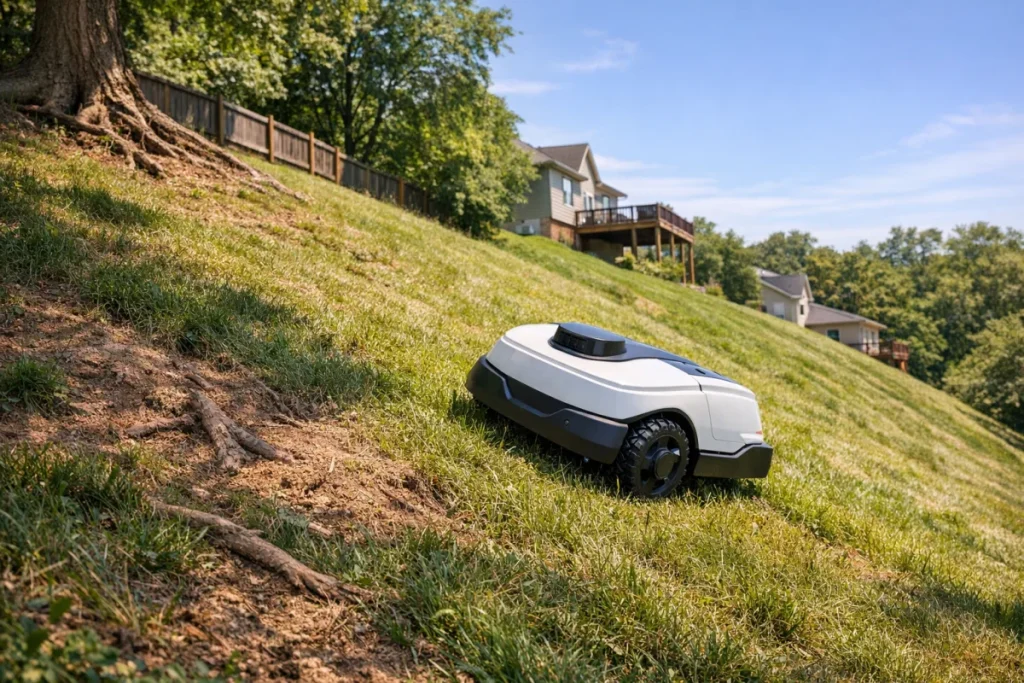
The listed maximum slope is 50%, which is a strong figure for a residential robot mower. For yards with noticeable grade changes, that number keeps the A2000 LiDAR PRO in the conversation. It is especially relevant for lawns with rolling side yards or a sloped transition behind the house.
The balancing detail is drive type: this is a two-wheel-drive mower. That does not cancel the slope rating, but it does shape the buying decision. All-wheel-drive models can be the more natural direction for yards where slope combines with uneven ground, slick grass, ruts, exposed roots, or awkward turns. The ECOVACS makes more sense when the grade is within its rated scope and the lawn surface is reasonably cooperative.
That is the kind of distinction that prevents disappointment. A spec can tell you whether a mower is designed for a slope. Your yard tells you whether traction, turning space, and surface quality will make that slope feel easy or annoying. If the steepest parts of your lawn are also bumpy and shaded, the 2WD layout is the compromise to weigh hardest.
App control and zone editing are central to daily ownership
The ECOVACS app supports mapping, scheduling, area editing, and mowing controls. Those functions are not side decorations on a wire-free mower; they are the control room. With no perimeter wire defining every edge, the app becomes the place where you shape how the mower works around the yard.
That is good news if you like adjusting zones, excluding areas, and changing schedules without reworking physical hardware. It is less ideal if you want the simplest possible appliance and never want to think about a map again. Robot mowers remove a lot of mowing labor, but wire-free models shift some of the work into setup decisions and digital management. The A2000 LiDAR PRO is better suited to the homeowner who is comfortable spending a little time getting the map right.
The rain sensor and waterproofing also affect ownership. ECOVACS lists IPX6 waterproofing for the mower and IPX4 for the station, along with a rain sensor. That supports operation in outdoor conditions, but it does not make wet mowing the best choice for turf health or cut quality. If your lawn frequently stays damp after storms, our guide to whether a robot lawn mower can cut wet grass after rain is a useful next read before you lean too heavily on rain handling.
Where this mower fits best
The strongest case for the A2000 LiDAR PRO is a medium-size lawn where perimeter wire is the dealbreaker. It suits a homeowner who wants virtual mapping, multi-area control, and a sensor-rich mower without turning installation into a landscape project. It also fits people who are comfortable using an app to refine areas and schedules.
It is less persuasive for owners who need maximum cutting height, all-wheel-drive traction, or a mower built primarily for very large properties. Those are not flaws so much as boundaries. The product has a clear lane: half-acre-class, wire-free mowing with LiDAR navigation and flexible mapped areas.
For many US yards, that lane is exactly where the interesting buying decision sits. The old choice used to be simple but limiting: install wire and get reliable boundaries, or wait for wireless systems to mature. The A2000 LiDAR PRO is part of the newer group trying to make wire-free mowing feel normal. It still needs a compatible lawn and a patient first setup, but the direction is easy to like.
Verdict
Score: 9.0/10. The A2000 LiDAR PRO earns its recommendation through three main strengths: LiDAR-led navigation without physical perimeter wire, a useful about-0.5-acre working capacity, and practical app-based control for mapping, scheduling, area editing, and mowing. The main reservations are equally clear: it is two-wheel drive rather than AWD, and its 3.54-inch maximum cutting height will not suit every warm-season lawn preference.
Choose it if your lawn is in the half-acre range, you want to avoid boundary wire, and your yard does not demand the traction reassurance of an AWD mower. Skip it for very large properties, rough steep terrain, or grass care plans that need a taller cut than this model provides.
ECOVACS GOAT A2000 LiDAR PRO
A strong fit for medium lawns where wire-free LiDAR mapping and flexible zone control are the main priorities
You might also like: How to Route a Robot Mower Between Lawns Across a Driveway.