A robot mower can keep a fall lawn looking crisp longer than a weekend-only push mower, but it should not run just because the calendar still has empty slots. The right time to stop robot mowing in fall is when your grass has mostly stopped growing, frost is becoming routine, and the mower is doing more tracking, slipping, or leaf-chopping than clean cutting. Use the lawn’s growth rate first, then adjust for grass type, weather, leaves, and your mower’s setup.
The seasonal stopping rule
Stop scheduling your robot mower for the season when the lawn no longer needs regular cutting. In practical terms, that means the grass has not gained meaningful height for a week or two, overnight frost is showing up often, and the mower is spending more time driving over cold, wet, or debris-covered turf than trimming new growth.
That rule works better than a fixed date because fall behaves differently from yard to yard. A sunny front lawn may keep growing after a shaded backyard has nearly stopped. A cool-season lawn can stay active later than a warm-season lawn. A mower set to run daily in September may need only a light schedule in October, then no automatic schedule at all once growth fades.
Step 1: Check whether the grass is still gaining height
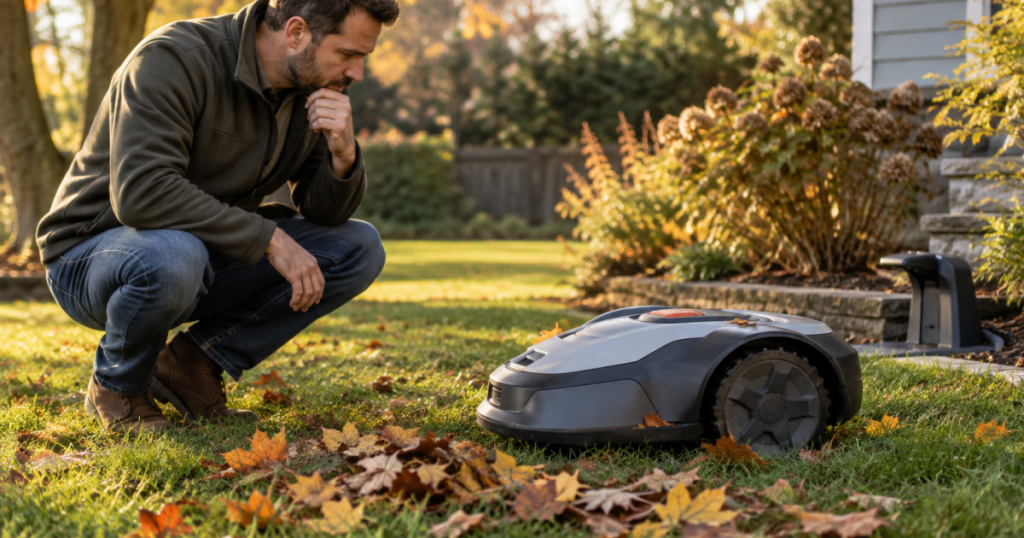
The simplest test is to pause the schedule for several days and look for actual growth, not just uneven color or seedheads. Pick two or three spots that represent the lawn: one sunny area, one shaded area, and one low or damp area if you have one. Measure from the soil surface to the blade tips, or use a consistent visual reference such as the top of a sprinkler head or edging strip.
If the lawn gains enough height that the mower would remove only a light amount, keep mowing on a reduced schedule. If the height barely changes for a week or longer, the mower is no longer doing useful work. At that point, leaving the schedule active can create wheel marks, compact soft soil, smear wet clippings, or dull blades on sticks and leaf litter.
As a general guide, cool-season grasses slow sharply as soil temperatures settle near the lower 50s °F and below. Warm-season grasses usually go dormant earlier as nights cool. You do not need a soil thermometer to make a good decision, but it can help if your lawn has mixed sun, shade, and drainage patterns.
Step 2: Let grass type change the timing
Grass type matters because not all lawns enter dormancy at the same pace. Cool-season turf, including tall fescue and Kentucky bluegrass, often keeps growing through mild fall weather. These lawns may benefit from a gentle, reduced robot mowing schedule until growth clearly stops.
Warm-season turf, such as bermudagrass, zoysiagrass, and St. Augustine, usually slows more decisively once cooler nights arrive. When it starts turning tan or straw-colored from dormancy, routine mowing should taper quickly. A robot mower cannot improve dormant turf by continuing to drive over it; the goal is to avoid unnecessary traffic while keeping the last cut tidy.
Cutting height also matters. If your lawn needs to stay relatively high going into cold weather, make sure the mower can maintain that height rather than forcing a short final cut. For more detail on grass types that need a taller cut, see this guide to robot mowers for tall fescue and Kentucky bluegrass.
Step 3: Treat frost as a stop sign for the day
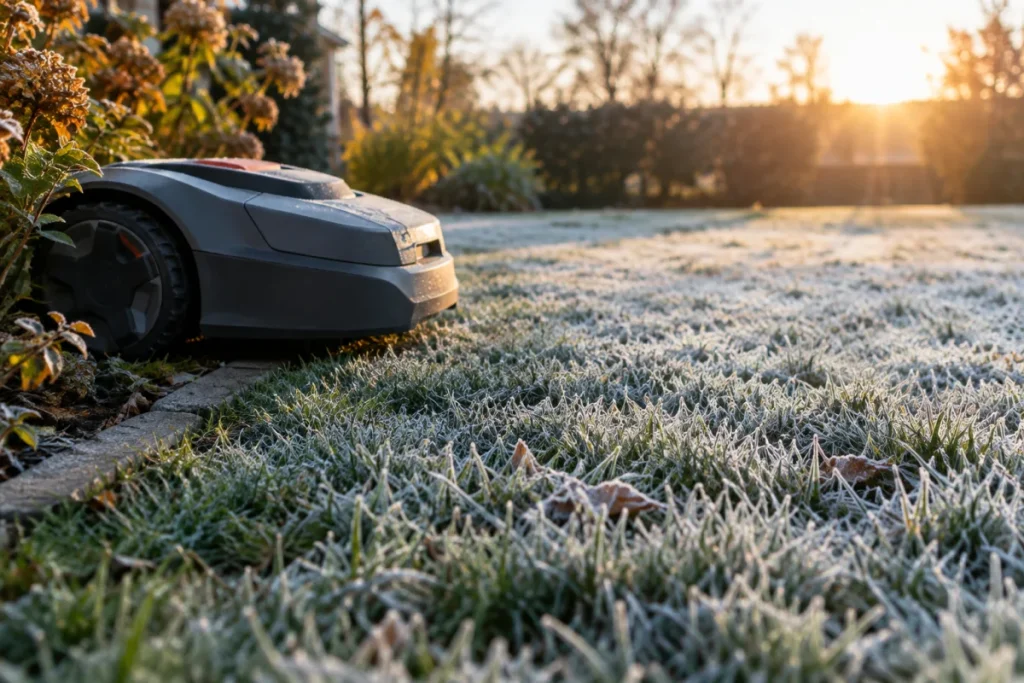
Do not run a robot mower across frosty grass. Frozen or frost-coated blades are more brittle, and wheel traffic can leave visible bruising once the lawn thaws. Even if the mower itself can physically move, the turf is not in a good condition for mowing.
A single early frost does not always mean the whole season is finished. In many yards, a chilly night is followed by another mild week of growth. The safer routine is to disable early-morning mowing after the first frost and run only later in the day, after the lawn has thawed and dried. Once frost becomes frequent, stop the automatic schedule instead of trying to catch narrow afternoon windows.
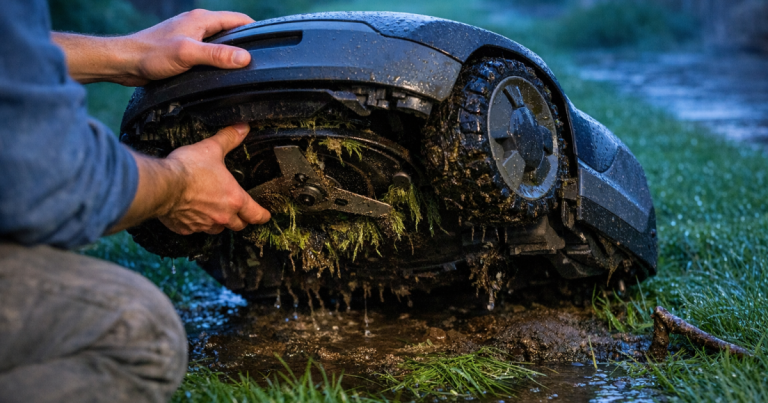
Watch the soil as much as the grass. Fall rain, shorter days, and lower evaporation can keep the surface soft. If the mower leaves track marks, skids on turns, or carries mud onto the charging area, it is time to pause. A clean cut is not worth rutting the lawn right before winter.
Step 4: Taper the schedule instead of stopping abruptly
The best fall routine is usually a taper, not an on/off switch. Robot mowers are designed around frequent light trimming, so a heavy final session after weeks of growth is not ideal. Reduce the schedule in stages while the grass slows.
- Early fall: Keep the normal schedule if grass is still growing fast and the lawn is dry enough for clean turns.
- Mid fall: Cut mowing days or operating windows by about half, then watch whether the lawn still looks even.
- Late fall: Use occasional daytime mowing only when the grass has visibly grown and the surface is dry.
- End of season: Disable the recurring schedule once growth has stopped, frost is regular, or debris makes mowing messy.
This approach keeps the lawn from getting shaggy while avoiding the most common fall robot mower problem: a machine still dutifully patrolling a yard that no longer needs to be cut. The mower may be loyal, but it does not know your grass has clocked out for the year unless you tell it.
Step 5: Plan the final cut without scalping
The final cut should be tidy, not aggressive. Keep the mower near the lawn’s normal healthy cutting height, especially if you have cool-season turf. Dropping the height suddenly can stress the grass and expose crowns just as cold weather arrives.
If the lawn is slightly too tall for your robot mower to handle cleanly, use a conventional mower for one final reset rather than forcing the robot through heavy growth. Robot mowers work best when they remove small amounts frequently. Tall, wet fall grass can clump, clog, and leave uneven patches.
After the final mow, inspect the yard. Remove sticks, acorns, pinecones, toys, hoses, and seasonal decorations from mower paths. These are easy to overlook once the schedule is off, but they matter if you restart for one last daytime cut during a mild spell.
Step 6: Decide what to do about leaves
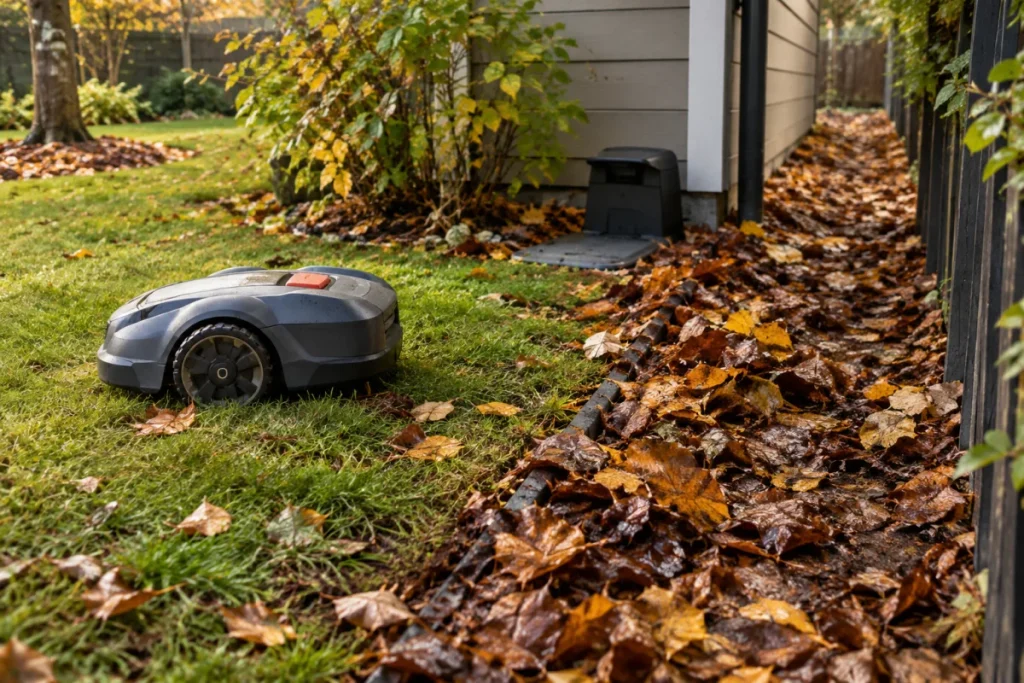
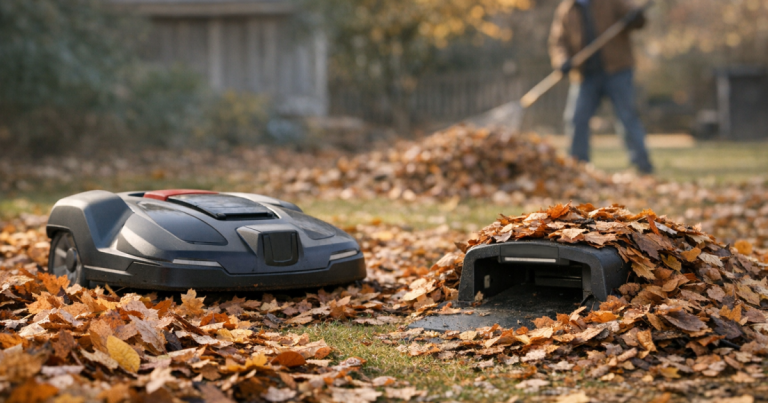
A thin layer of dry leaves is not always a reason to stop immediately, but heavy leaf cover changes the job. The mower may chop some leaves, miss grass underneath, lose traction, or push debris into piles near edges and obstacles. Wet leaves are worse because they can mat down, hide branches, and make slopes or turns slippery.
If leaves are falling steadily, clear the lawn before any remaining fall mow. This is especially important around boundary areas, guide paths, charging stations, narrow passages, and tree roots. For a fuller look at the trade-offs, read whether you should run a robot mower over fall leaves.
Once leaf cleanup becomes the main lawn task, the robot mower season is nearly over. At that stage, a rake, blower, or bagging mower usually does more good than another automated trim.
Step 7: Shut down the season cleanly
When the lawn is done growing, turn off the recurring schedule first. Then give the mower a basic end-of-season check: clean off dry grass buildup, inspect blades and blade screws, wipe the charging contacts, and confirm the charging station area is clear of wet debris. Follow the mower manufacturer’s storage and battery instructions for your model.
If the charging station or power supply needs to stay connected temporarily during cool weather, keep the setup neat and weather-appropriate. Do not rely on improvised extension cords, loose outdoor connections, or power routes that sit in wet leaves. For charging-station power planning, use the safety guidance in how to safely extend robot mower charging station power.
Before storing the mower, note anything you want to fix before spring: weak signal zones, areas where the mower slipped, spots that grew faster than the rest, or places where leaves confused the routine. Those notes are much easier to act on than a vague memory when the grass wakes up again.
Common mistakes that make fall mowing harder
- Running on frosty mornings: Move any remaining mowing to dry afternoons, then stop once frost becomes normal.
- Keeping a summer schedule too long: Daily mowing can become unnecessary traffic once growth slows.
- Cutting too short at the end: A neat final cut is useful; scalping is not.
- Ignoring wet soil: Wheel marks and ruts are a stronger stop signal than the calendar.
- Mowing through heavy leaves: Clear debris first or pause the schedule until cleanup is done.
- Forgetting shaded zones: Shady grass may stop growing sooner and stay wetter than open areas.
Season-end questions answered
Should I stop after the first frost?
Not always. One light frost can be followed by more grass growth, especially on cool-season lawns. Stop mowing for that frosty day, then reassess. If the lawn resumes growth and dries out, a reduced daytime schedule can still make sense. If frost becomes frequent, end the automatic schedule.
How short should the final robot mower cut be?
Use the lawn’s normal healthy mowing height rather than making a dramatic drop. The final cut should leave the grass even and manageable without removing too much leaf blade at once. If your robot mower cannot cut high enough for your grass type, that is a mower-fit issue to solve before the next growing season.
Can I restart the mower during a warm spell?
Yes, if the grass is actively growing, the lawn is dry, and frost is not present. Use a short daytime mowing window and inspect the yard first. A one-time trim is fine; restarting the full summer schedule usually is not necessary.
What to remember
The reliable way to decide when to stop robot mowing in fall is to watch the turf, not the date. Keep mowing lightly while grass is growing, taper the schedule as growth slows, skip frosty or soggy days, and stop once the mower is no longer making the lawn cleaner or healthier.
A good fall shutdown protects the mower and the lawn at the same time. You finish with an even cut, fewer ruts, less debris trouble, and a clearer plan for spring startup. That is the quiet win of automated mowing: the machine does the routine work, but the seasonal judgment still belongs to you.