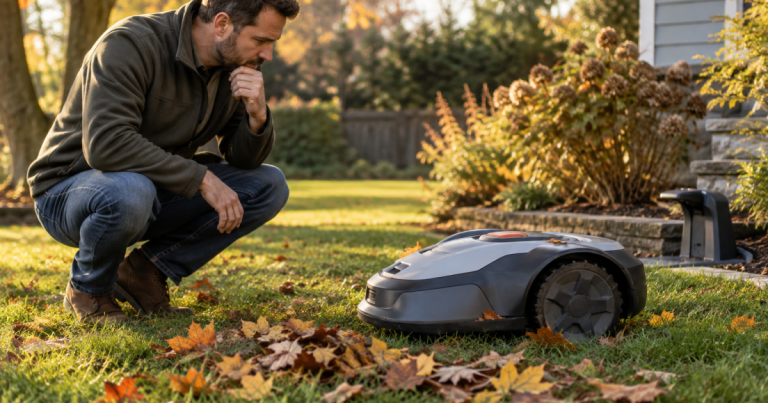
Running a robot mower over fall leaves can be fine when the cover is light, dry, and scattered. It becomes a problem when leaves hide the grass, turn slick, collect around the dock, or pack under the deck. A robot mower is a mower, not a leaf vacuum with ambitions.
The useful rule is simple: if you can still see plenty of grass and the mower’s wheels are riding on turf, let it mow. If leaves form a mat, stick to your shoes, or bury the charging area, clear them first.
The short answer for fall leaves
A robot lawn mower can chop up some dry fall leaves while it trims the grass, but it should not be used as the main leaf-removal tool. Light leaf cover means scattered leaves with grass visible between them. Heavy leaf cover means broad areas where the grass is hidden, the leaves are wet or compressed, or the mower has to drive through piles instead of over turf.
That distinction matters because the mower is designed to take frequent small cuts from grass. Dry leaves may get sliced into smaller pieces, but thick layers can reduce traction, block the blade area, interfere with docking, and leave the lawn shaded and damp. The mower may still move, but the lawn underneath is not getting the benefit you bought the machine for.
- Let it run when leaves are thin, dry, and spread out.
- Clear first when leaves are wet, piled, or covering the grass.
- Check the dock and approach path before each fall run.
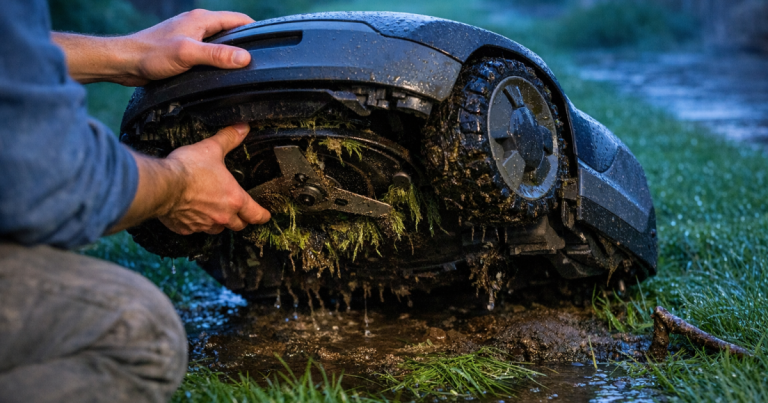
- Inspect the underside more often because leaf fragments and damp clippings can build up faster in autumn.
Light leaves versus leaf mats
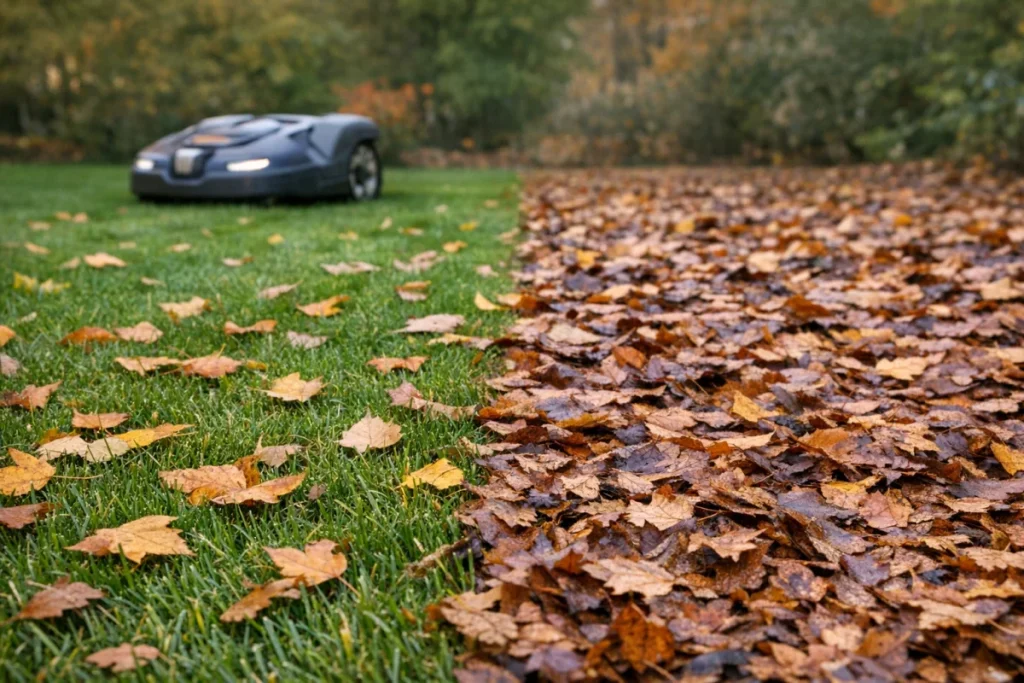
The easiest way to decide is to look at the turf, not the trees. A few leaves falling every hour is normal fall background noise. A blanket of leaves after a windy night is a different job.
Light leaf cover
Light cover is scattered enough that you can see the mowing lanes, grass blades, and ground contours. In this situation, a robot mower may trim grass and nick some leaves into smaller pieces. That can be acceptable, especially on lawns where leaves fall gradually rather than all at once.
Even then, avoid treating the mower as a mulcher for the whole yard. If the grass is barely growing, reduce mowing time rather than sending the mower out just to chase leaves. Robot mowers work best when the schedule matches grass growth, not when the schedule is trying to make up for a rake.
Moderate leaf cover
Moderate cover is the gray zone: grass is still visible, but leaves are collecting in fence corners, along curbs, beneath maples and oaks, or in low spots where wind deposits them. This is where a quick pass with a blower or rake pays off. Move leaves out of narrow passages, dock approaches, and slope transitions before the mower runs.
If your yard has separate zones, prioritize the problem areas. The open front lawn may be fine, while the shaded side yard beside the house may need clearing every few days. Fall ownership is less about perfection and more about not letting the mower fight the same pile repeatedly.
Heavy leaf mats
Heavy cover is when you cannot easily see the grass over large sections, or when wet leaves press together into a slick sheet. Do not send the mower into that as a routine. The mower can lose grip, miss grass, smear leaves into the turf, or carry wet debris under the deck.
Heavy mats also hurt the lawn. Leaves that sit on grass can block light and trap moisture. A robot mower driving over that layer does not fix the underlying problem; it may only press it flatter. Clear the leaves, then let the mower handle the grass again.
What leaves do to the mower
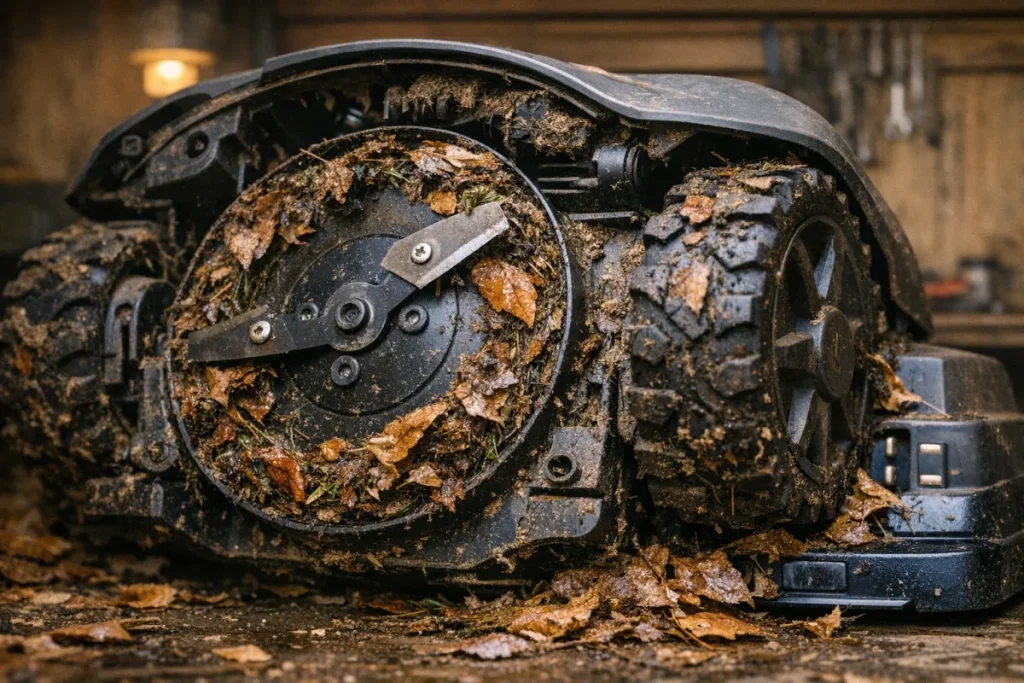
Fall leaves affect more than the cutting result. They change how the mower sees, grips, charges, and cleans itself during normal use.
- Blades: Dry leaves may be chopped, but damp leaf fragments can stick to clippings and collect around the blade disc. That buildup can reduce cutting quality and make the mower work harder than it needs to.
- Traction: Wet leaves on slopes, roots, pavers, or shaded soil can act like a slick film. If the mower already struggles in a spot, leaves will not make it more athletic.
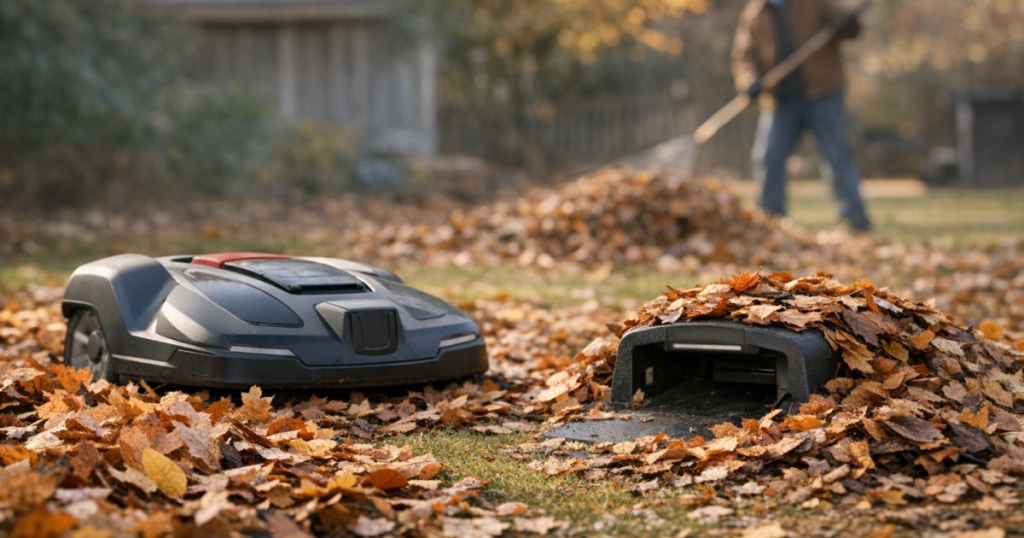
- Docking: Leaves around the charging station can block the approach, sit against contacts, or create an uneven surface where the mower needs a clean final alignment.
- Sensors and navigation: Camera-based, LiDAR-based, RTK, and boundary-wire systems handle yards differently, but all mowers still need a passable physical route. Leaf piles can hide edges, toys, sticks, holes, and shallow obstacles.
- Lawn finish: A mower can trim grass only when the grass is exposed. If leaves cover the turf, you may get tracks through leaves instead of a clean cut.
Before clearing leaf clumps from wheels, blades, or the charging area, stop the mower, disable it according to the owner’s manual, and keep your hands away from the cutting area.
A simple fall decision rule
Use this before you let the mower leave the dock:
- If grass is visible across most of the yard and the leaves are dry, run the mower on a shortened or normal fall schedule.
- If leaves are clustered in narrow passages, around the dock, near guide paths, or at zone entrances, clear those spots first.
- If the lawn is hidden under leaves, clear the leaves before mowing.
- If leaves are wet enough to stick to shoes, wheels, or the underside of the mower, wait or clear them manually.
- If the mower returns with debris packed underneath, clean it before the next run.
That last point matters because fall buildup can sneak up quickly. Dry leaves in the morning can become damp by evening, especially in shaded yards. If the underside is collecting leaf paste, use a safer cleaning routine rather than scraping at random parts. Our guide to how to clean the robot mower deck safely walks through that job without turning routine maintenance into an expensive mistake.
Adjusting the schedule as growth slows
In many US lawns, fall mowing is uneven. Cool-season grass may perk up after summer heat, while warm-season lawns slow down as temperatures drop. Leaves add another variable: the mower may be able to run, but the lawn may not need as much cutting.
Start by shortening the schedule rather than stopping immediately. If the grass is still growing, frequent light trims can keep the lawn tidy and reduce the amount removed in each pass. Once growth slows, run fewer sessions and focus on dry windows. Morning dew, rain, and shade can make leaf cover much more slippery than it looks from the kitchen window.
Also watch the dock area. A robot mower can only be as reliable as its route home. Keep the charging station, approach lane, and any tight turns clear of leaves, twigs, acorns, and seed pods. Small debris in exactly the wrong spot is a classic robot-mower drama: low stakes, high annoyance.
Common mistakes that cause fall problems
Using the mower as a leaf cleanup machine
A robot mower can help maintain a lawn during leaf season, but it should not replace raking, blowing, bagging, or mulching with a conventional mower when leaf drop is heavy. If the job is mostly leaves and very little grass, use the right cleanup method first.
Ignoring wet shaded areas
North-facing strips, tree-covered corners, and the side yard between a house and fence can stay damp long after the open lawn dries. These are the places where leaves mat down, wheels slip, and repeated stuck spots appear.
Leaving sticks hidden under leaves
Leaves can hide branches, dog toys, garden edging, shallow holes, or exposed roots. A quick walk-through before mowing is worth it after windy weather. It takes less time than rescuing the mower from the same trap three afternoons in a row.
Letting one trouble spot become routine
If the mower stalls in the same leafy corner, do not just restart it and hope for a better personality. Clear the area, check for slope, ruts, roots, loose soil, and debris, then adjust the route or boundary if your system allows it. For repeated location-specific failures, see our guide to a robot mower that gets stuck in the same spot.
Does mower type change the answer?
Somewhat, but not enough to ignore leaf conditions. Boundary-wire mowers, wire-free RTK models, camera-based mowers, and LiDAR-style systems vary in how they define the mowing area and detect their surroundings. Those differences can matter in fall, especially around edges, tree cover, and narrow paths.
Still, the physical limits are shared. Wheels need grip. Blades need exposed grass. The dock needs a clear approach. Sensors and navigation systems need a yard that is not disguised by piles of leaves. A premium mower may handle complex layouts better than an entry-level model, but heavy wet leaves remain a yard-maintenance issue, not a navigation feature.
If you are buying with fall conditions in mind, think less about whether a mower can “handle leaves” and more about your yard pattern. A few ornamental trees over an open lawn is very different from a wooded lot with daily leaf drop, damp shade, and steep transitions. The second yard can still work for automation, but it needs more seasonal cleanup discipline.
Questions people ask
Will a robot mower mulch leaves?
It may chop some dry leaves into smaller pieces, but it is not the same as a dedicated mulching mower or leaf vacuum. Treat any leaf shredding as a bonus during normal mowing, not the main fall cleanup plan.
Should I raise the cutting height in fall?
Follow your mower manual and grass type guidance rather than raising or lowering the mower only because leaves are present. The bigger issue is whether leaves are covering the grass. If the mower cannot reach the grass cleanly, cutting height will not solve the problem.
Can wet leaves damage the mower?
Wet leaves are more likely to cause traction problems, debris buildup, and messy cutting. One damp pass is not automatically a disaster, but repeated runs through wet mats increase the need for cleaning and can lead to more stoppages.
What to do before the first hard freeze
As fall turns into storage season, stop trying to squeeze one more automated run out of a lawn that is no longer growing. Clear leaves, clean the mower, inspect the blades, and prepare the charging area according to the manufacturer’s instructions. If your climate brings snow, freezing rain, or long dormant periods, seasonal shutdown matters more than one last trim.
When mowing is done for the year, use a proper storage routine rather than simply parking the mower and hoping spring is kind. Our guide to how to winterize a robot lawn mower before storage covers the steps worth handling before the mower sits for the off-season.
What to remember
Yes, a robot mower can run during fall leaf season, but it should run on exposed grass, not through heavy leaf cover. Light, dry, scattered leaves are usually acceptable. Wet mats, buried grass, blocked docks, and hidden debris are signs to clear first.
The best fall routine is simple: keep the dock clear, remove piles before they compact, mow during drier windows, and clean the deck more often. That keeps the mower doing the job it was built for and keeps your lawn from spending autumn under a soggy blanket of leaves.